LA Day Of Mindfulness - Deer Park Monastery
When We Walk Together
Reflections from the Los Angeles Day of Mindfulness
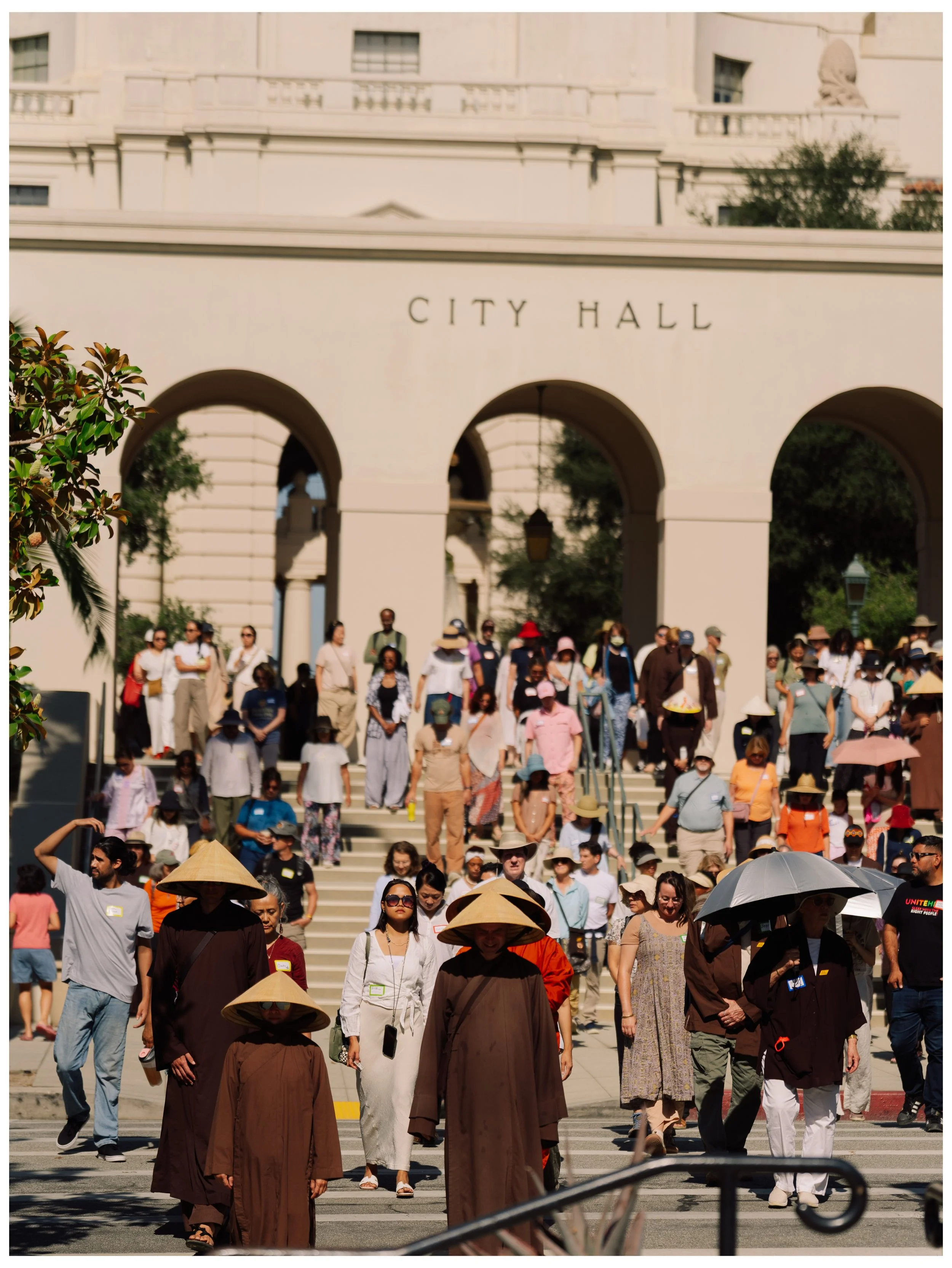
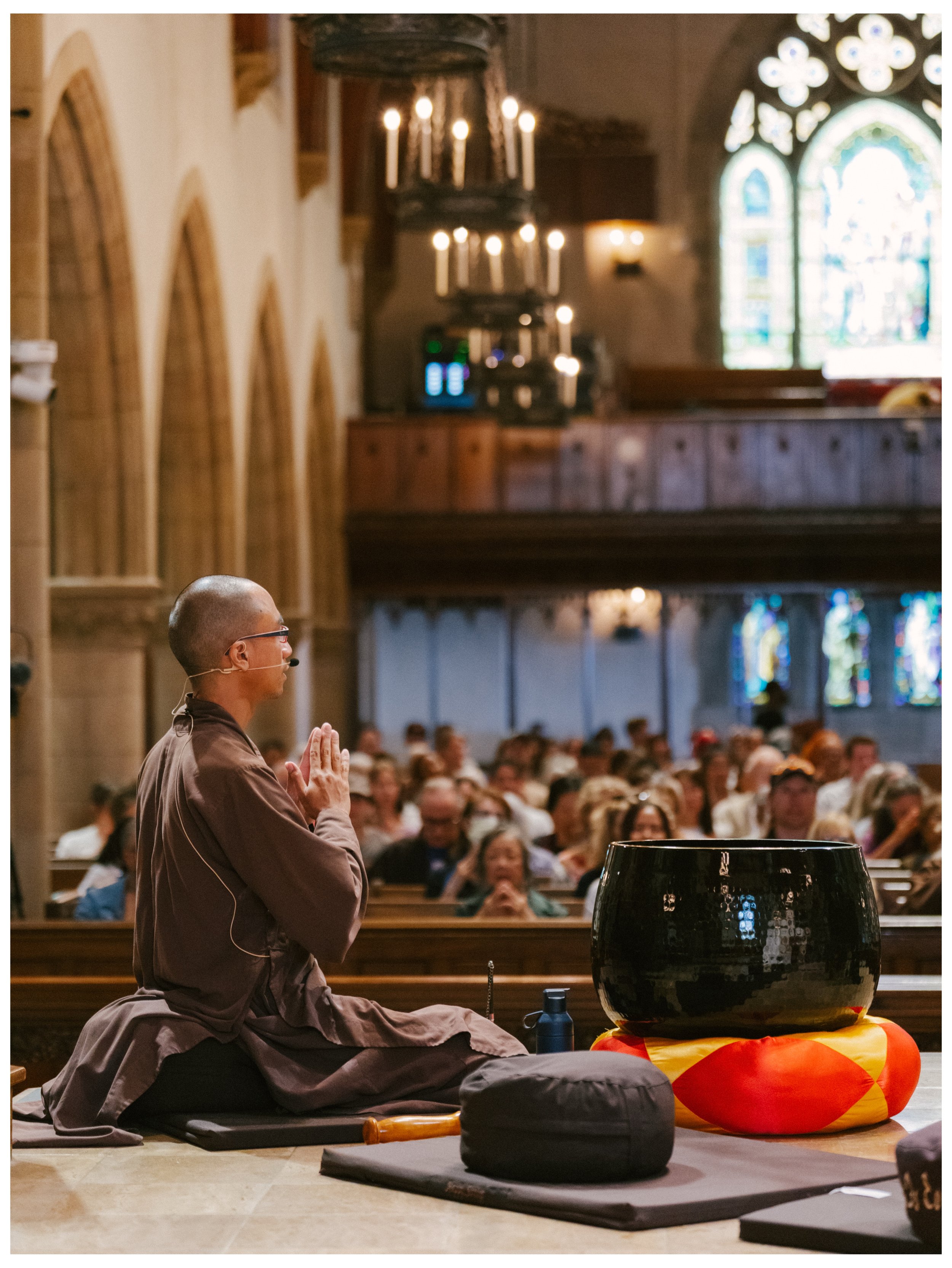
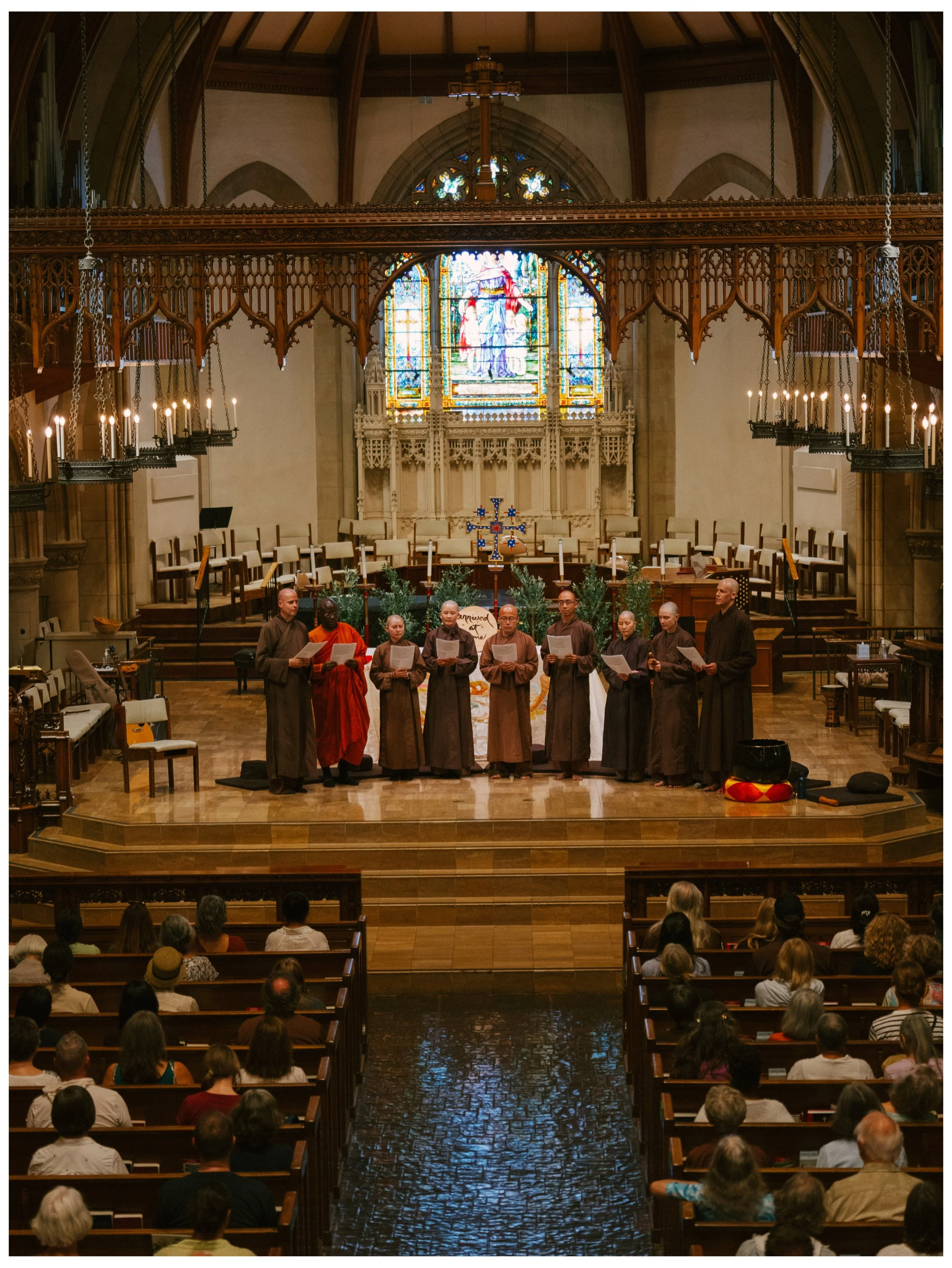
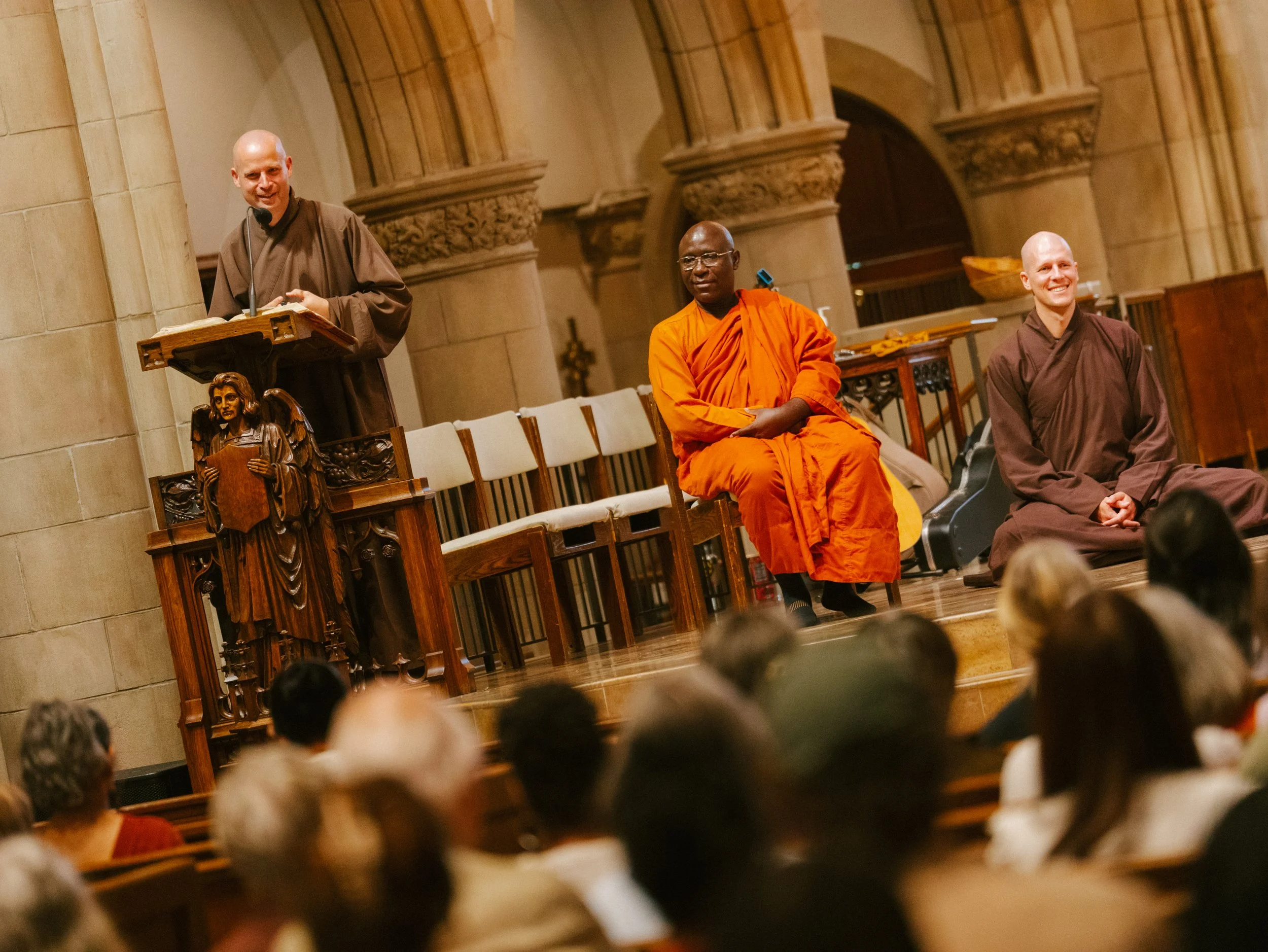
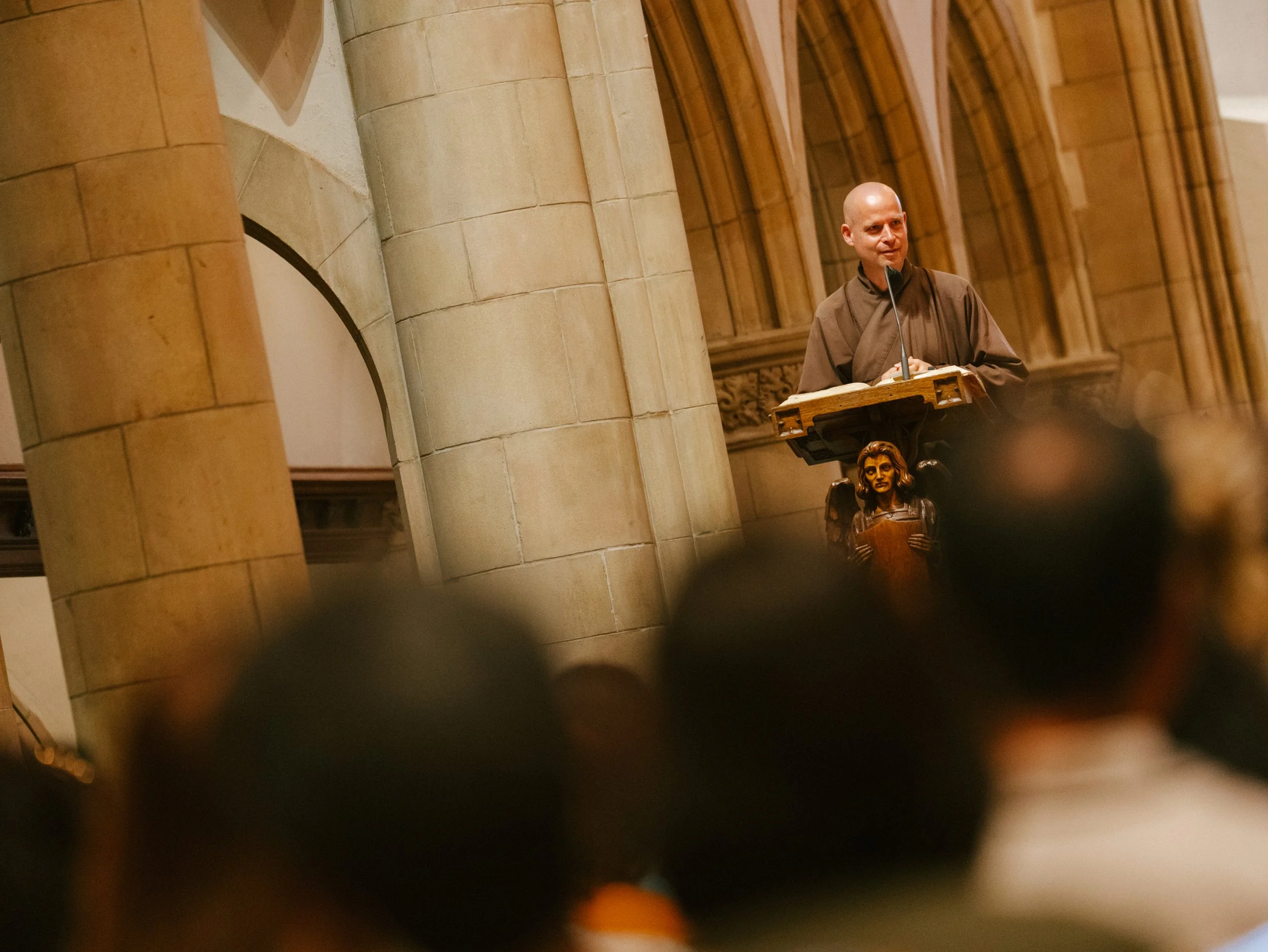
Last Friday, I traveled by train from Deer Park Monastery to Los Angeles with nine monastics. The following morning, hundreds of people gathered at All Saints Episcopal Church in Pasadena for the Los Angeles Day of Mindfulness.
It was my first time traveling with the monastics and serving as the photographer for an event of this size. By the time it was over, my body was exhausted from the trip, the heat, and the many hours spent moving through the crowd with my camera.
Yet when I returned and began going through the photographs, what arose in me was not the exhaustion. It was pure joy and true happiness.
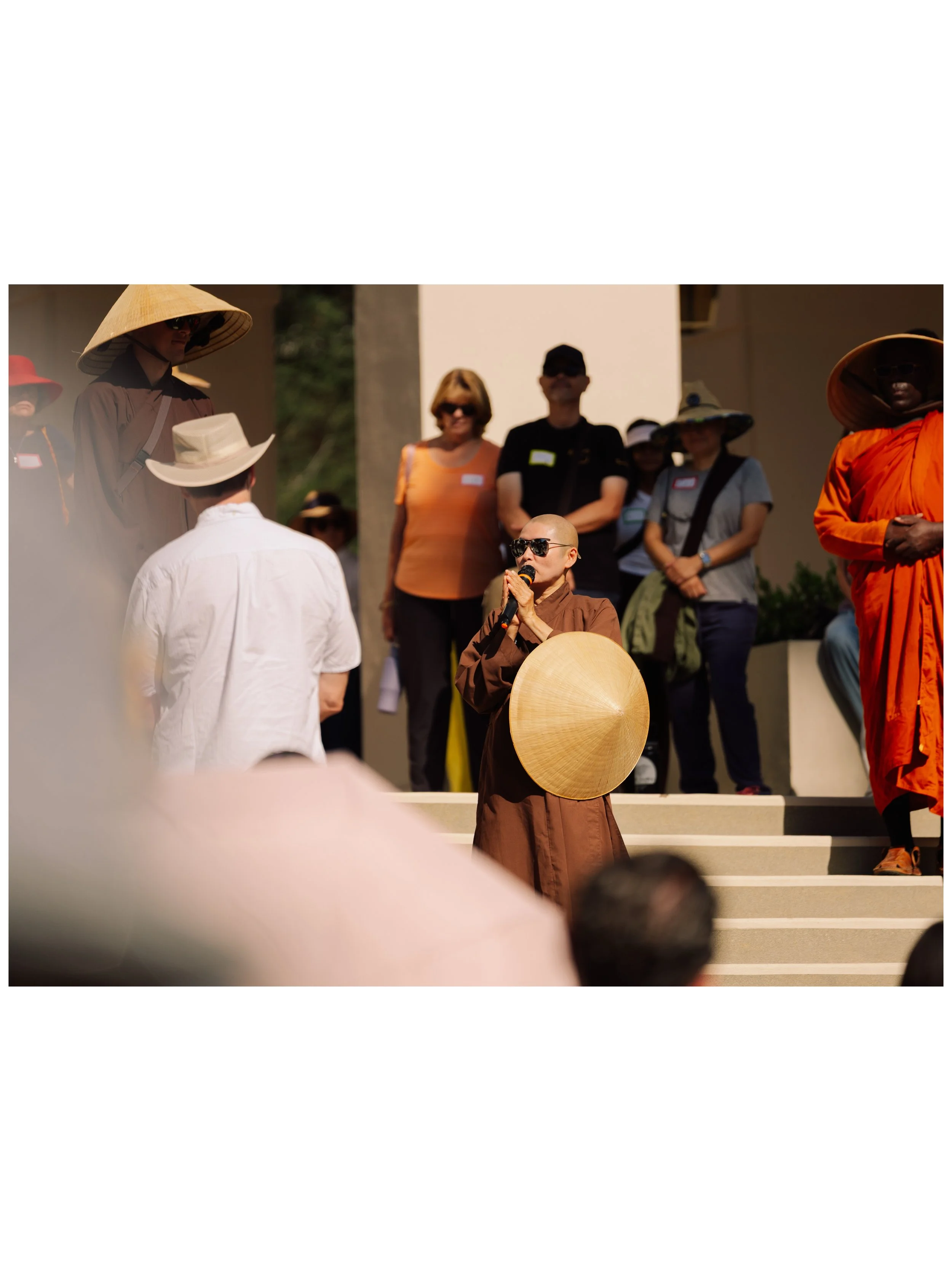
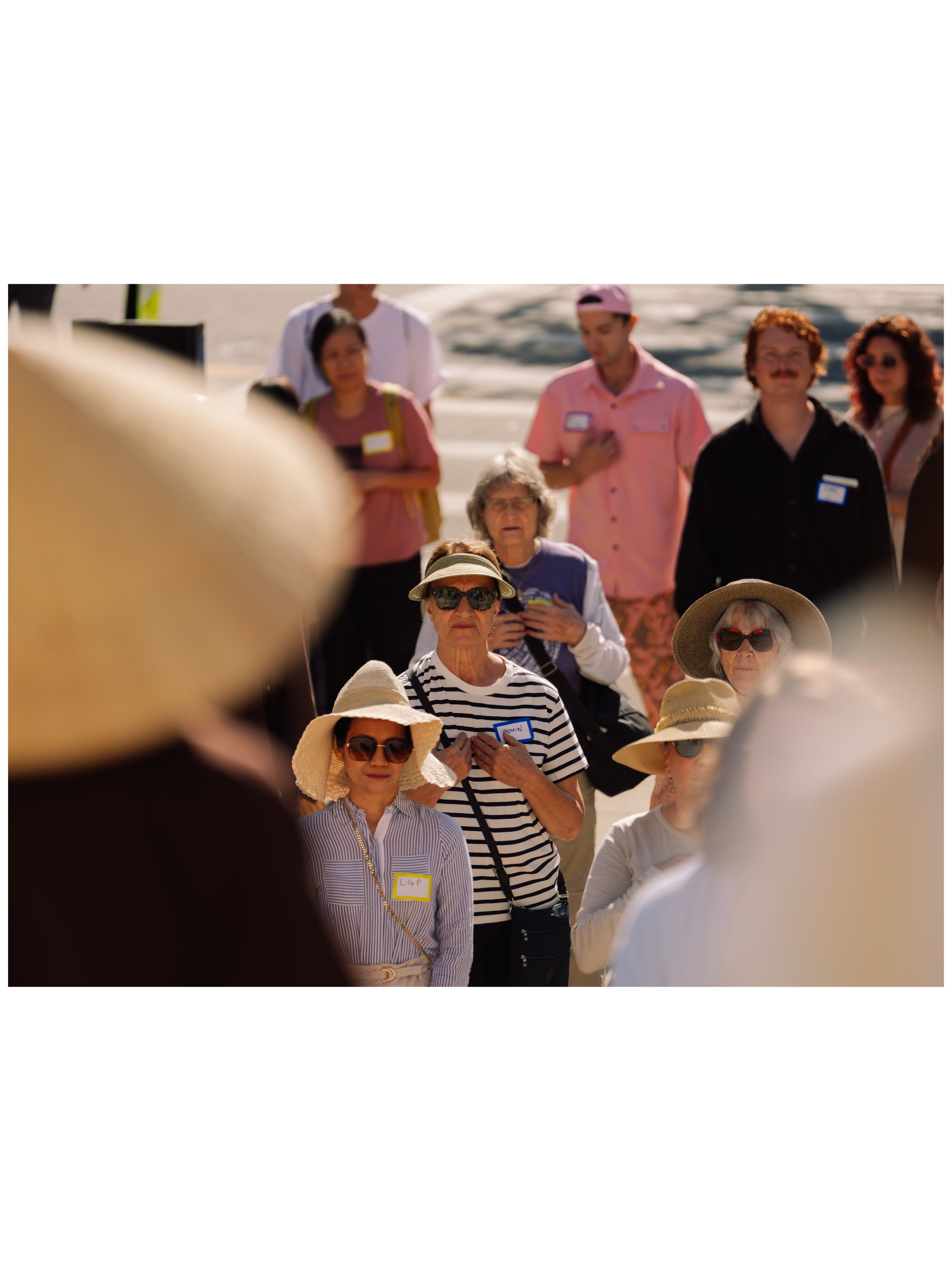
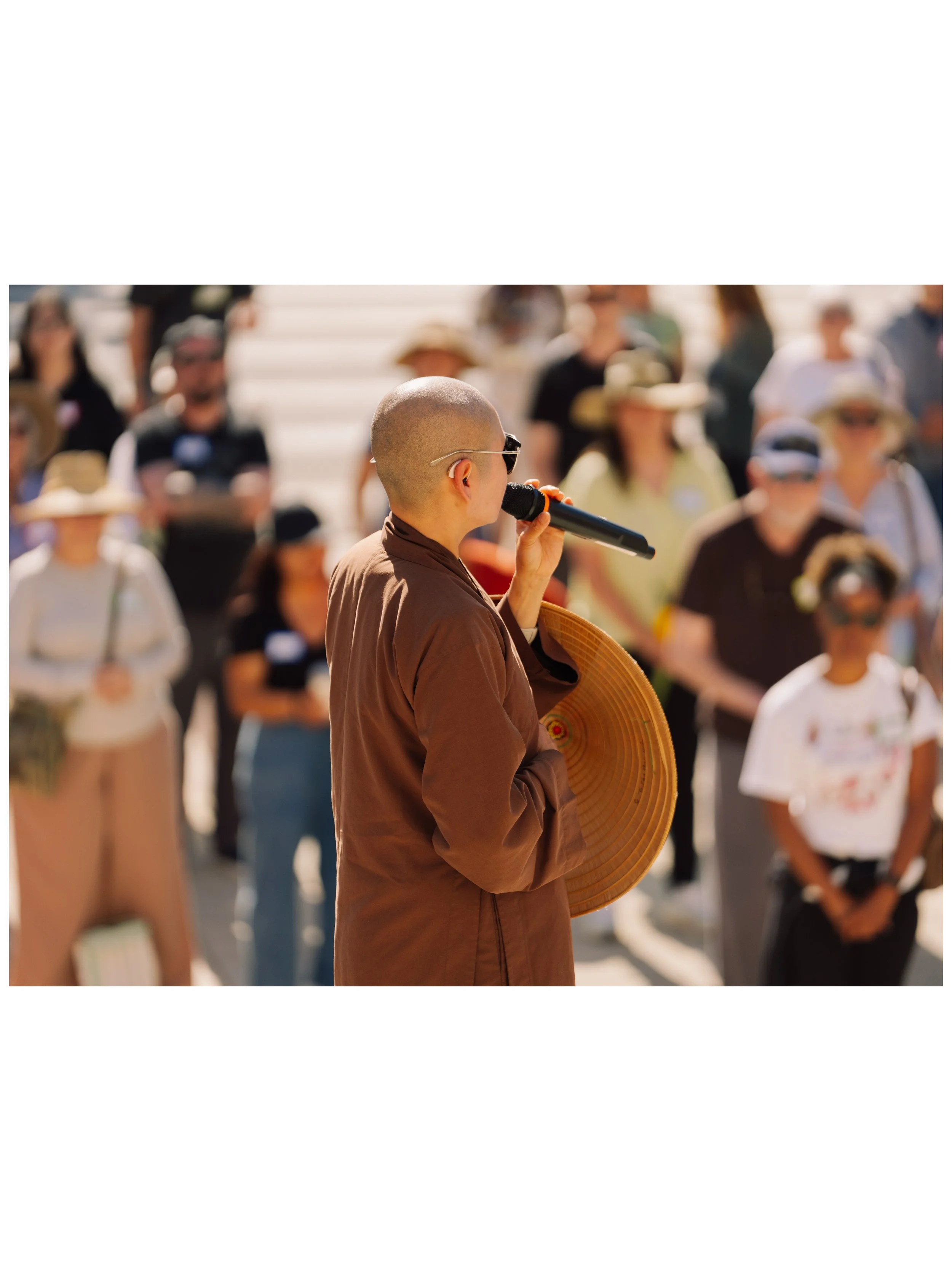
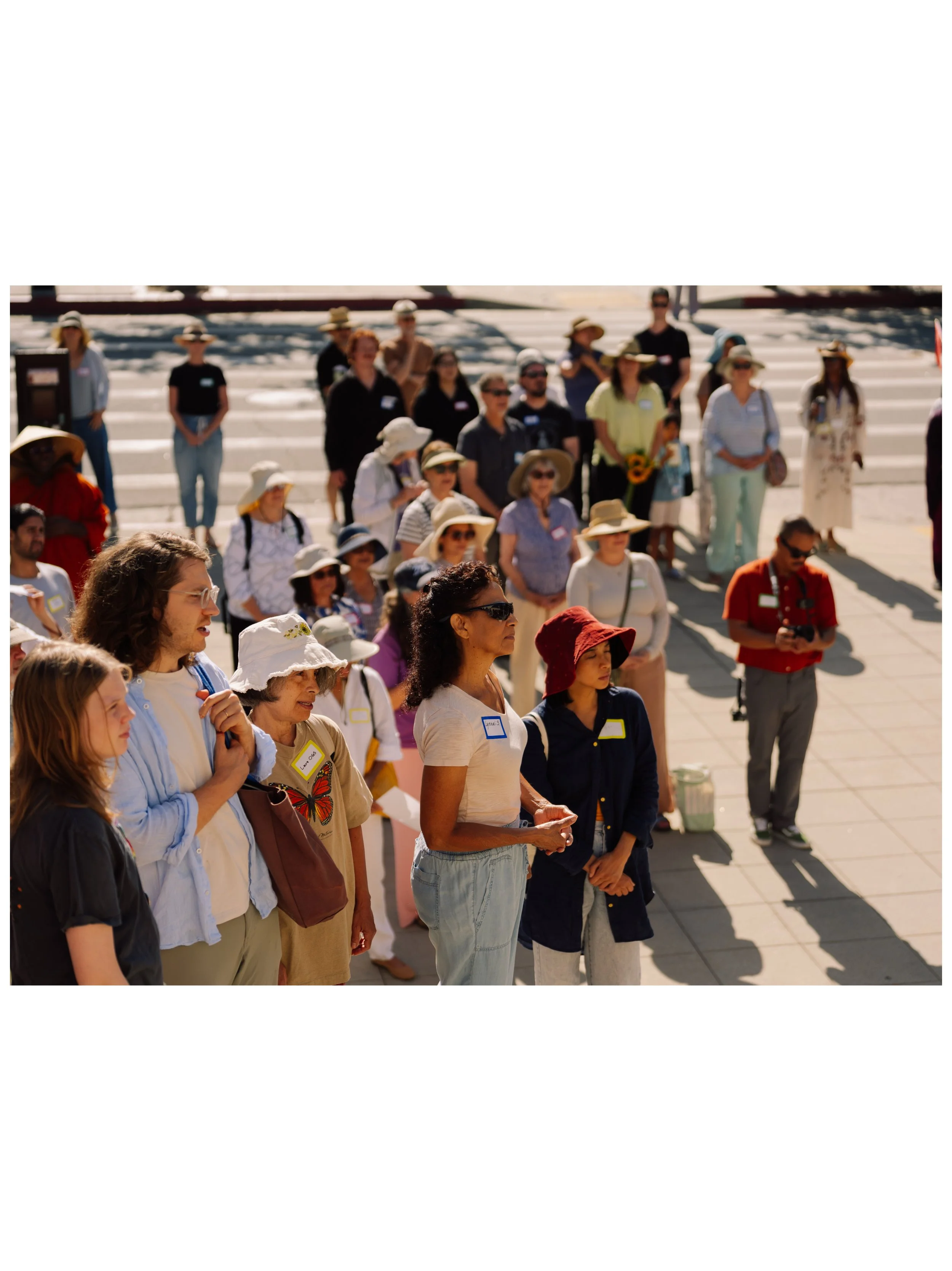
The Camera Helps Me Slow Down
Photography is often described as the act of capturing a moment. But during this event, it felt more like entering one.
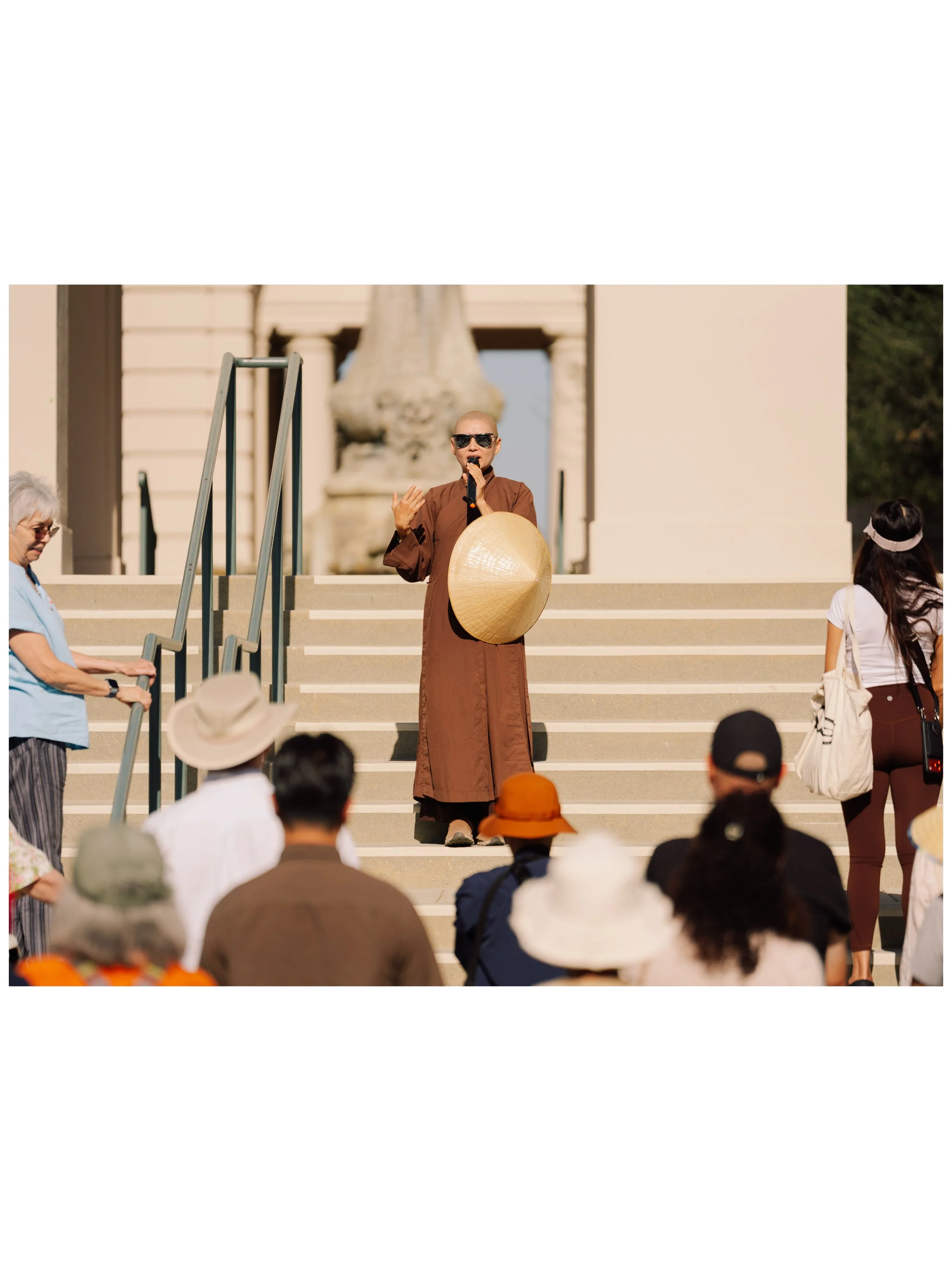
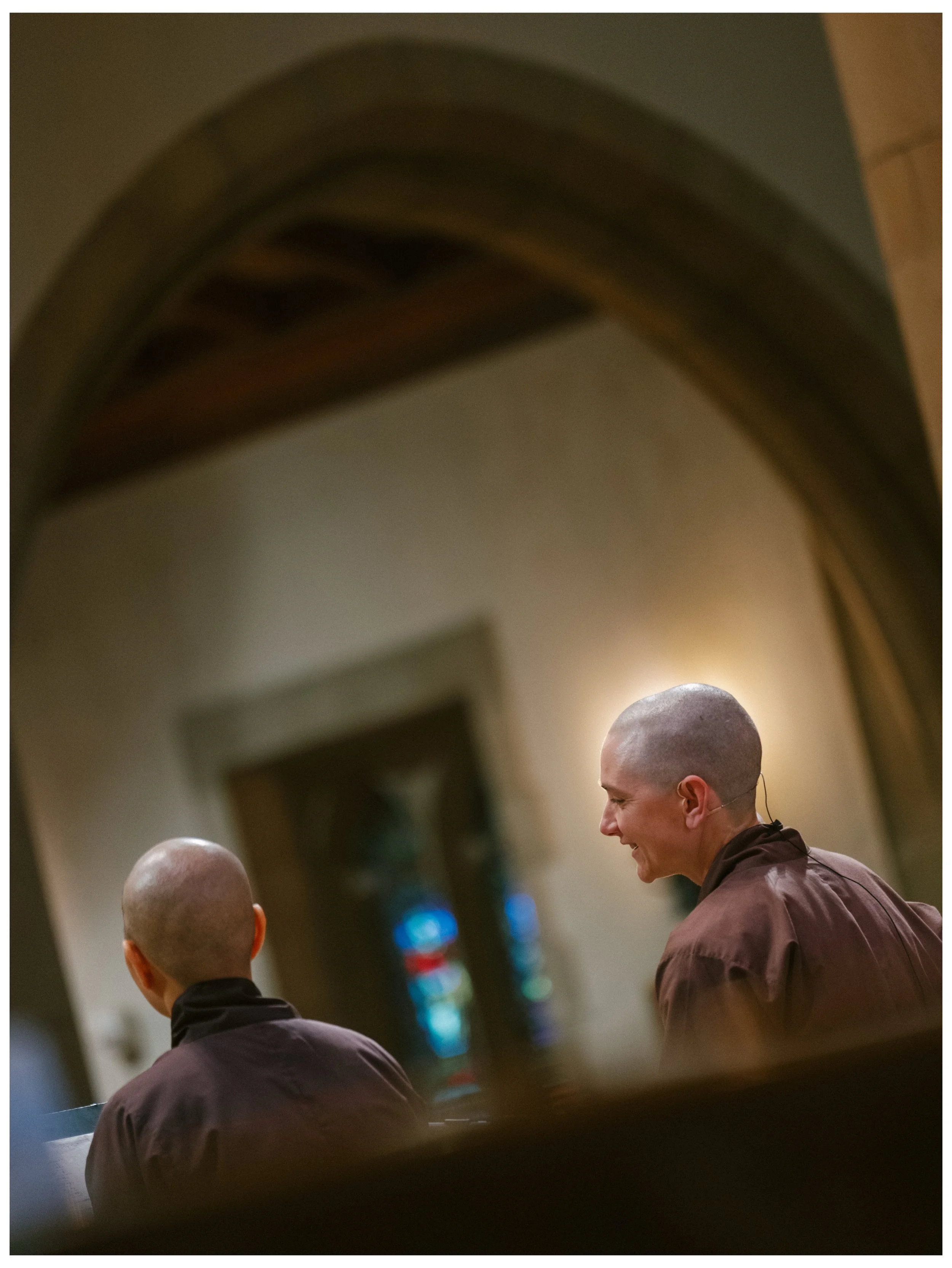
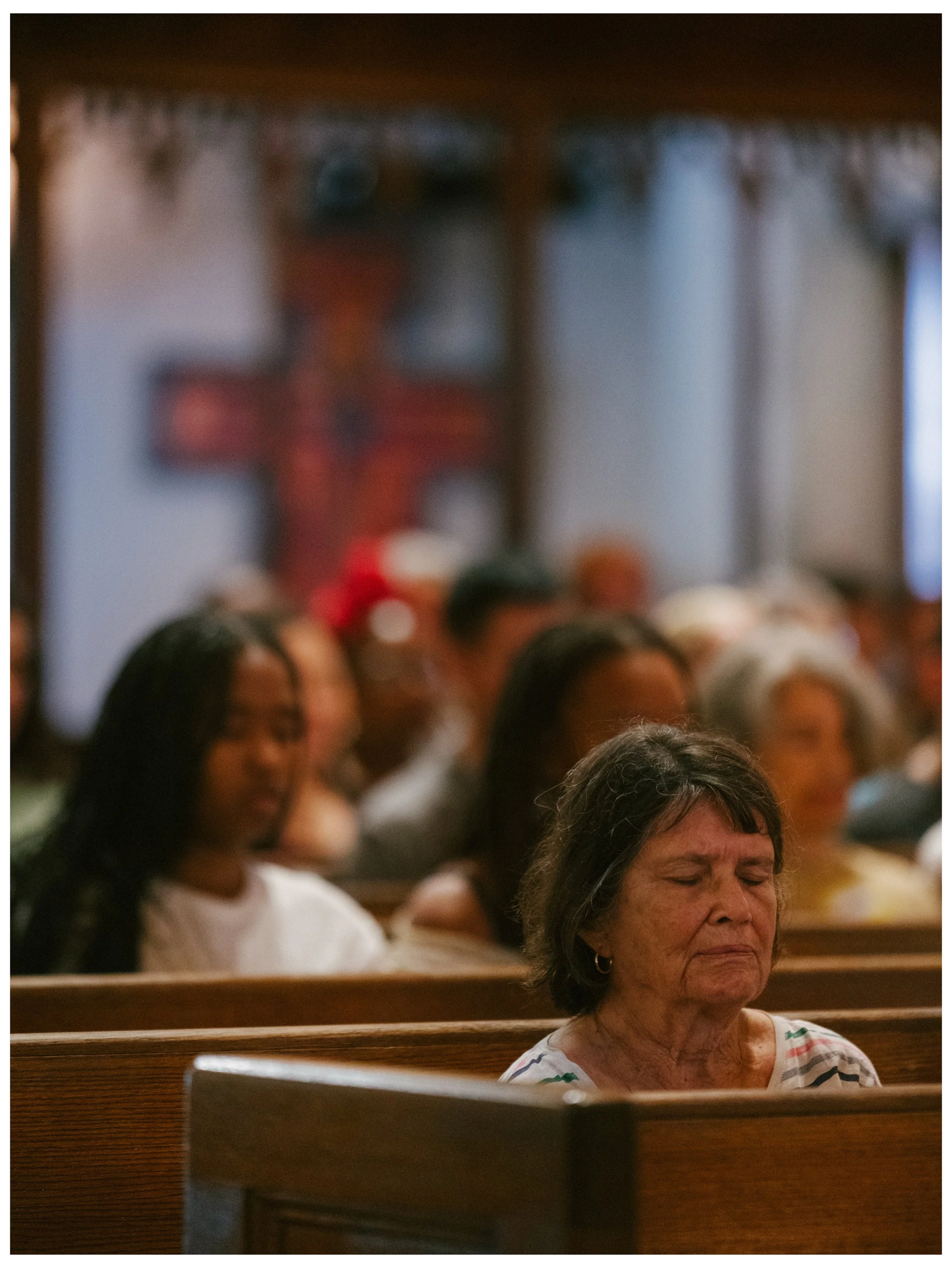
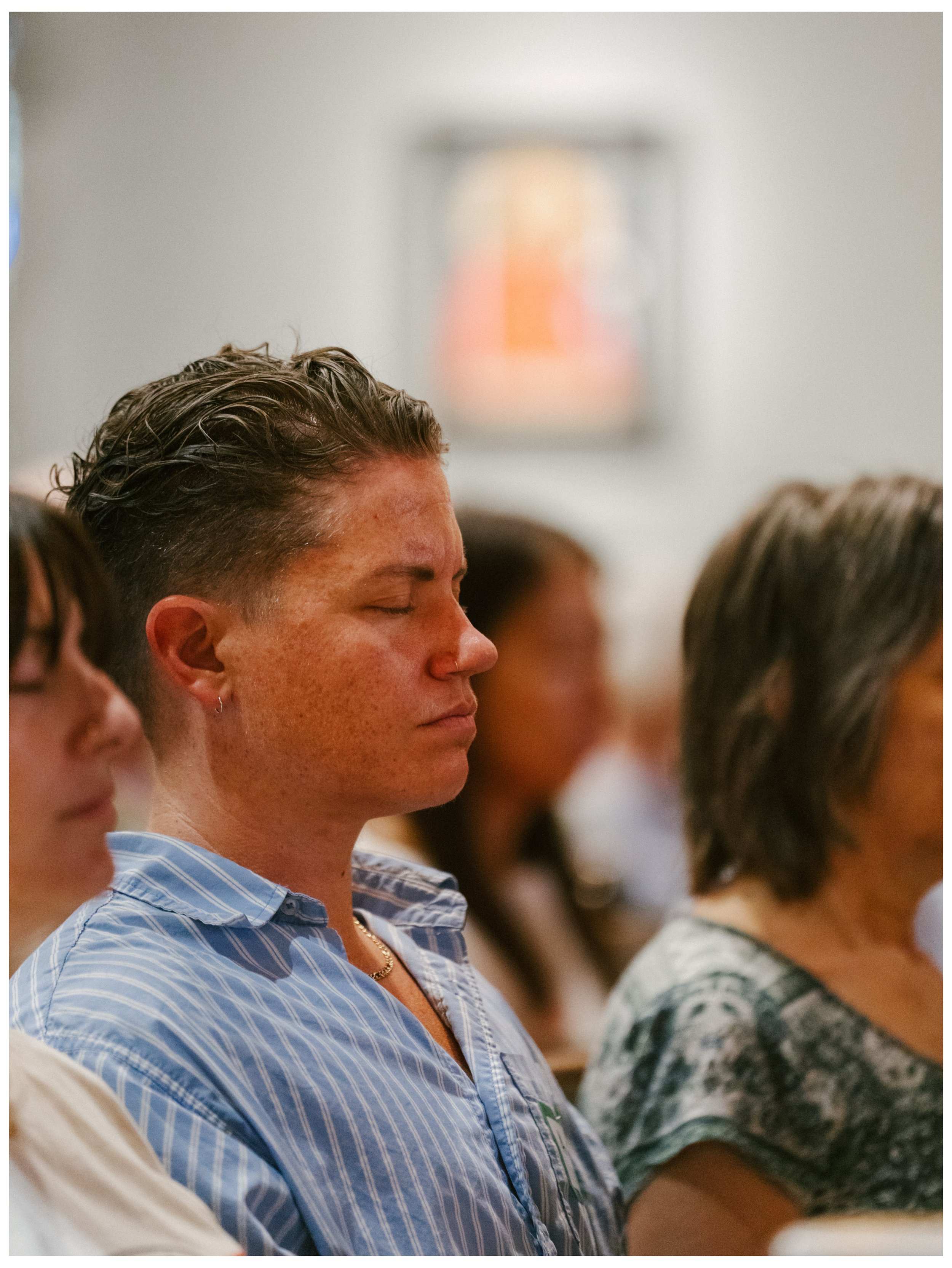
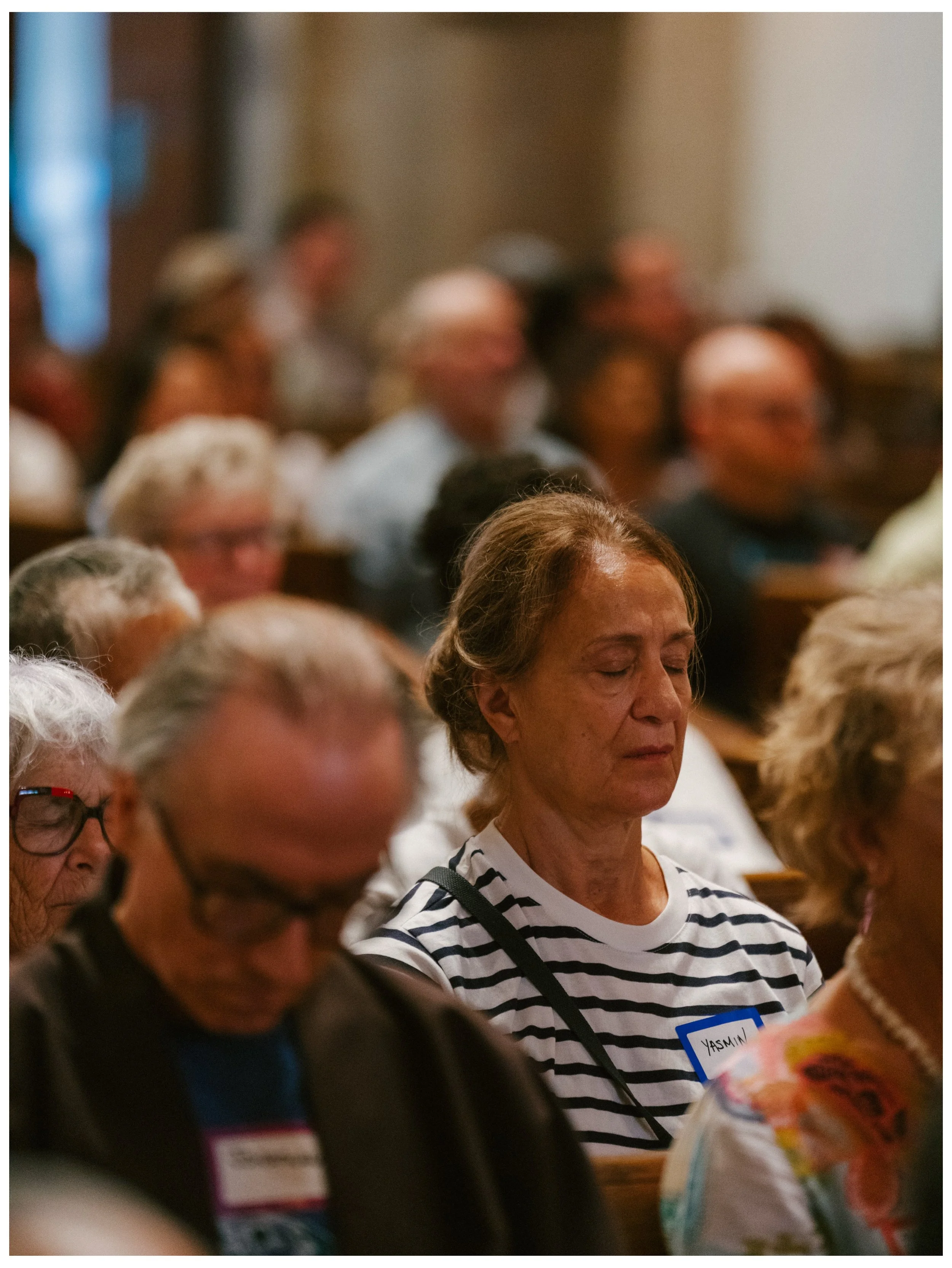
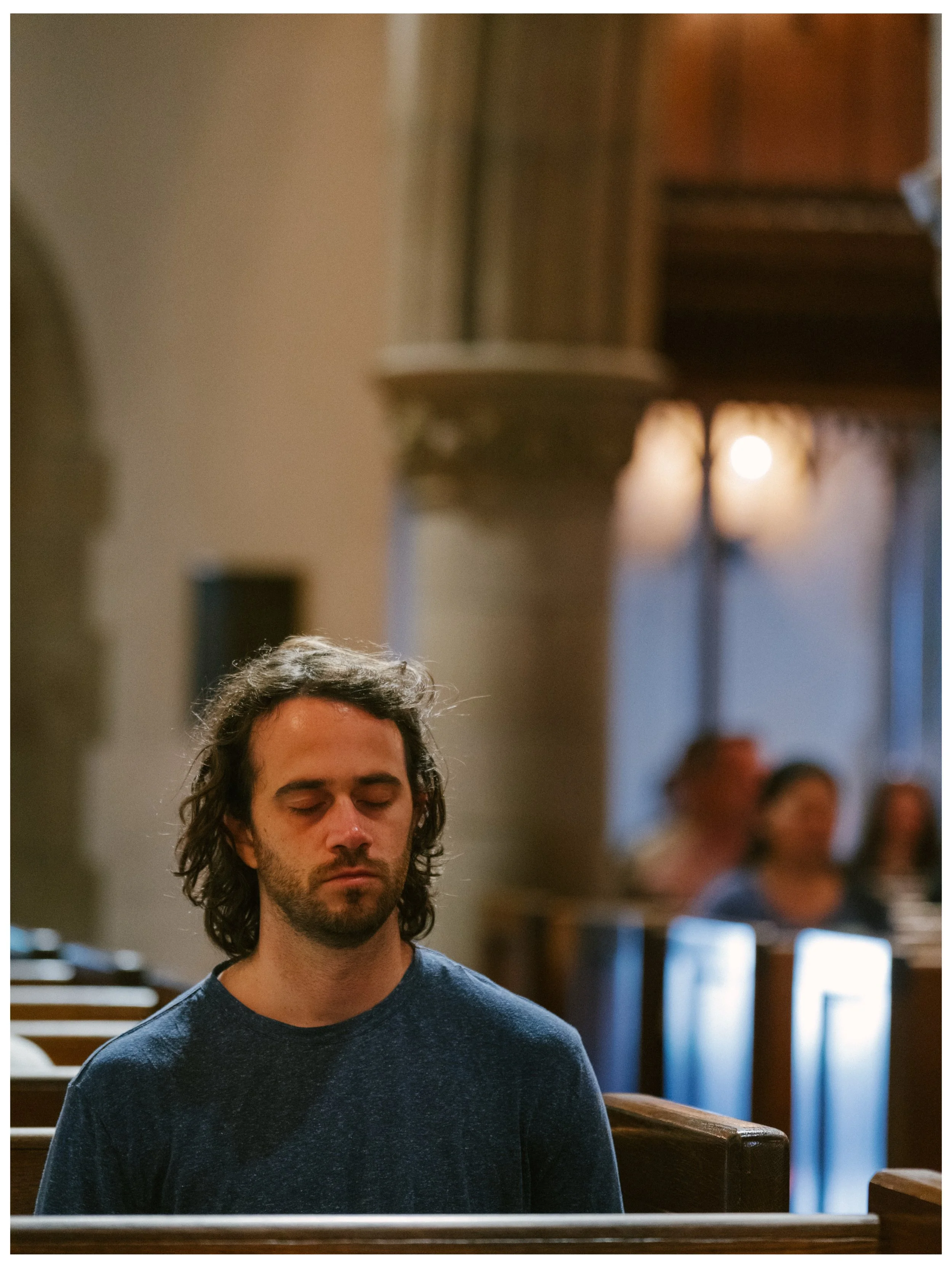
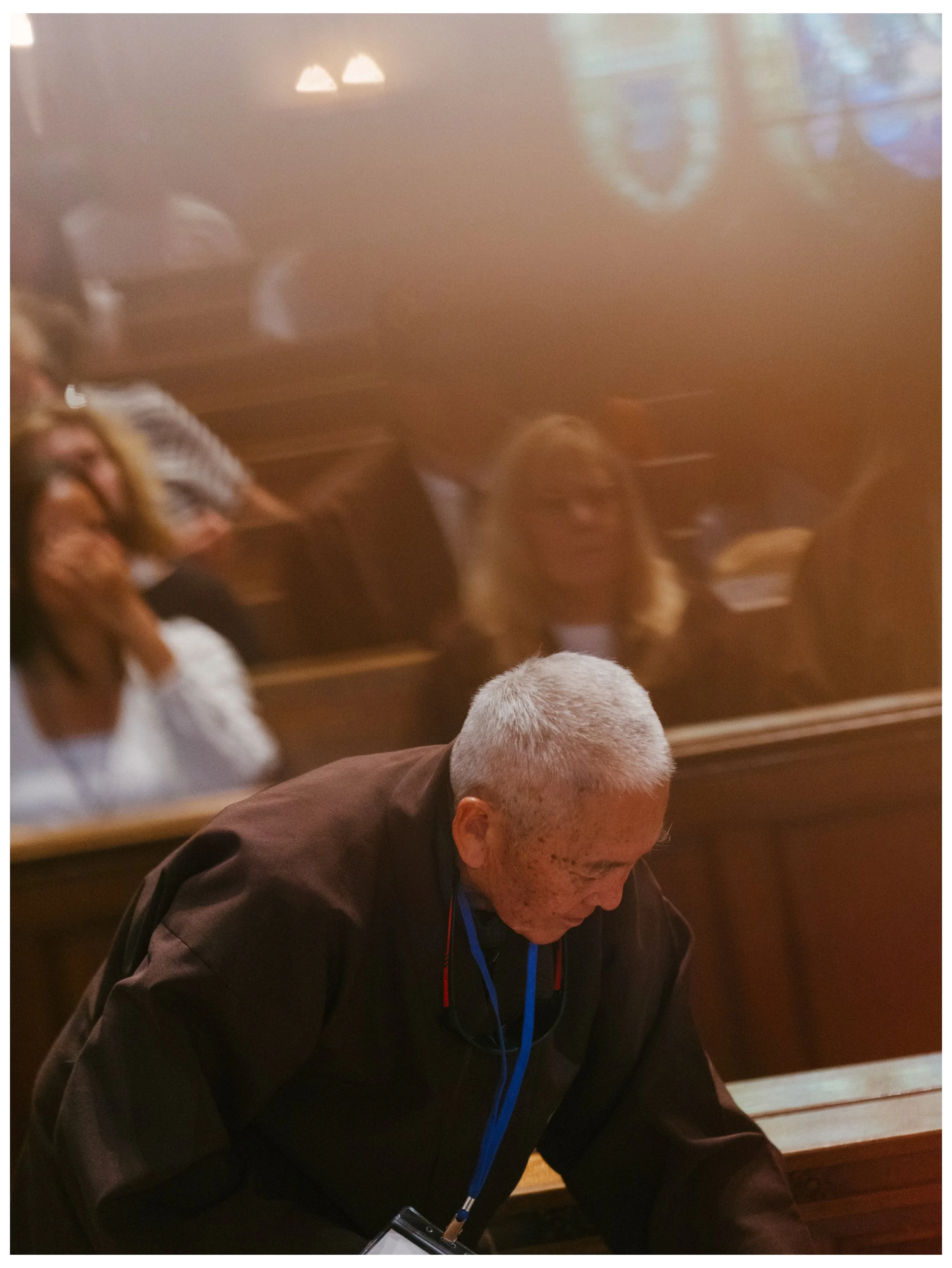
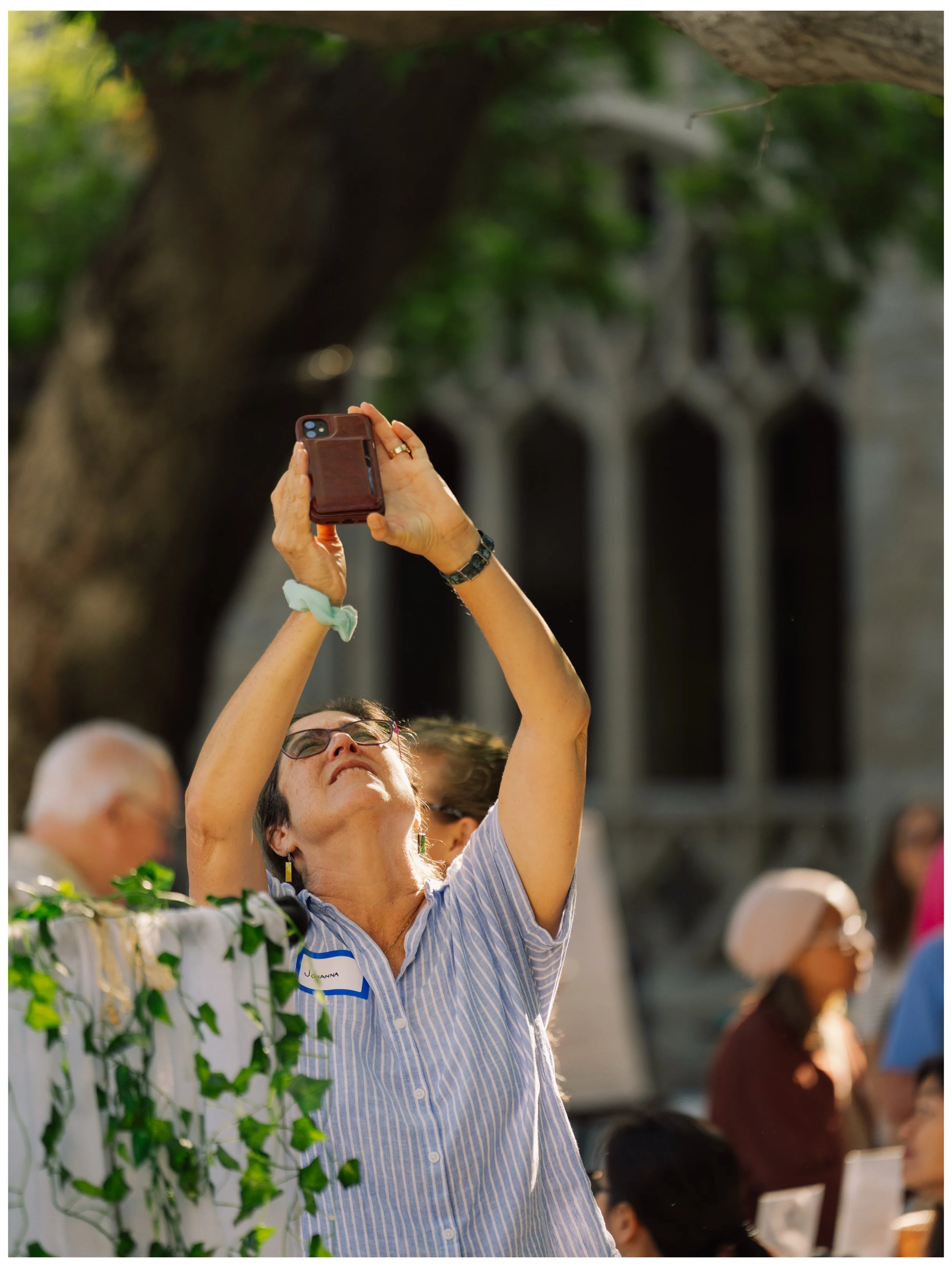
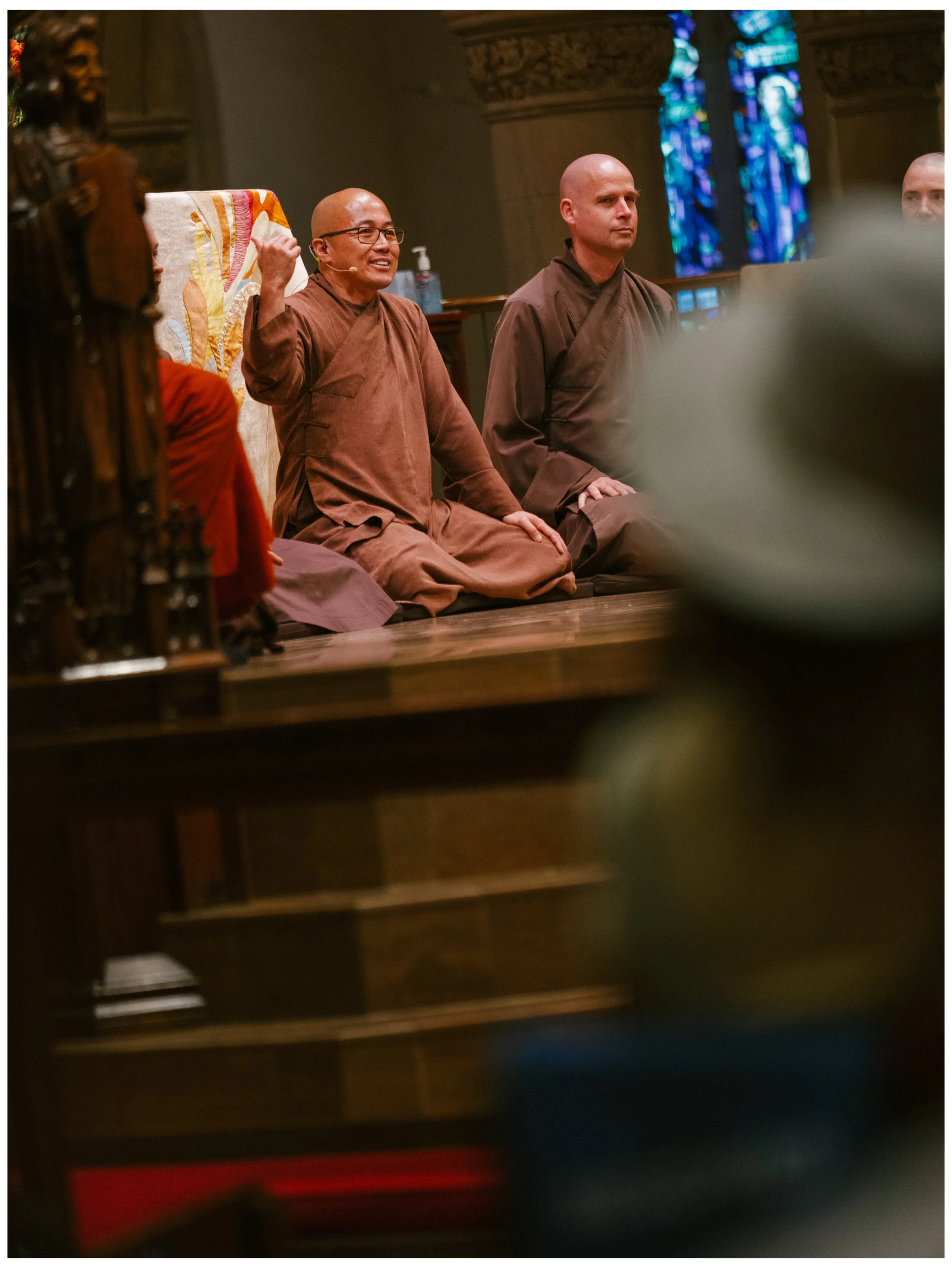
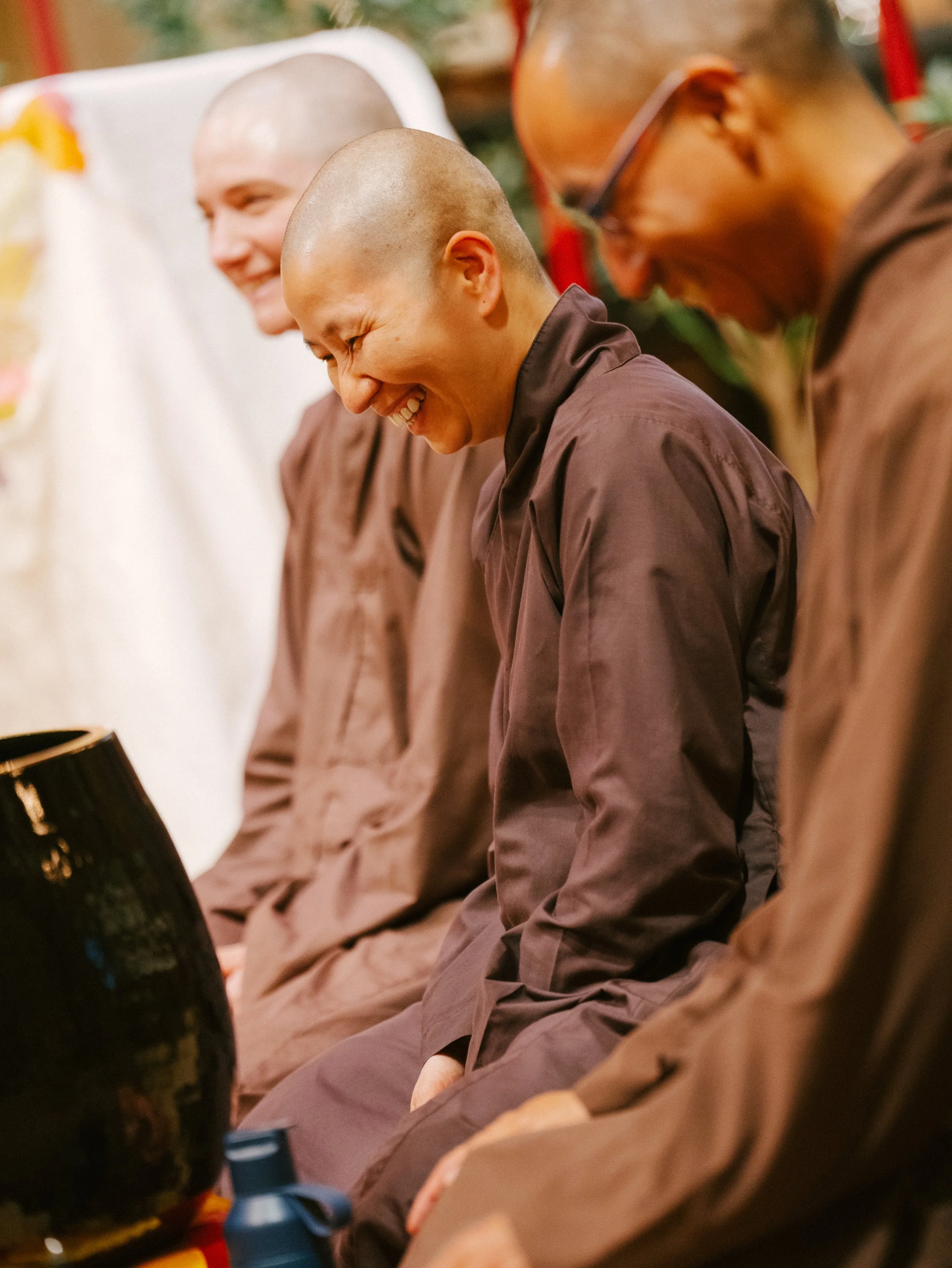
When I raise my camera, I begin to notice things that might otherwise pass too quickly: a hand resting quietly on a knee, the light falling across a brown robe, a child looking up at an adult, a face slowly softening after sitting in silence.
At the moment I press the shutter, the person in front of me and I are no longer entirely separate. For an instant, I feel that I enter the image and the image enters me.
This reminds me of something I have encountered both in Yogācāra teachings and in Thầy’s Understanding Our Minds: the mind and the object of mind inter-are. What I see is not simply an independent object standing outside of me. Seeing is a meeting. The photograph arises from the person before the camera, from my own state of mind, and from the relationship between us in that particular moment.
Perhaps this is why photography can feel like a form of practice for me. If my mind is hurried, I see hurriedly. If I am distracted, I photograph only the surface. But when I can become quiet and still enough, the boundary between observer and observed begins to soften. I am not taking something from another person. For one brief moment, we are participating in the same experience.
The photograph is what remains from that meeting.
The Space That Allows Us to Breathe
Another teaching that quietly shaped the way I photographed this day came from our most venerable Thích Phước Tịnh at Deer Park Monastery. In The Ten Oxherding Paintings, translated from a Dharma talk he offered at Deer Park, he spoke about the importance of space.
Our mental well-being depends on having some space within us. When there is space, possibility can arise. Yet in everyday life, we are often busy searching for things to fill every empty place—activities, information, entertainment, plans, and worries. Sometimes this constant filling is a way of avoiding the wounds or the sense of emptiness inside us. Only when we stop and become quiet can space begin to appear. And when we are able to recognize that space, we may also begin to see more deeply into our true nature.
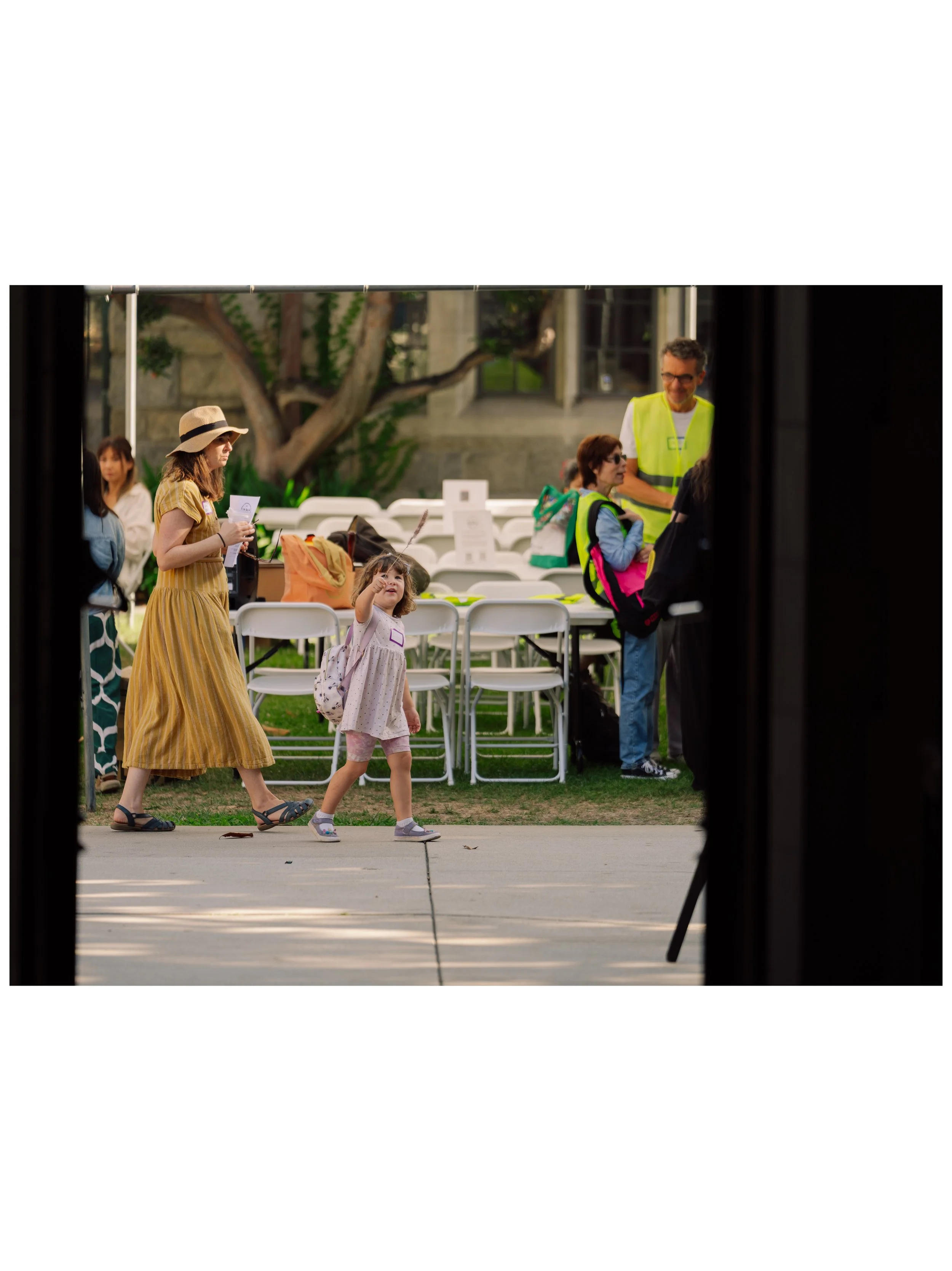
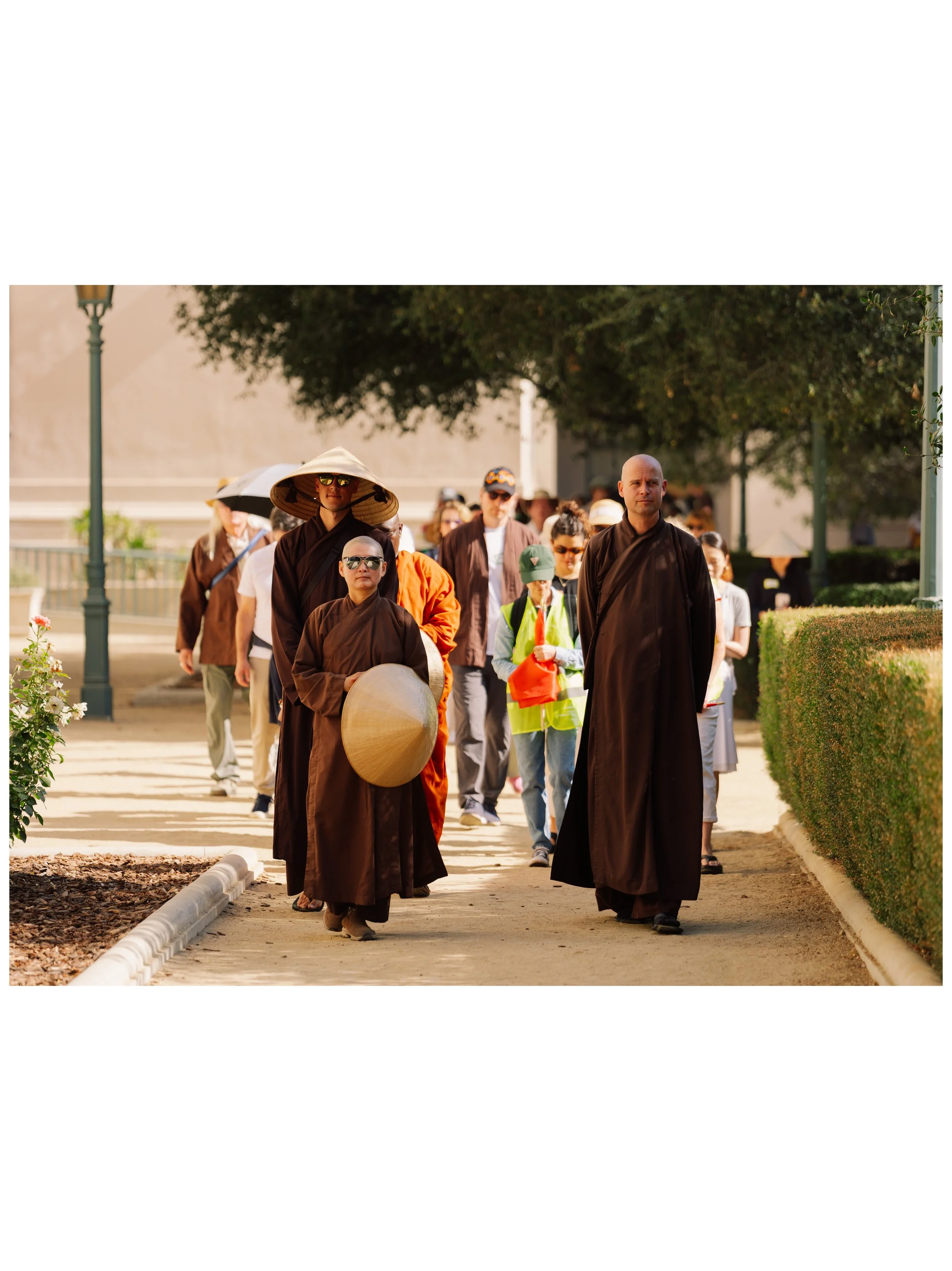
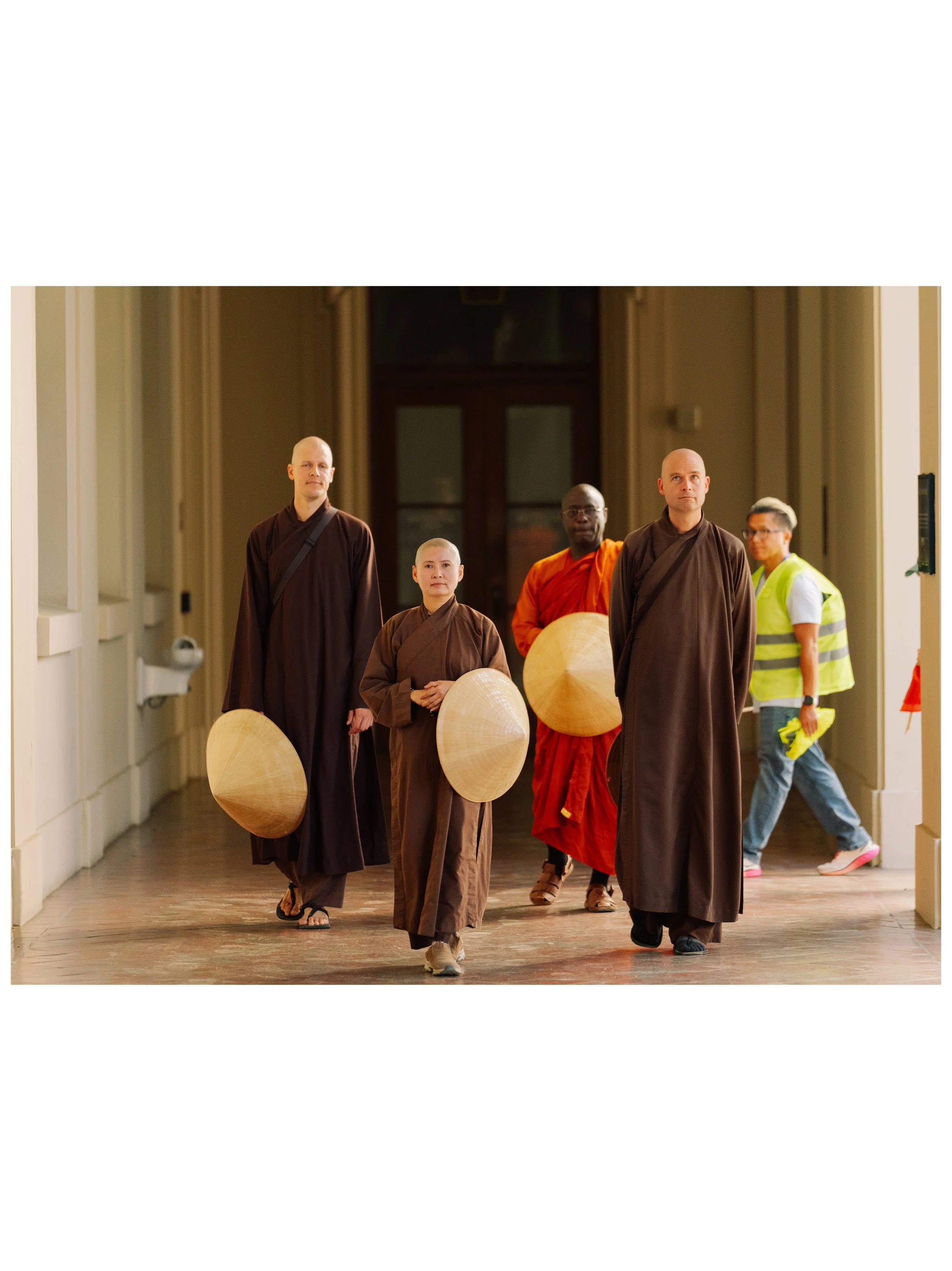
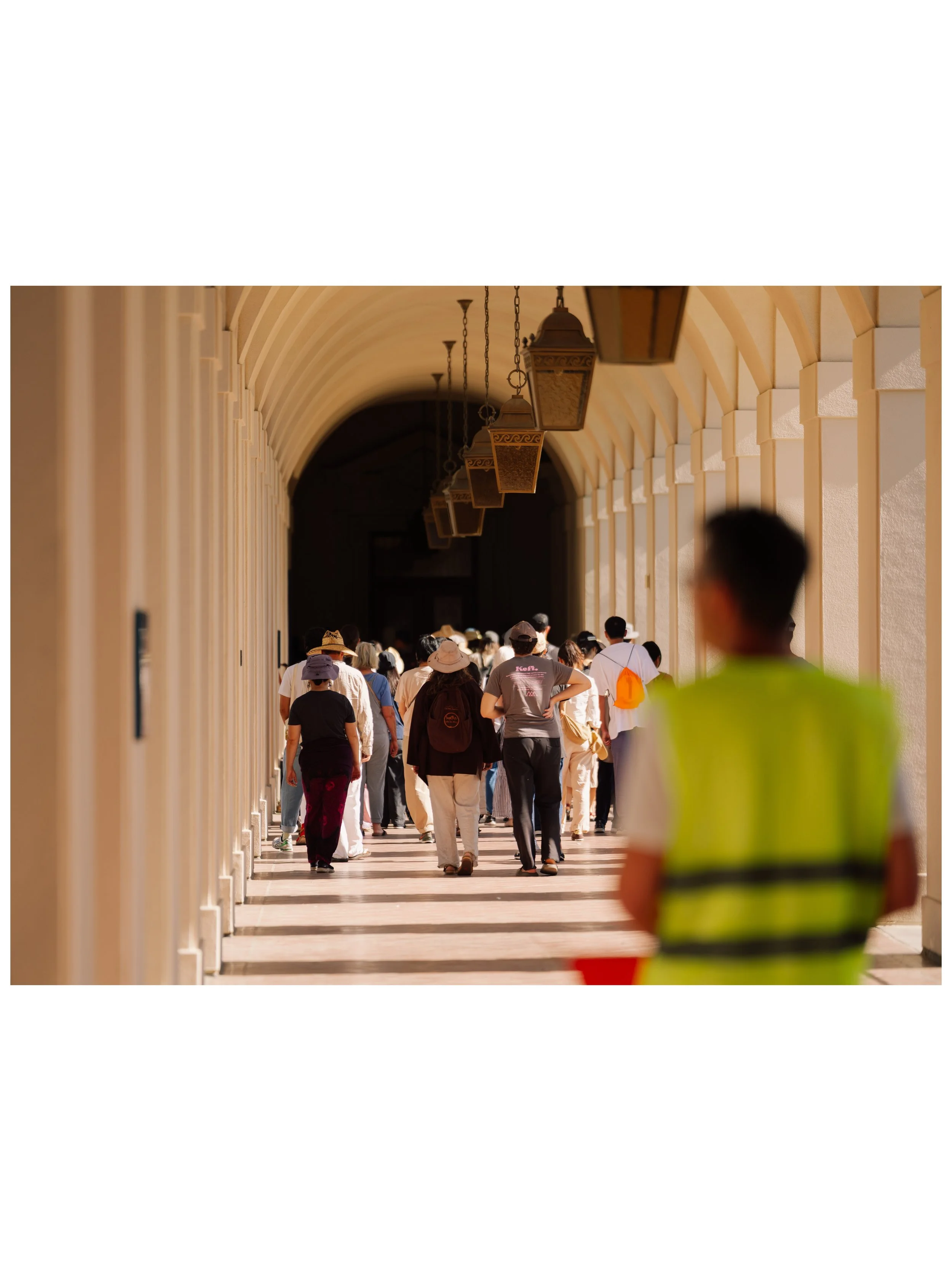
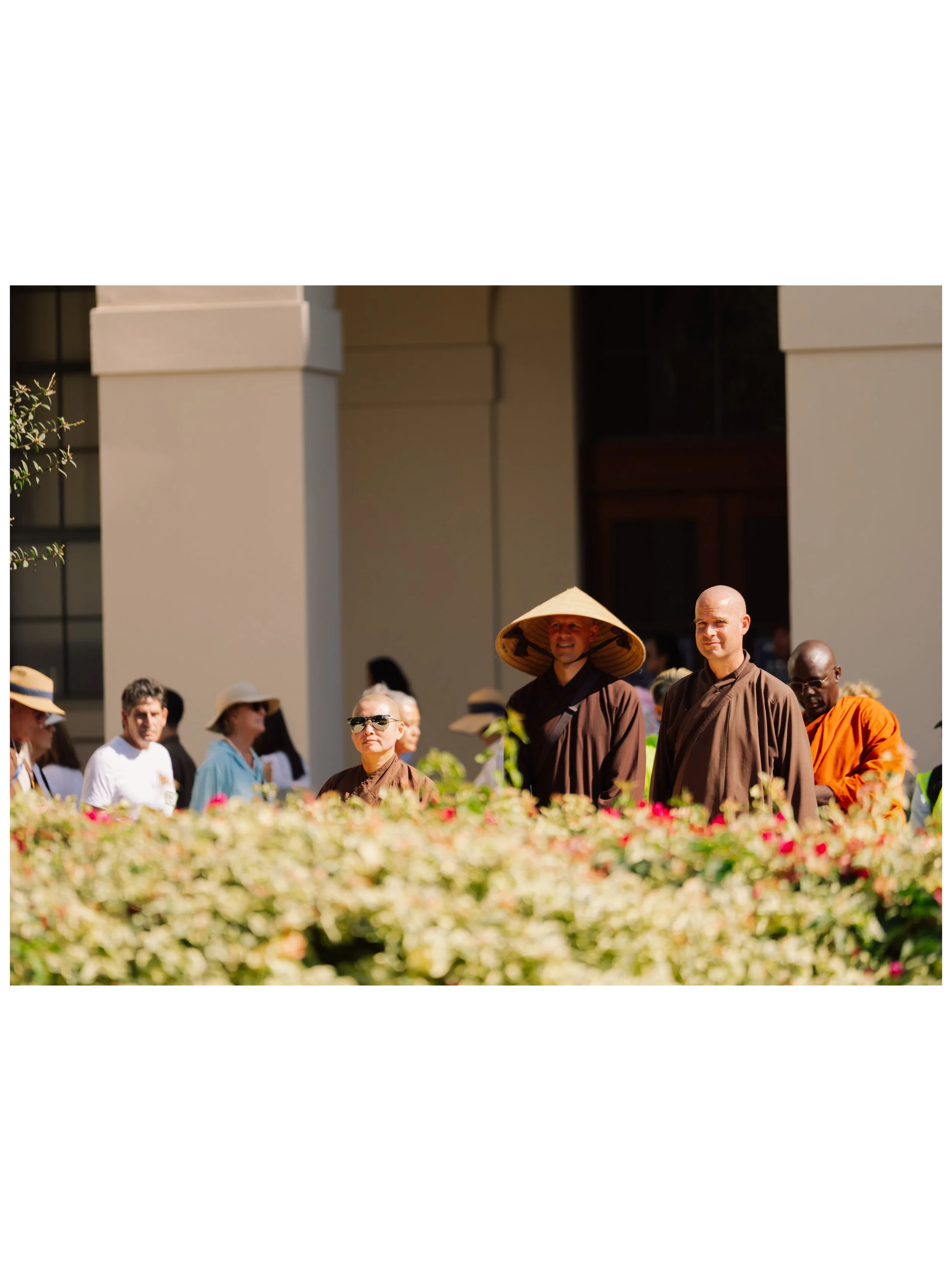
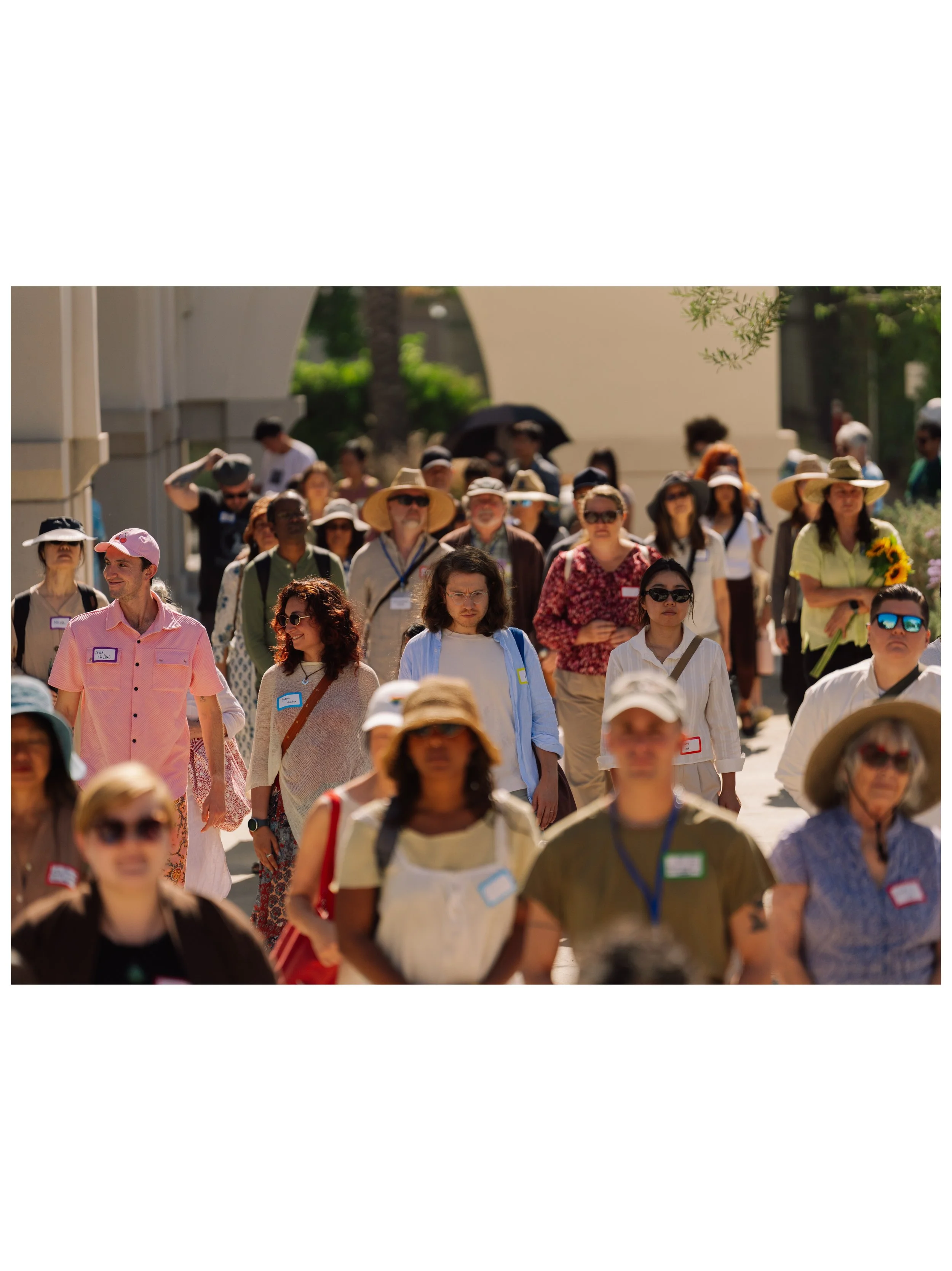
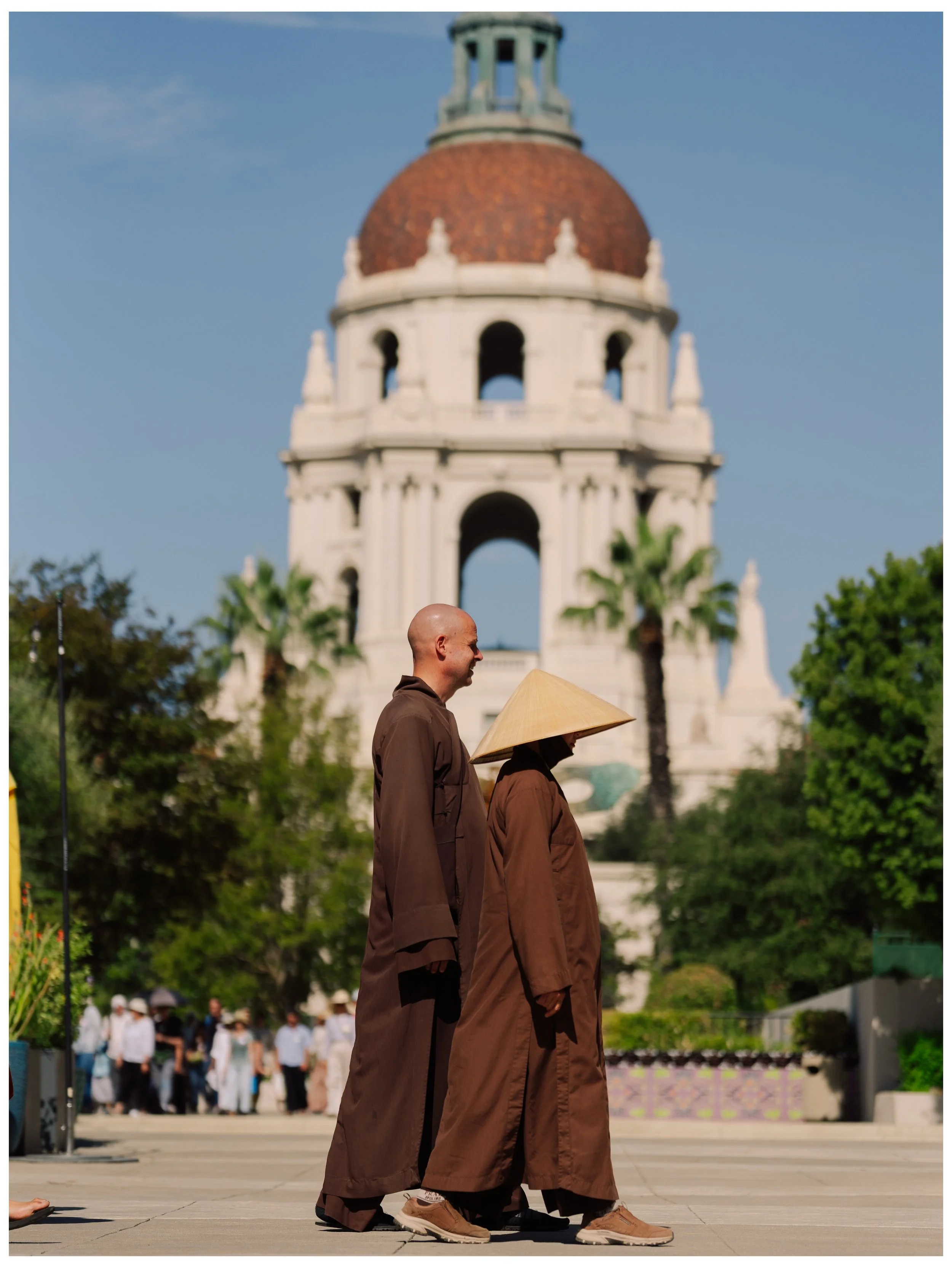
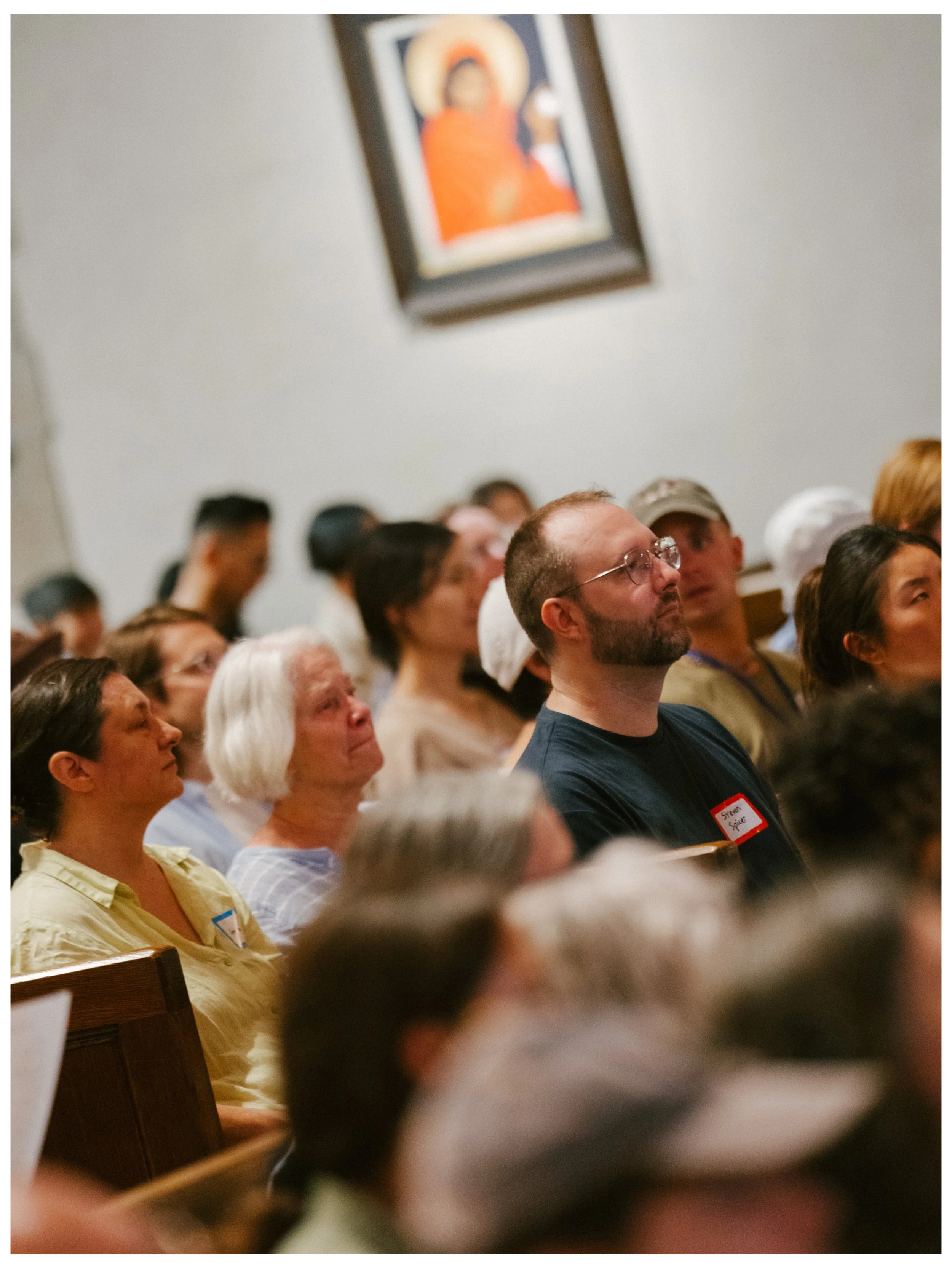
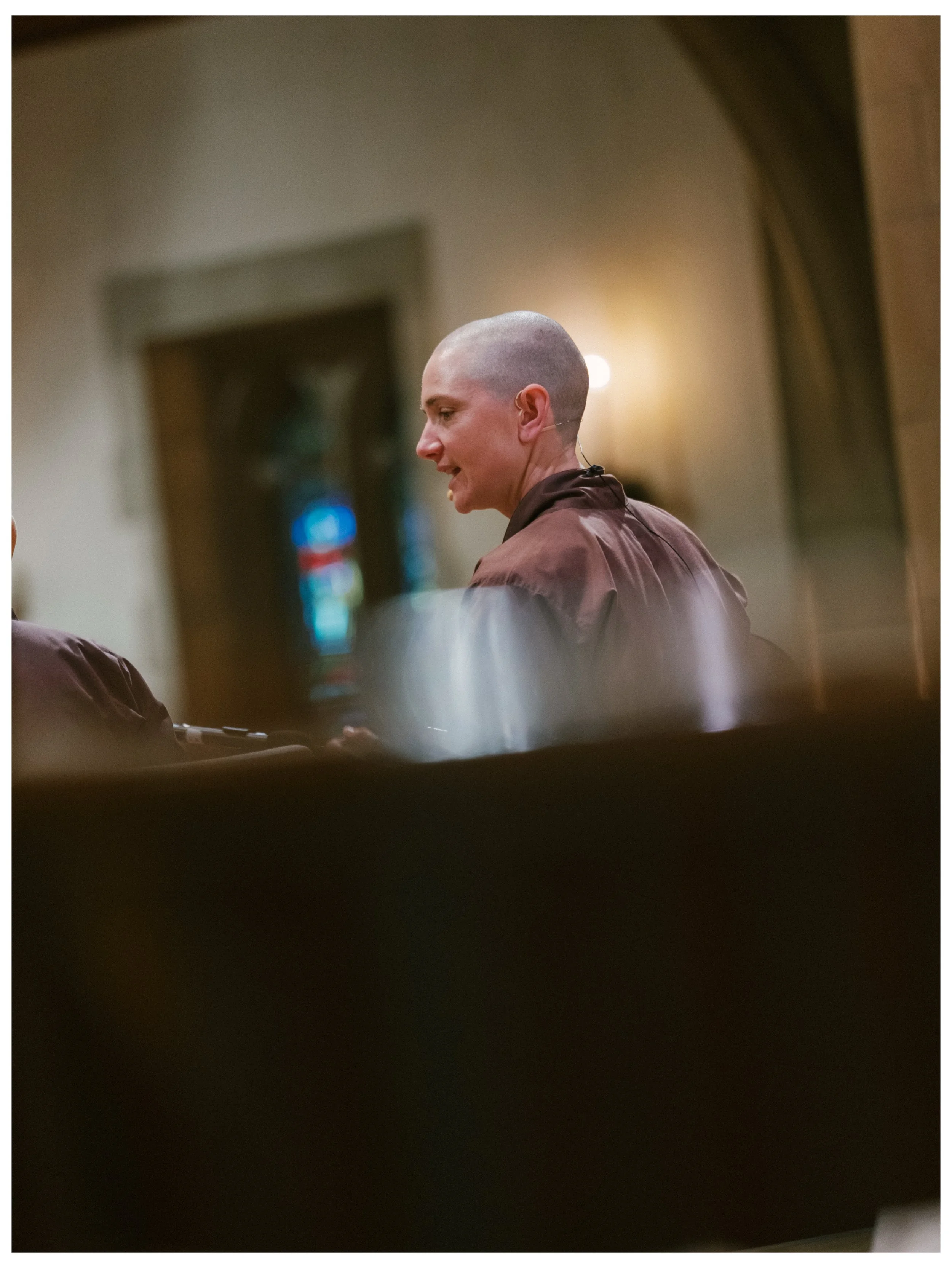
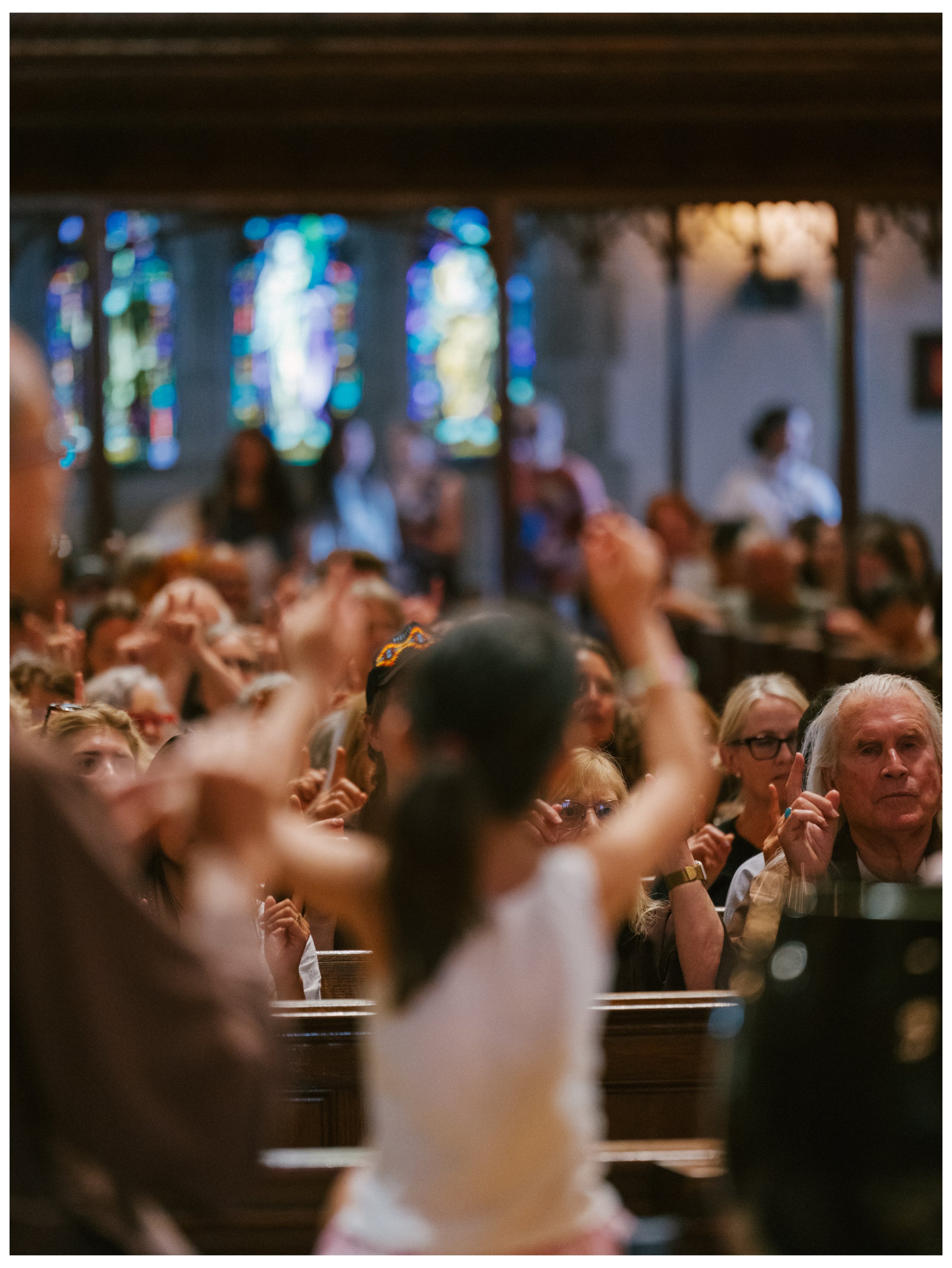
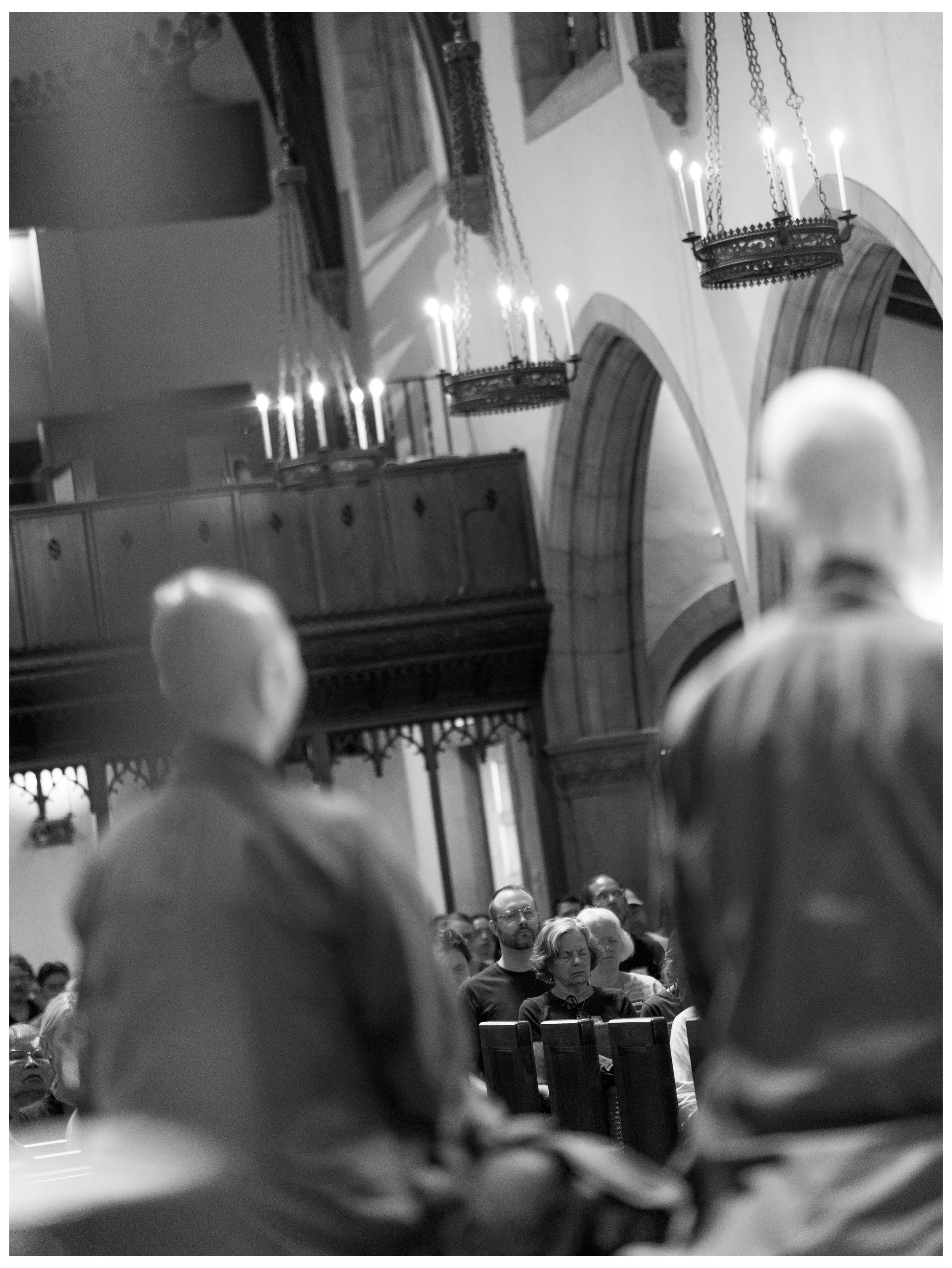
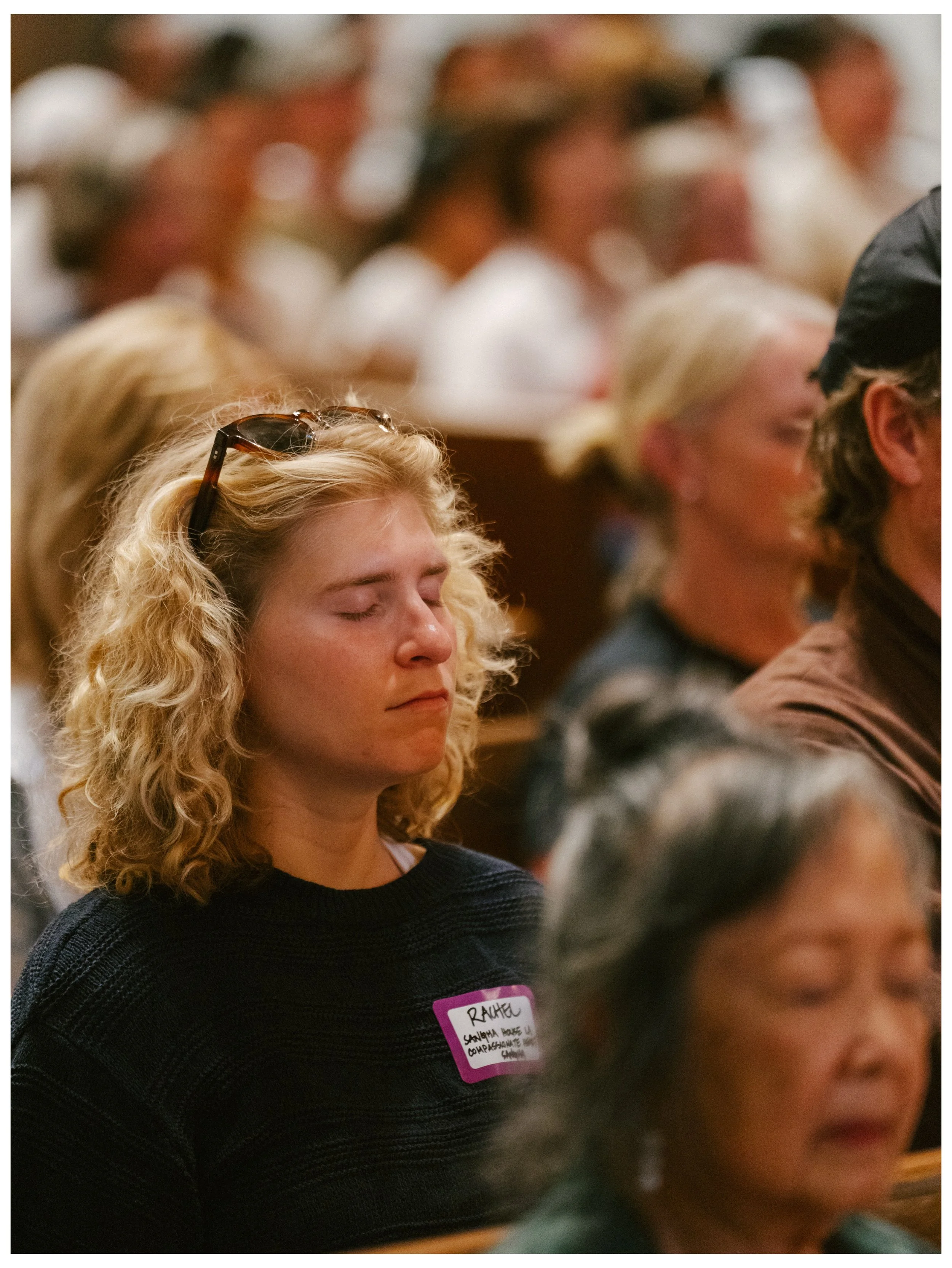
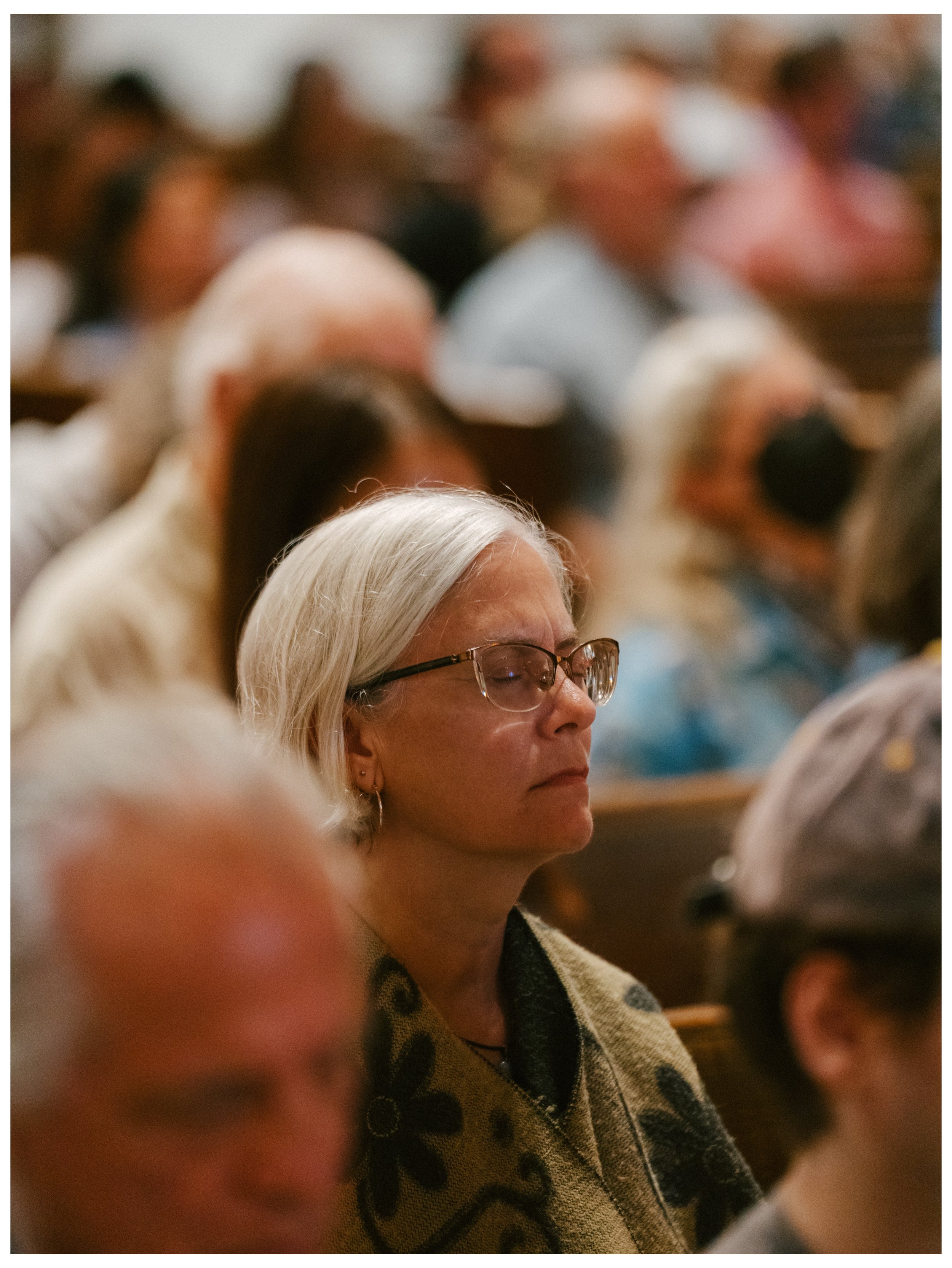
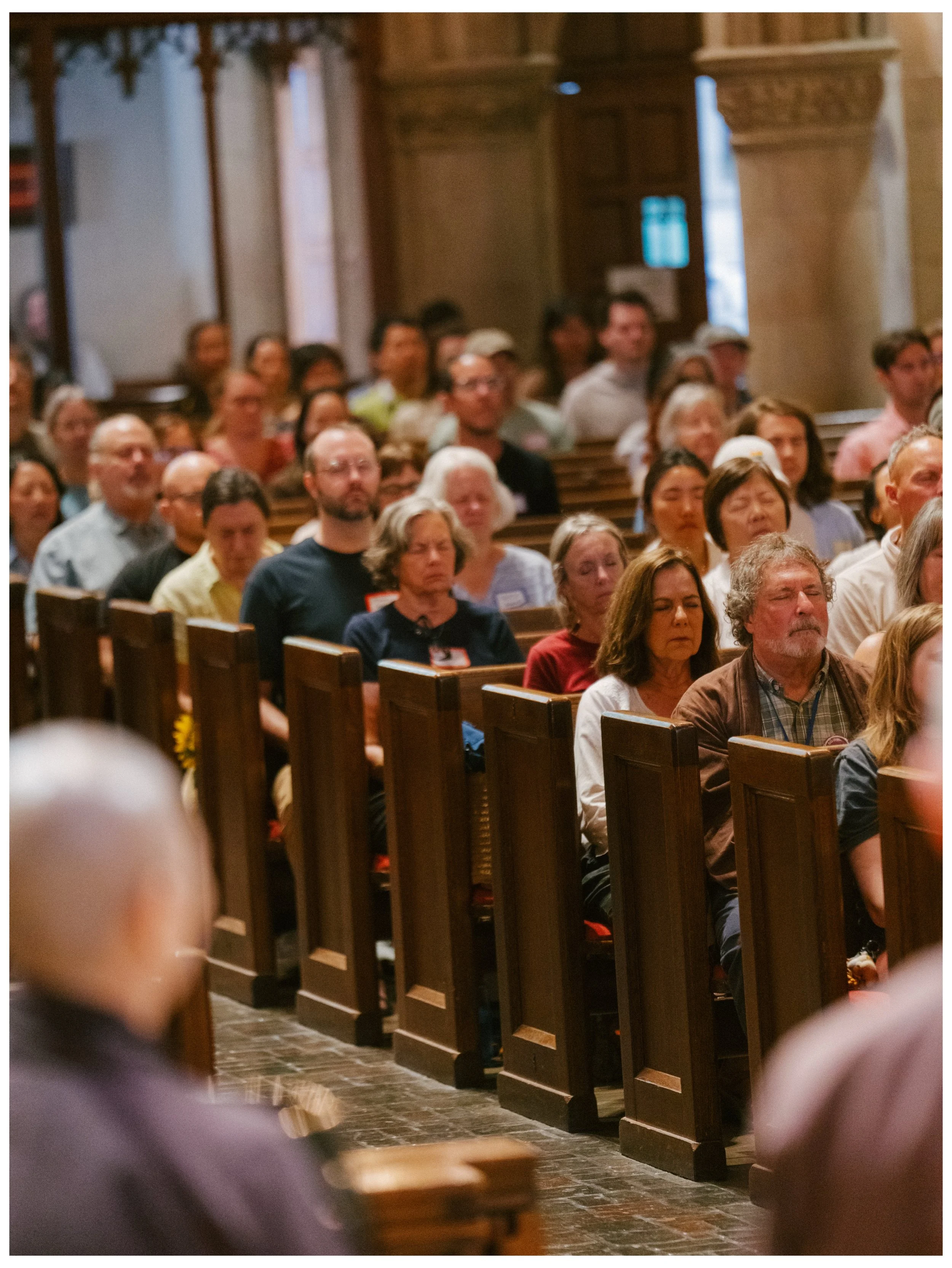
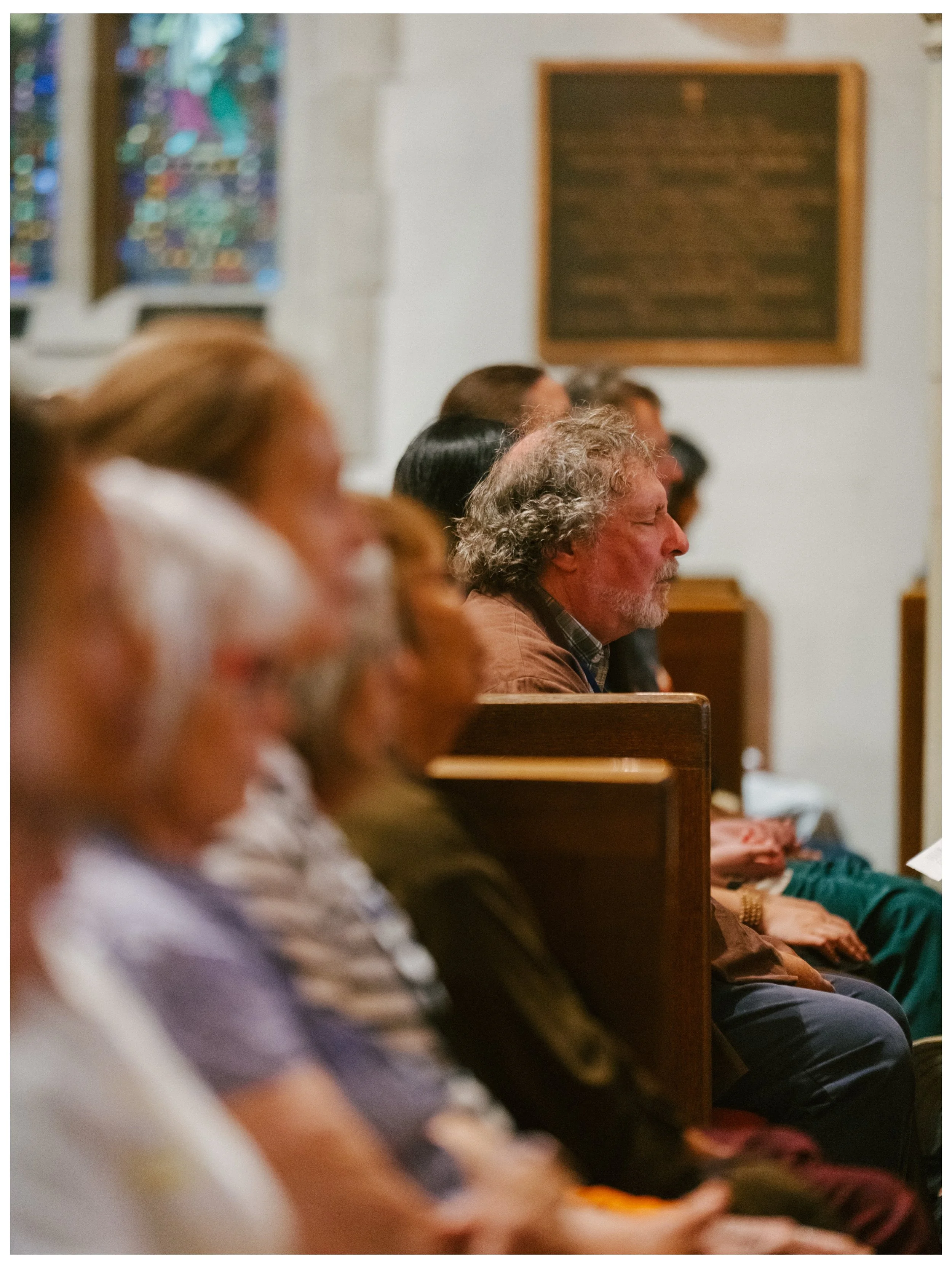
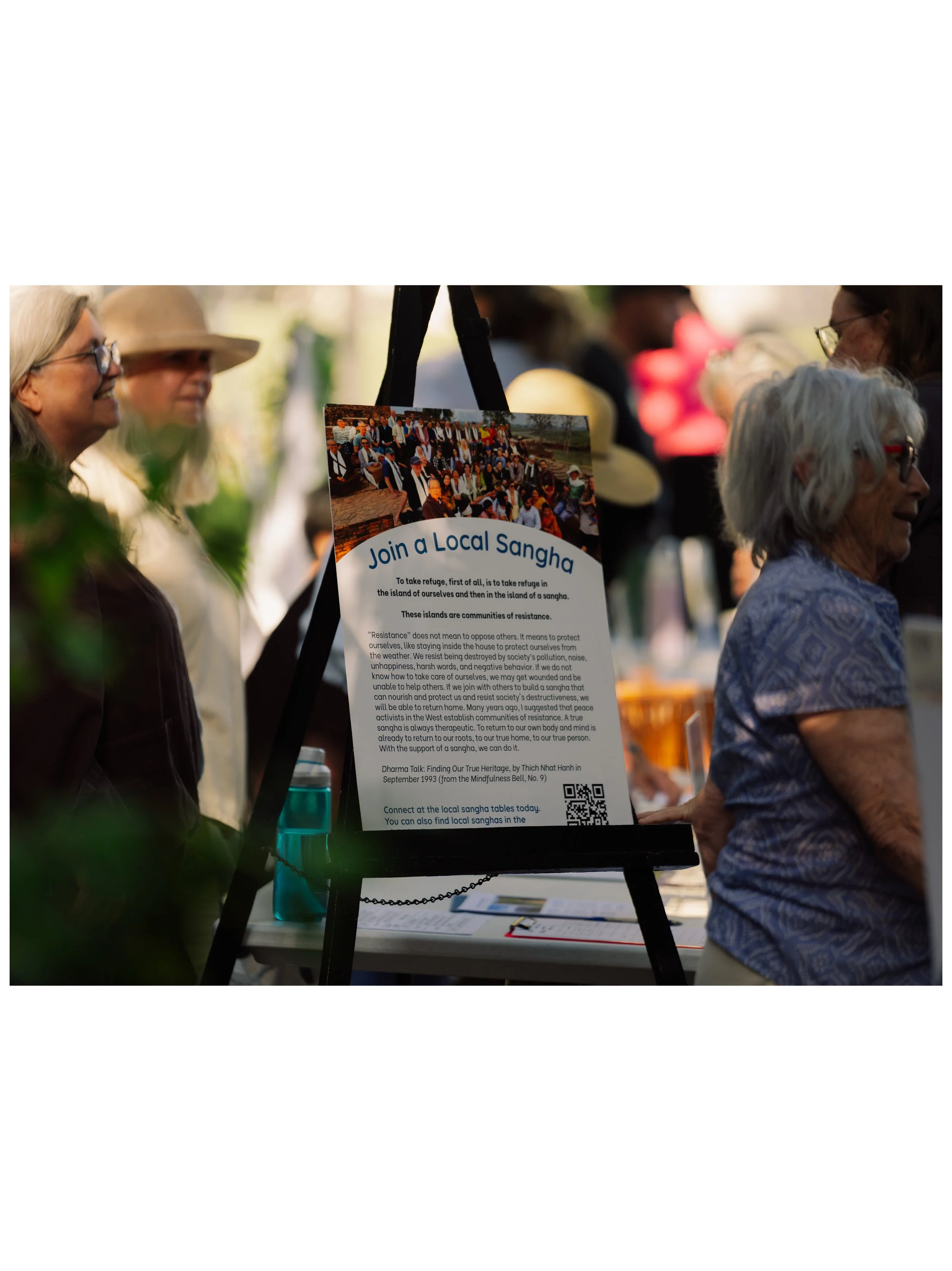
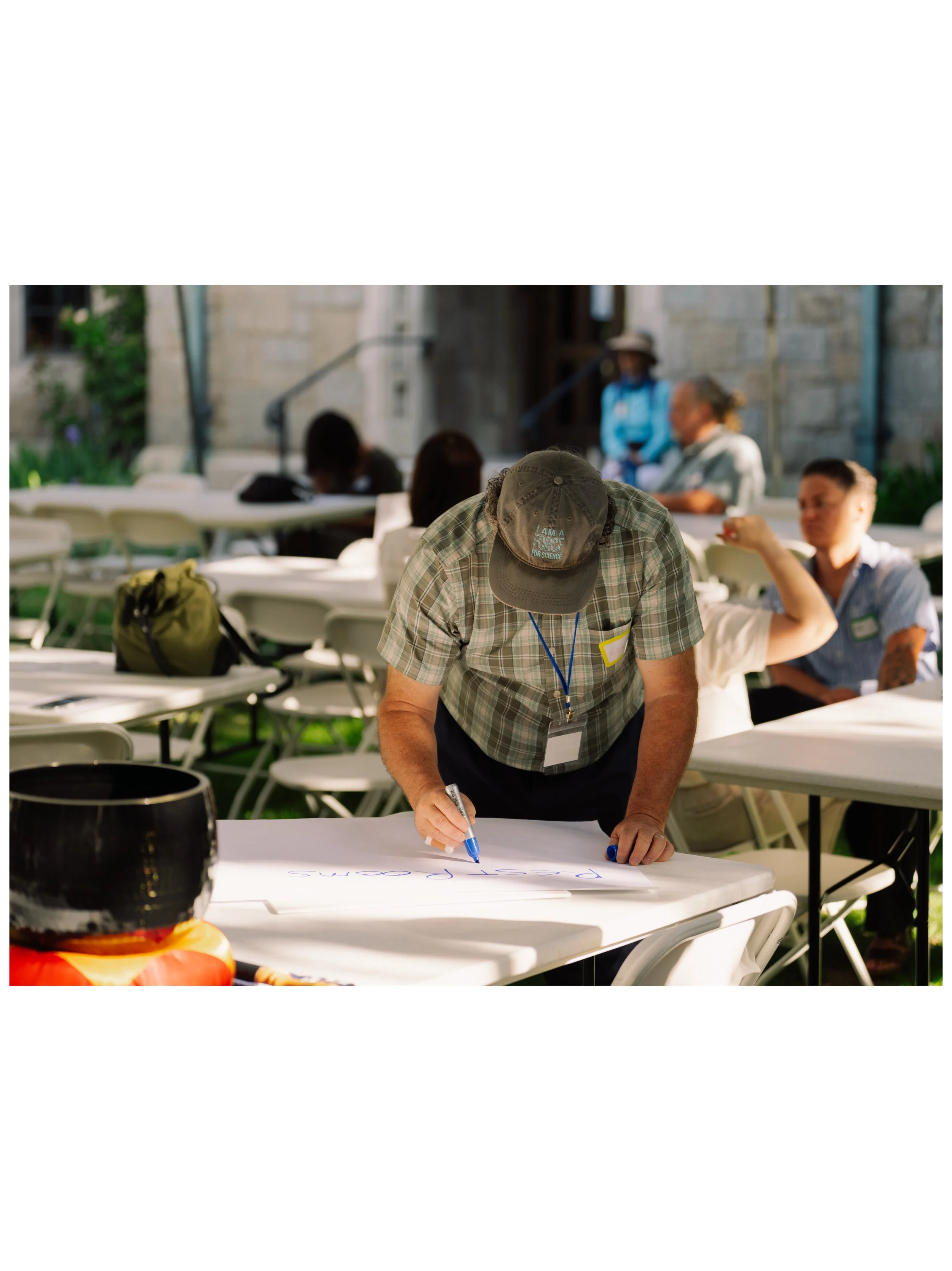
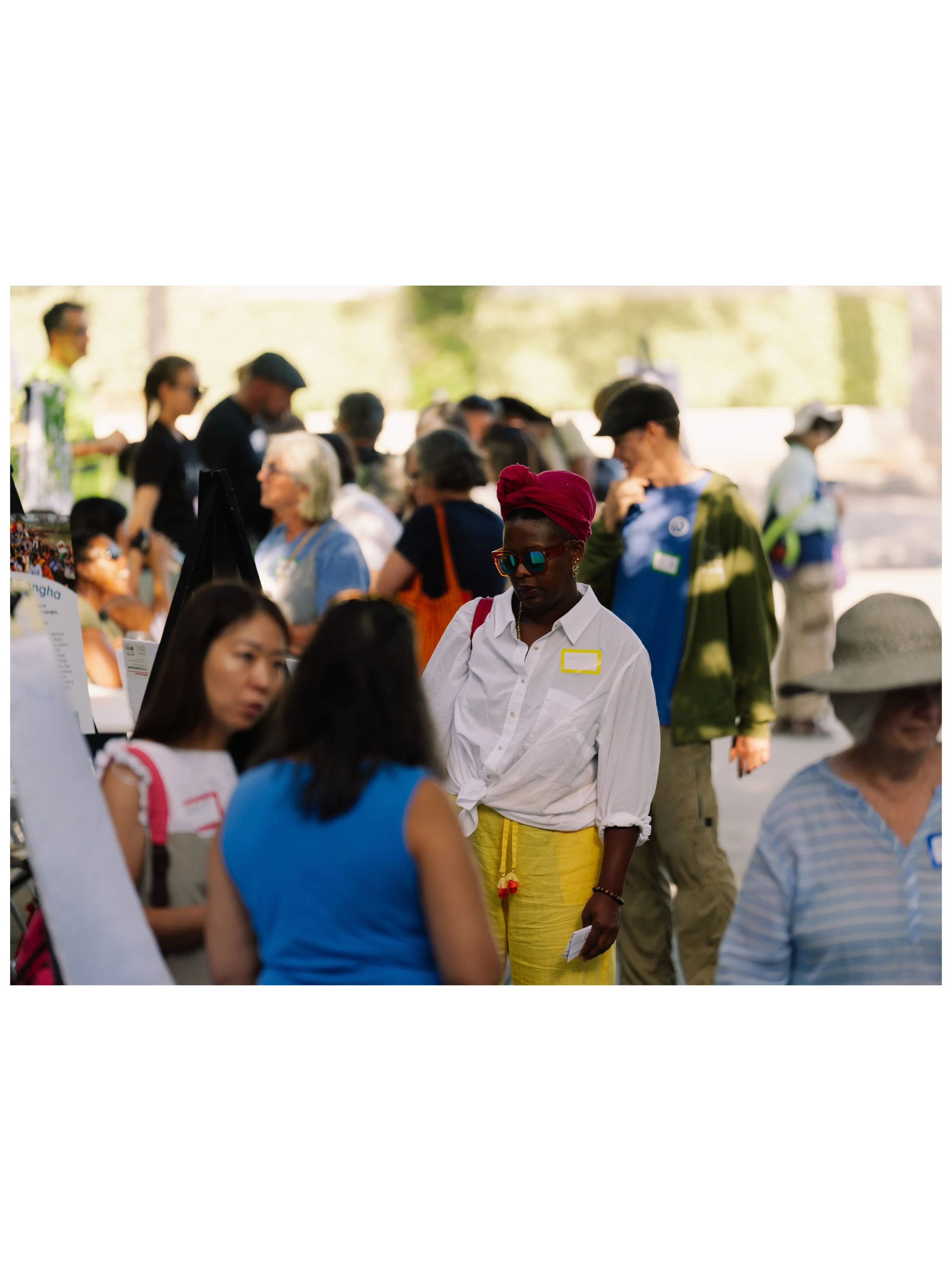
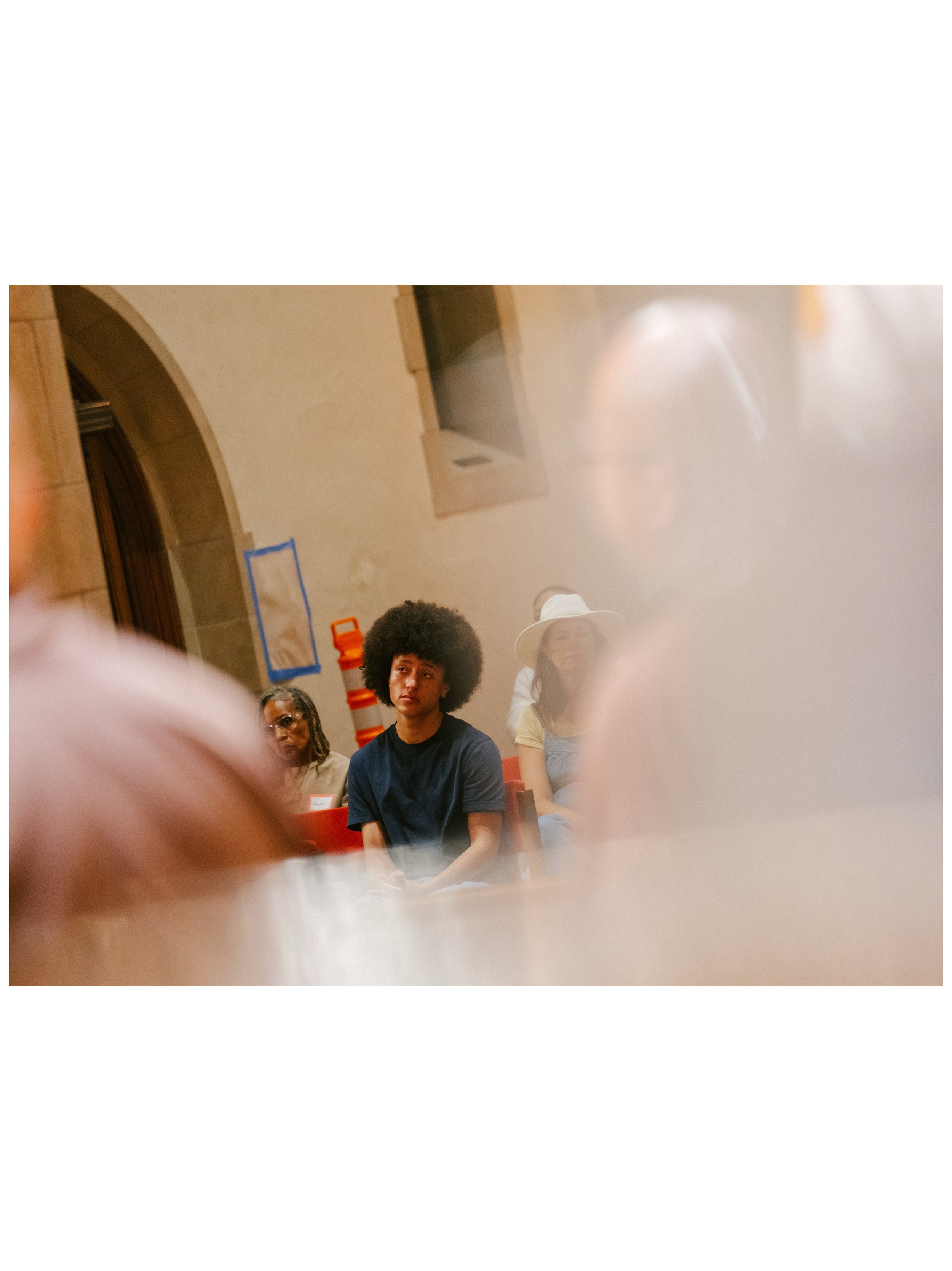
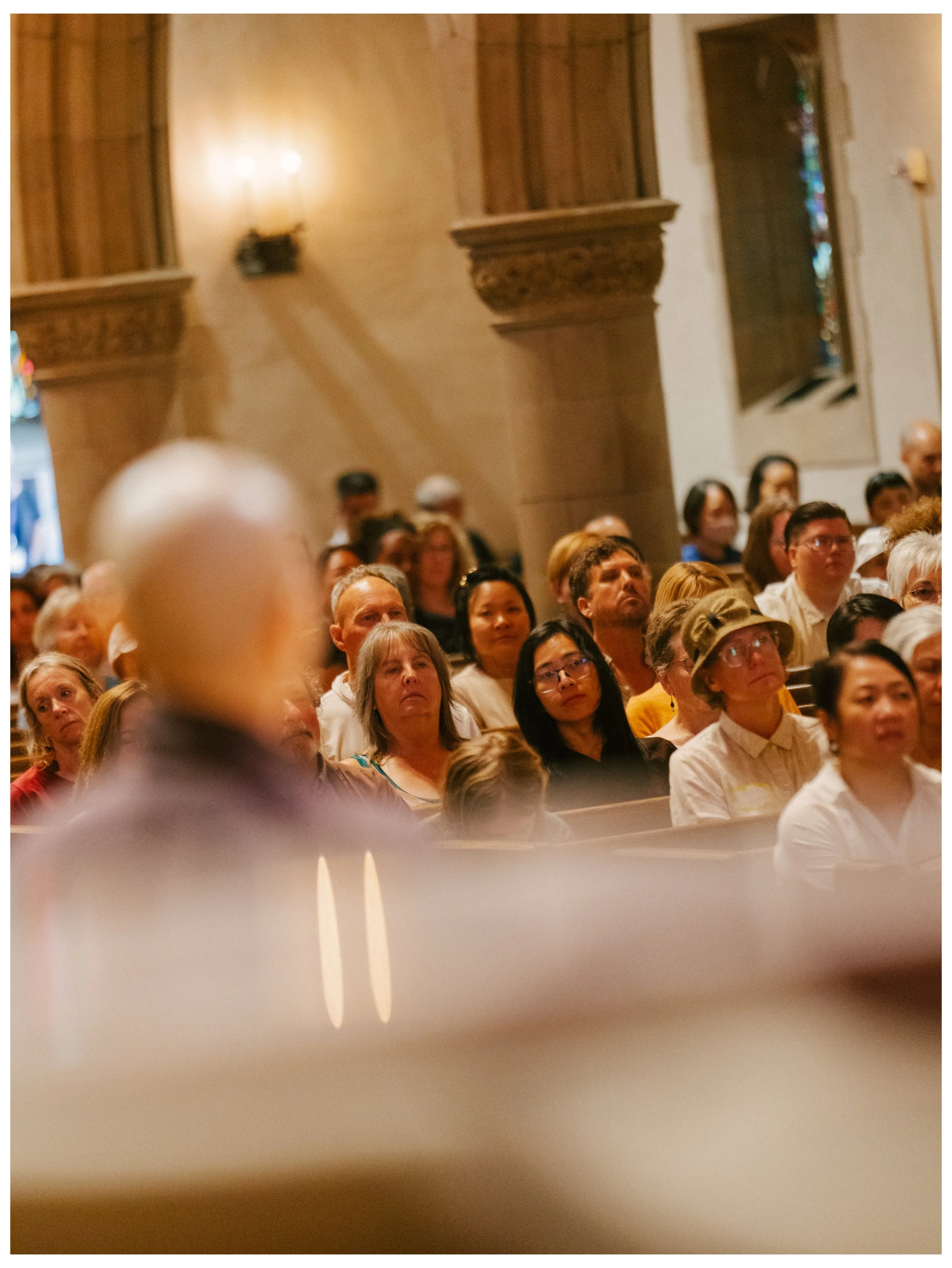
This teaching found its way into my photographs. I used a great deal of negative space, allowing the people in the images to be surrounded by stillness rather than filling every part of the frame. To me, these open areas are not empty. They give the photographs life. They allow the images—and the people within them—to breathe.
As you look at these photographs, I hope you might also pause for a moment and breathe. Notice the space within the frame, and then notice the space within your own body. Perhaps it is this space, more than anything we try to place inside it, that allows life to become spacious, gentle, and beautiful.
Other People’s Happiness
Throughout the day, I kept seeing faces change.
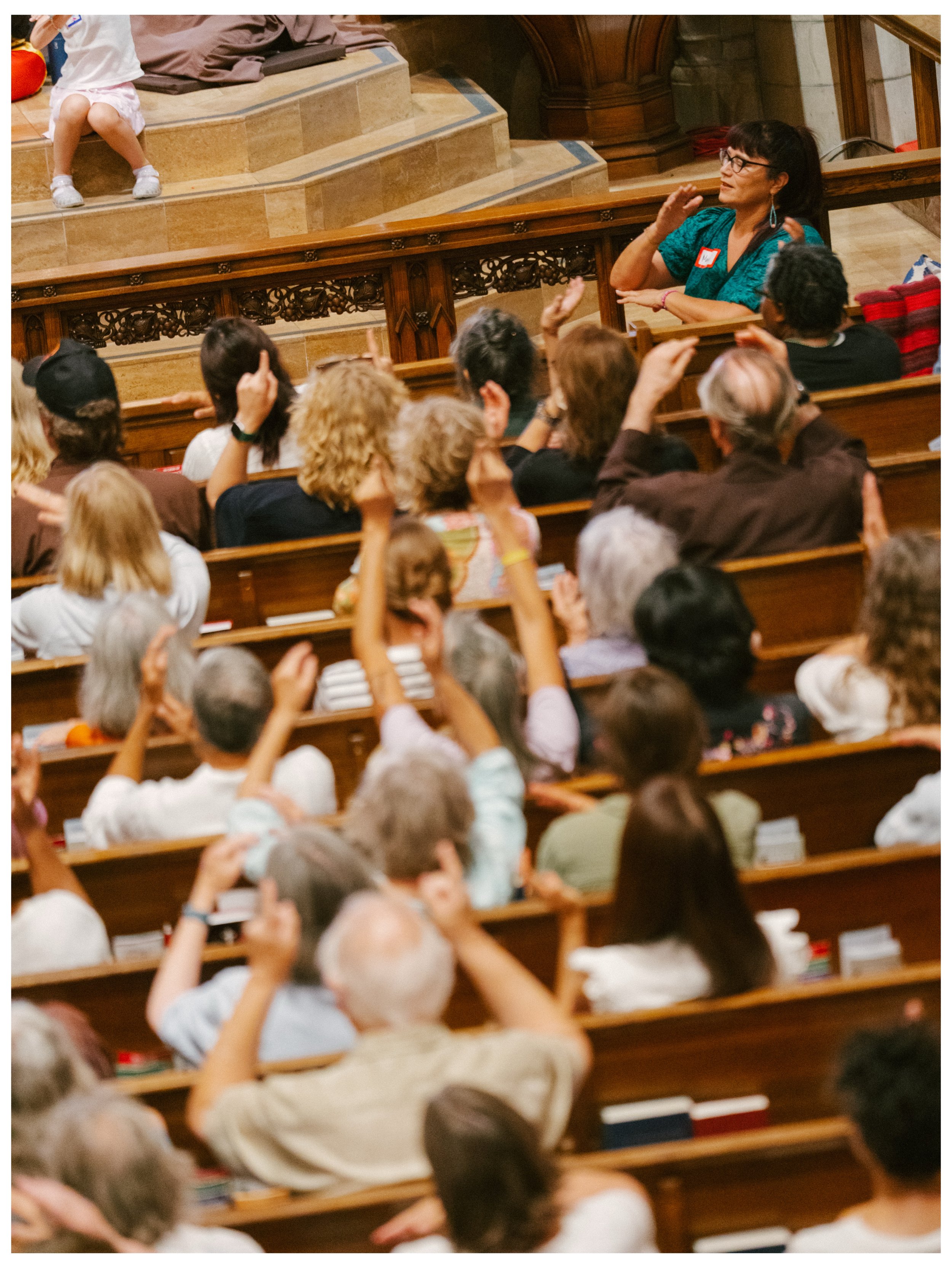
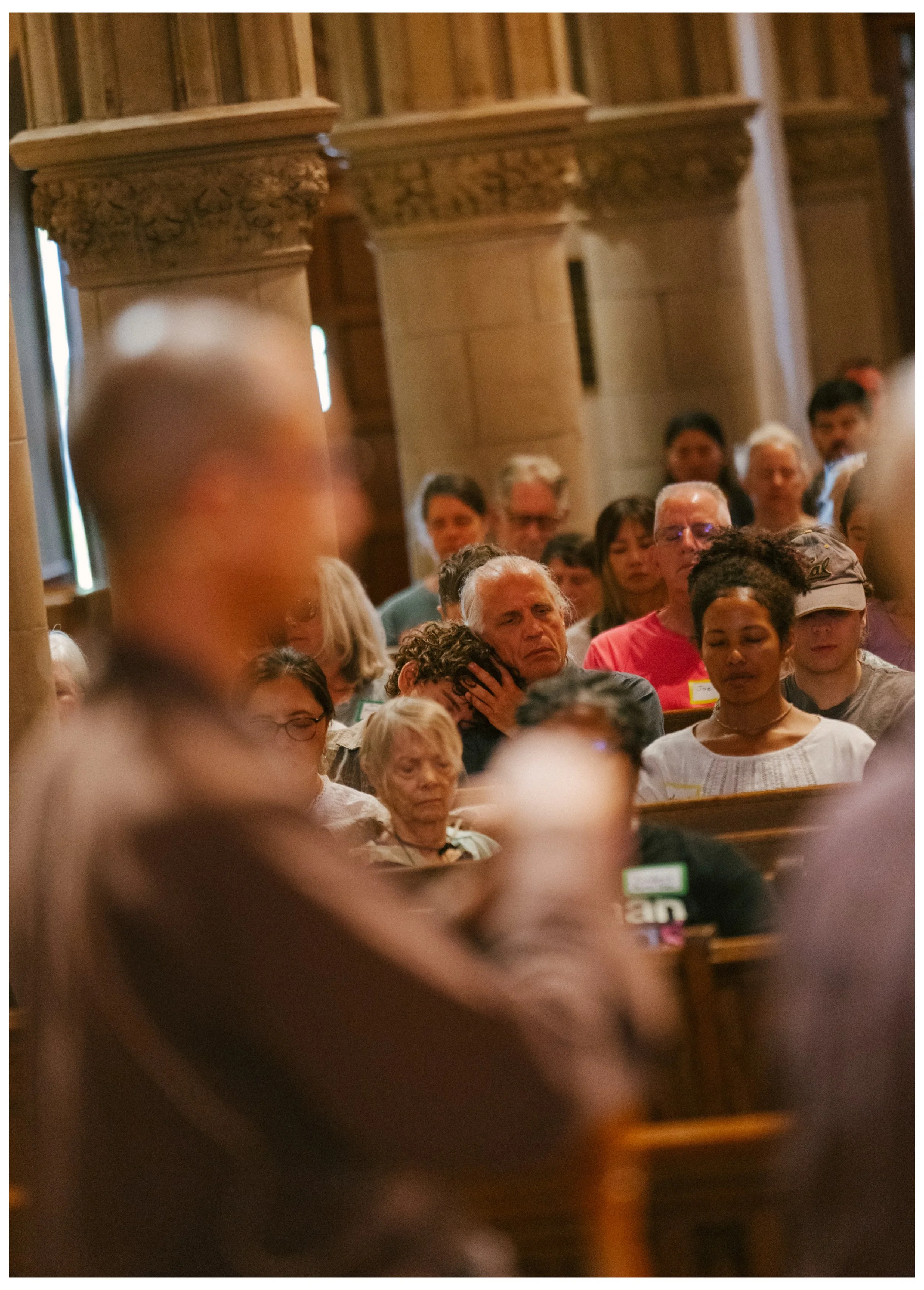
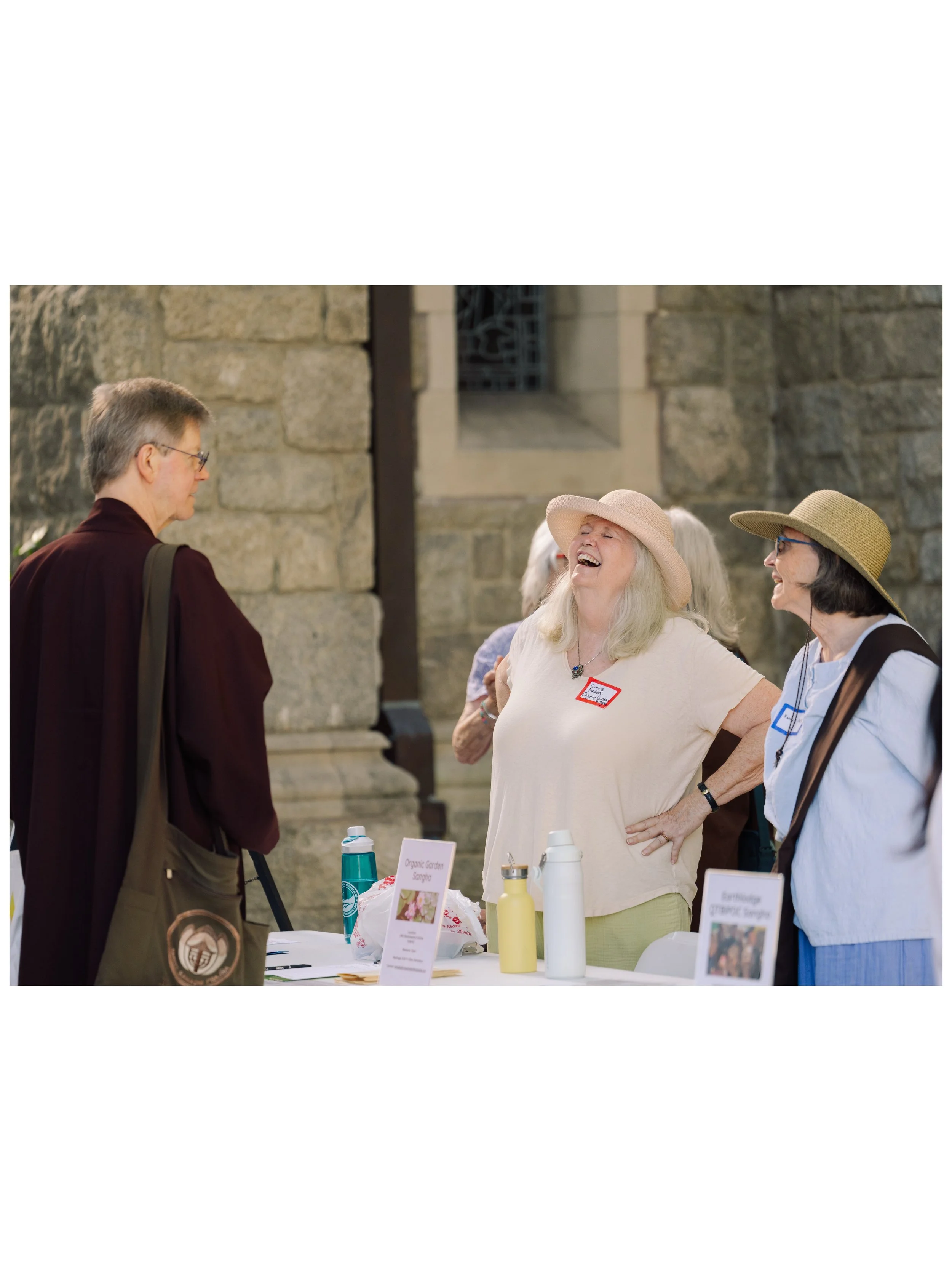
Some people arrived carrying visible tension. Later, I saw them walking more slowly, listening to one another, smiling, or simply sitting with a little more ease.
Every person there had come from a life I could not fully know. Each had a family, friends, coworkers, and a world beyond the church. When one person finds a little more peace, that peace does not remain contained within a single body. They carry it home. It reaches their children, partners, friends, and perhaps even strangers.
Through the camera, I began to sense that the gathering was much larger than the number of people physically present.
While photographing their happiness, I felt something in myself becoming lighter. I was no longer standing outside the experience as someone documenting it. Their joy was nourishing me as well.
I had heard the teachings “others’ happiness is my own happiness” many times. That day, it stopped being an idea. I could feel it in my body.
Perhaps this is one way to understand a boundless mind: not as something distant or mystical, but as the simple discovery that another person’s happiness does not diminish mine. It enlarges it.
The People Carrying the Weight
An event like this can appear effortless from the outside. People arrive, find their seats, listen, walk, eat, and leave.
But beneath that ease was the work of many people.
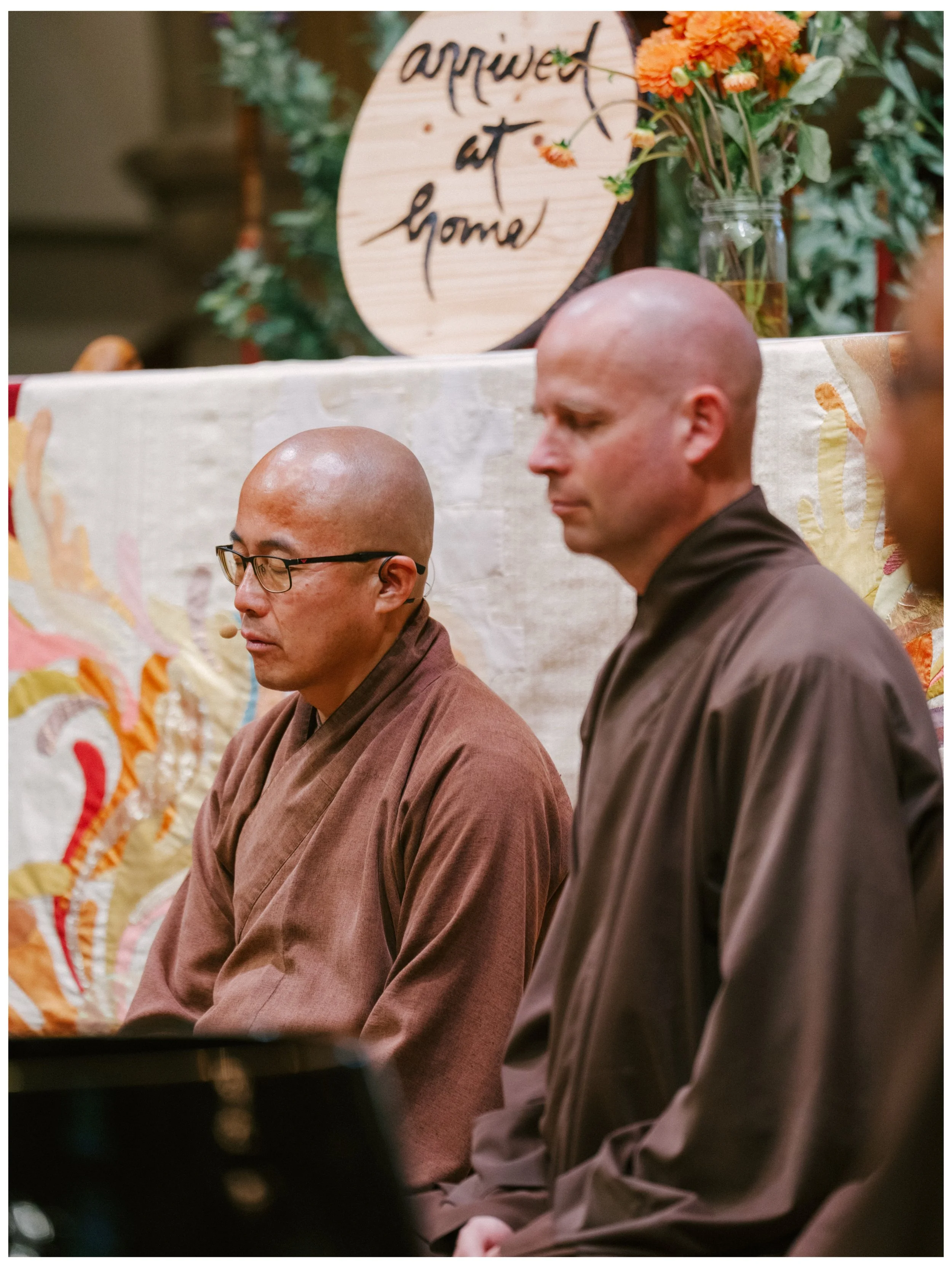
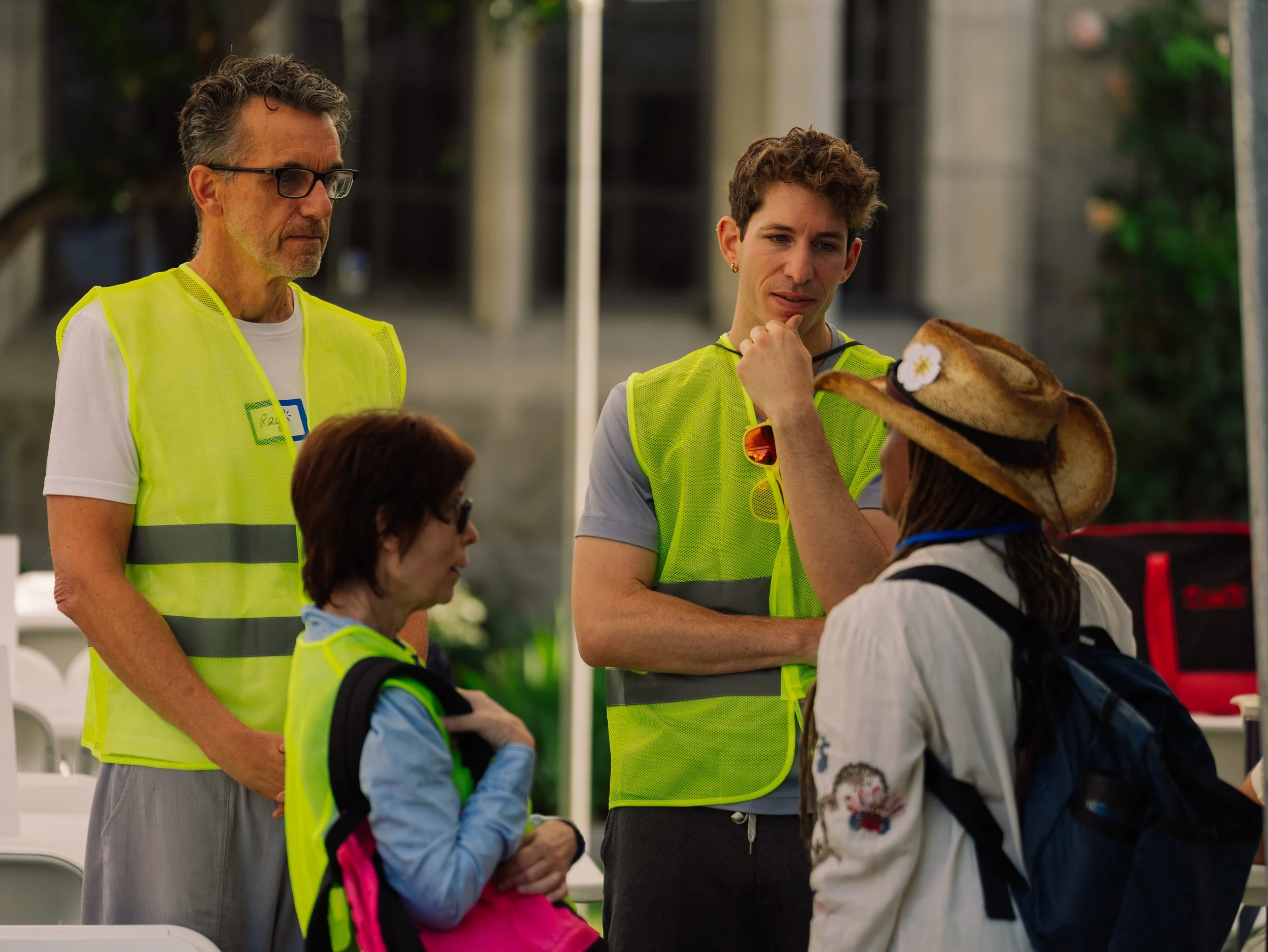
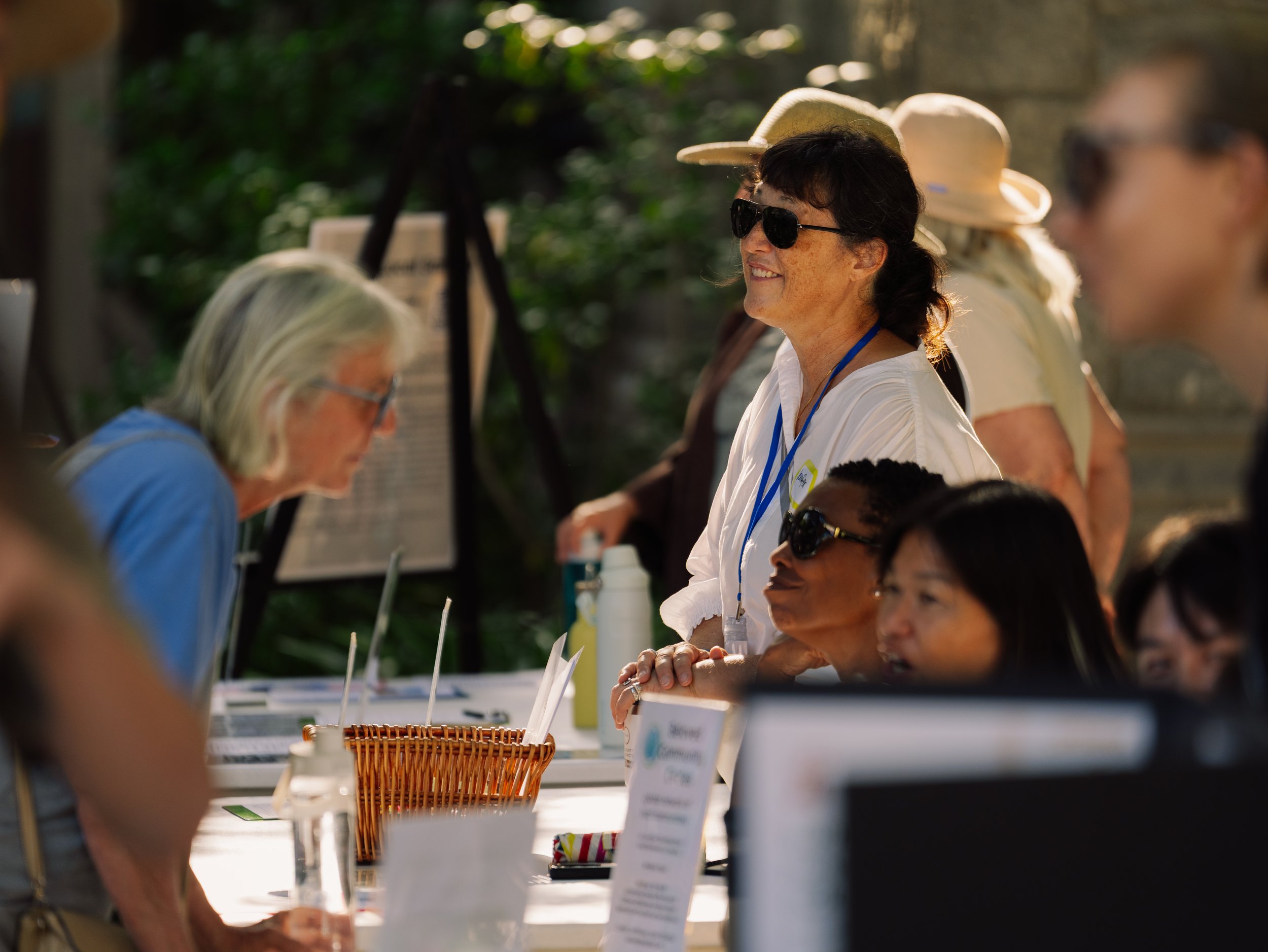
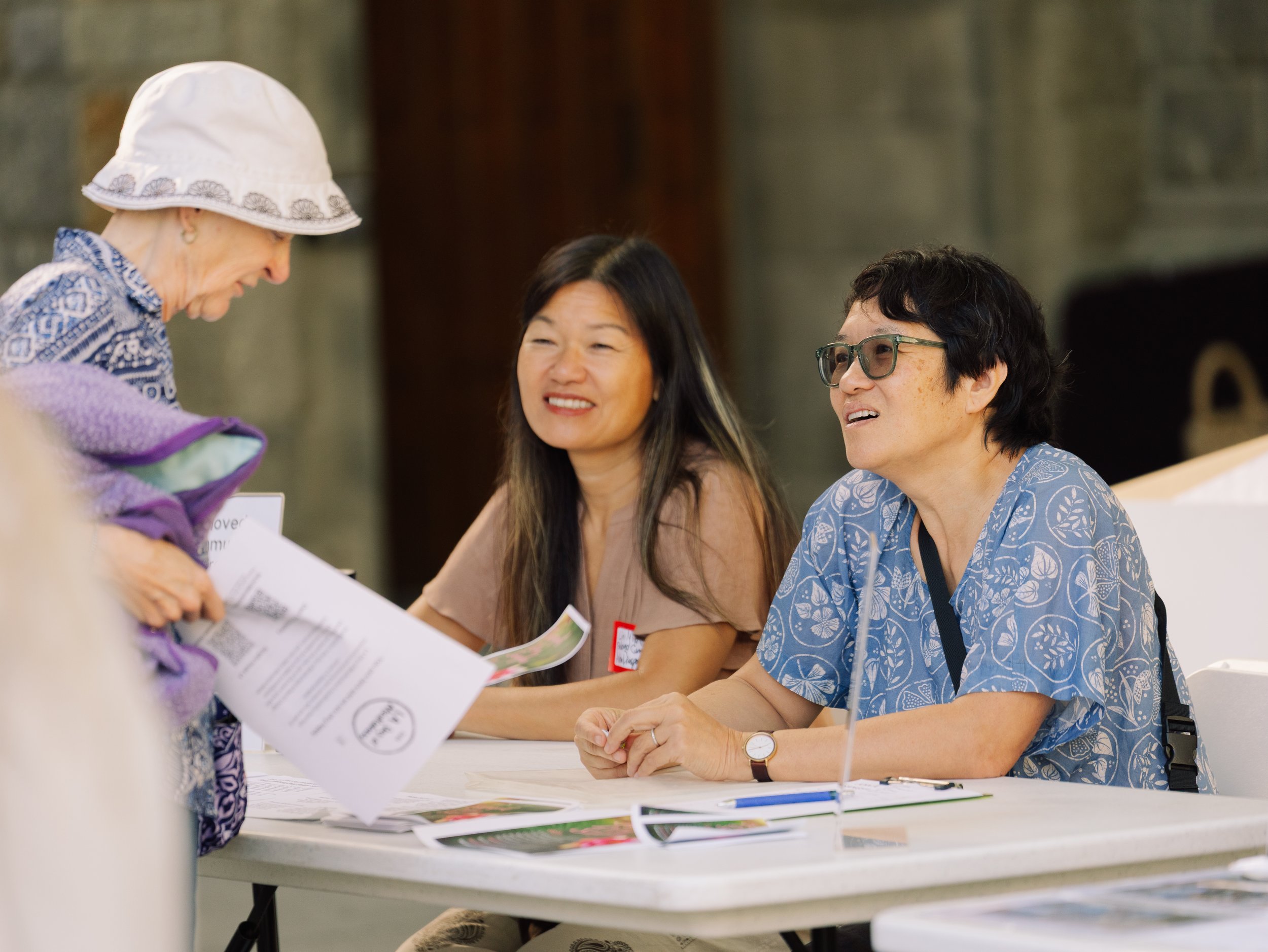
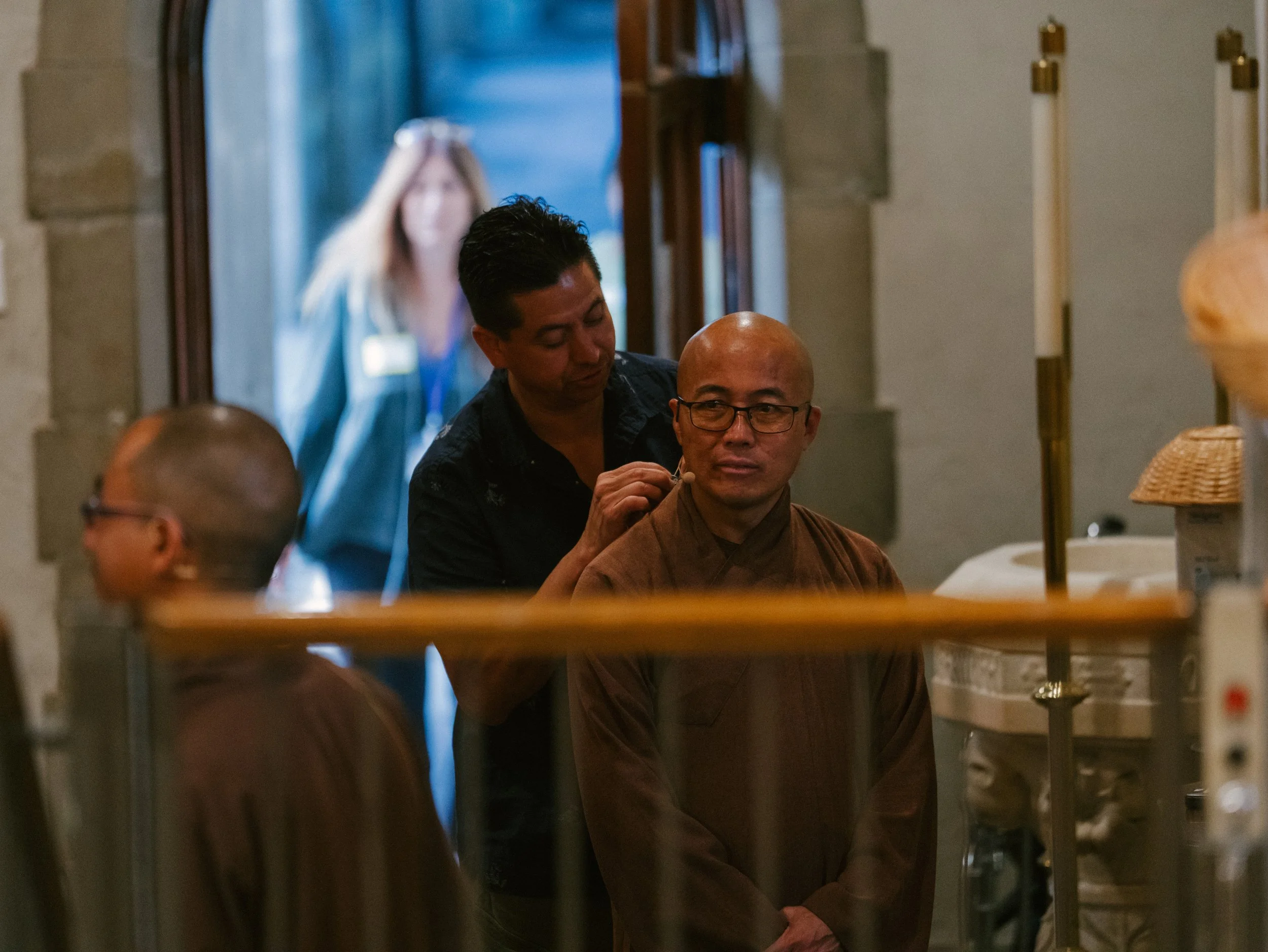
The Los Angeles organizing team had spent months preparing. Volunteers guided the walking meditation, arranged chairs, welcomed guests, answered questions, carried supplies, and quietly solved problems throughout the day. The church staff opened the space and helped us move through it with remarkable generosity.
They carried the weight so that the rest of us could move lightly.
As a photographer, I had the freedom to follow the light, notice small gestures, and enjoy the unfolding of the day. I could drift with the movement of the sangha because others were holding the structure together.
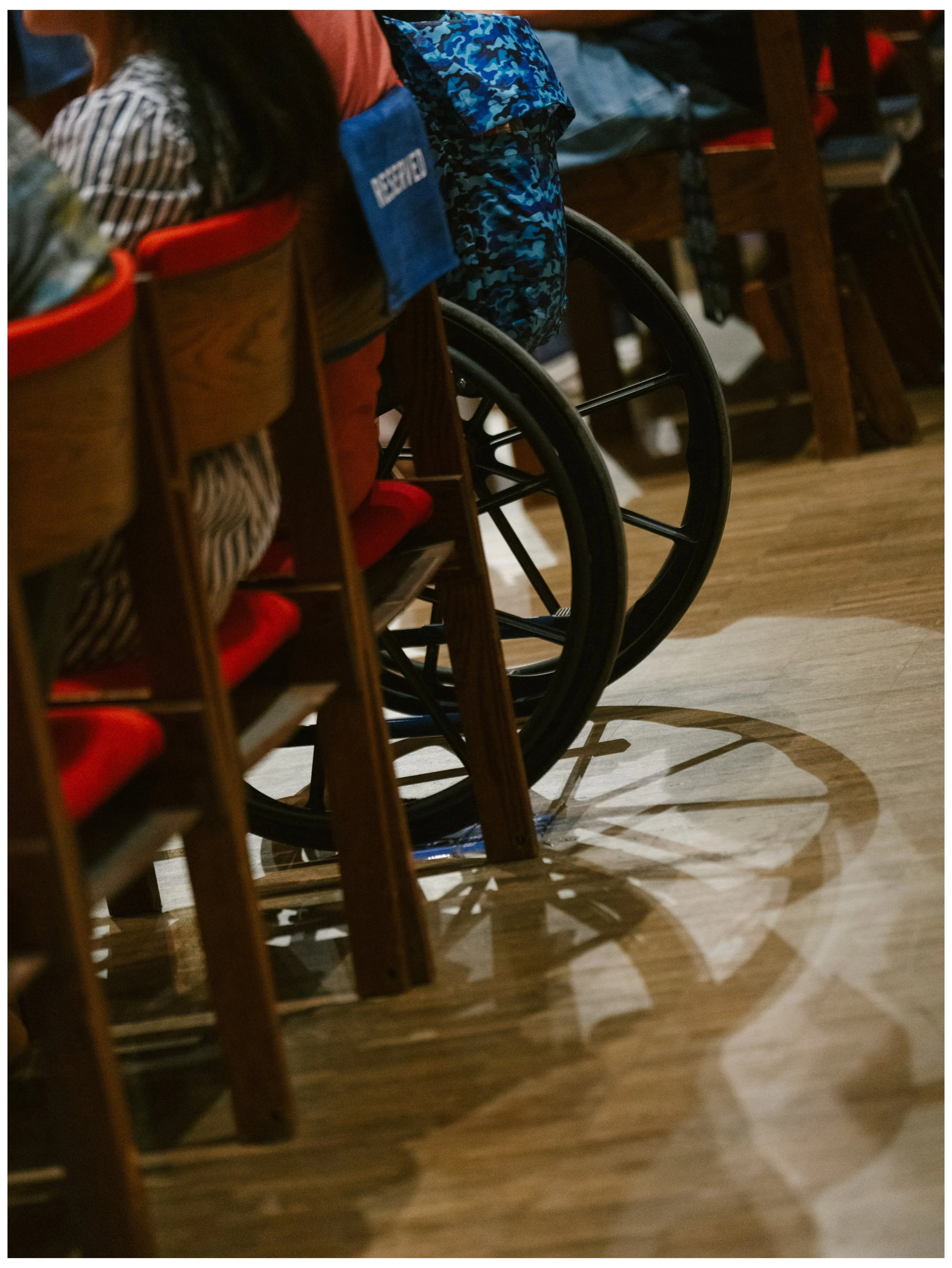
Remembering this makes me grateful. It also reminds me that a sangha is not an abstract spiritual idea. It is made from ordinary people doing ordinary things with care—setting up tables, offering directions, sharing food, translating, cleaning, and staying behind when everyone else has gone home.
Much of what sustains us is almost invisible.
A Church Opened Its Doors
I was also deeply touched that this gathering took place inside a Christian church.
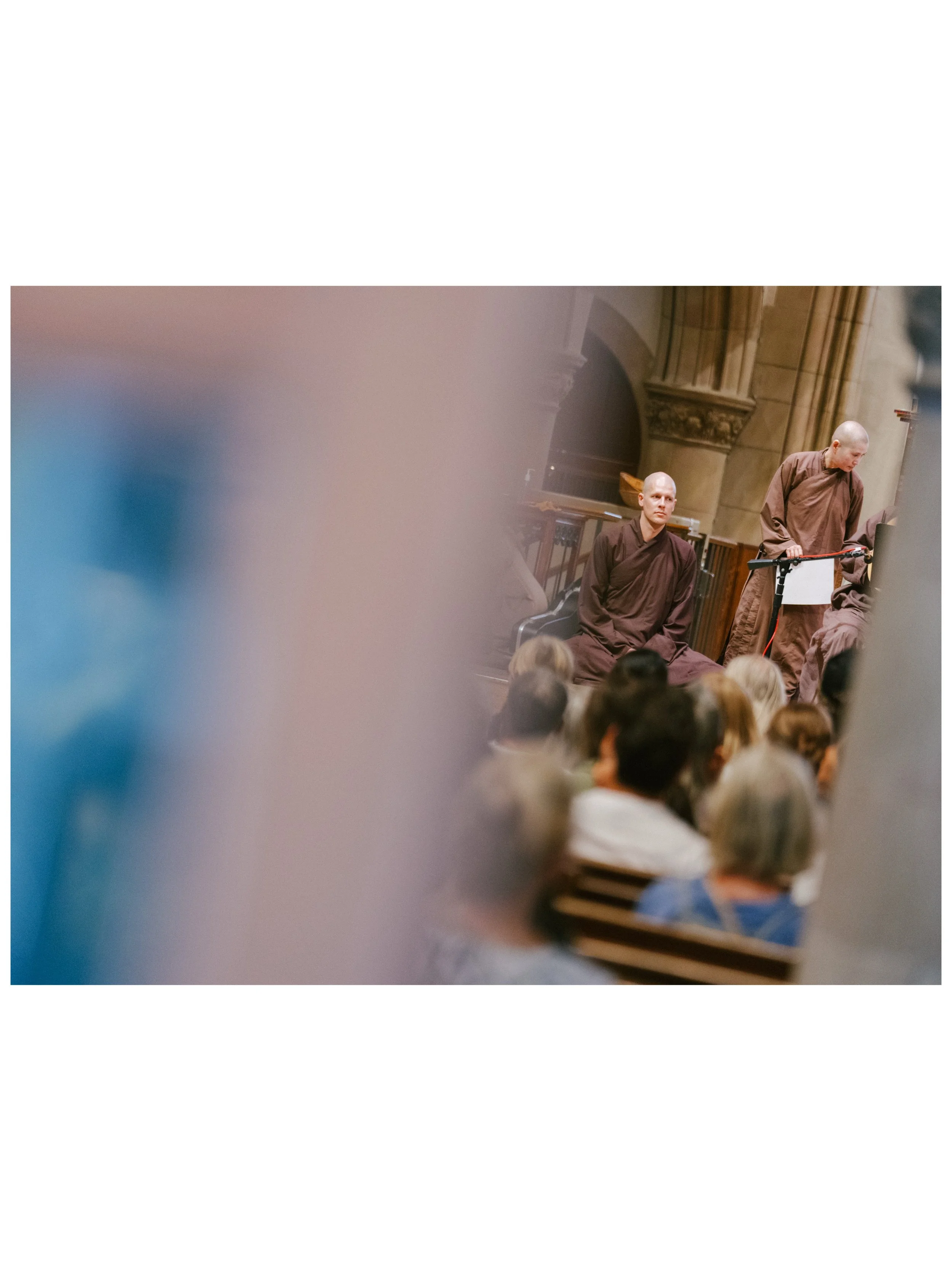
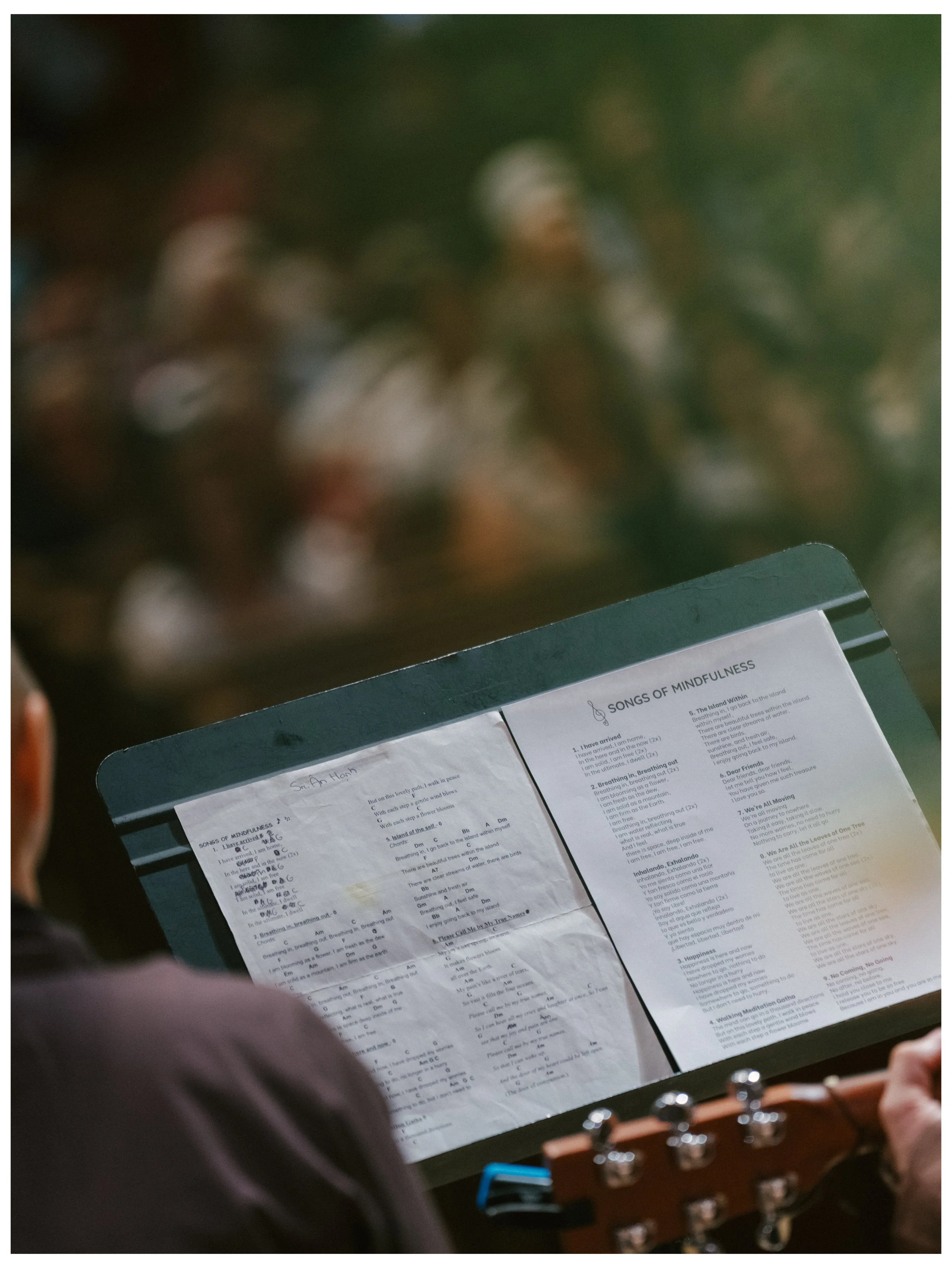
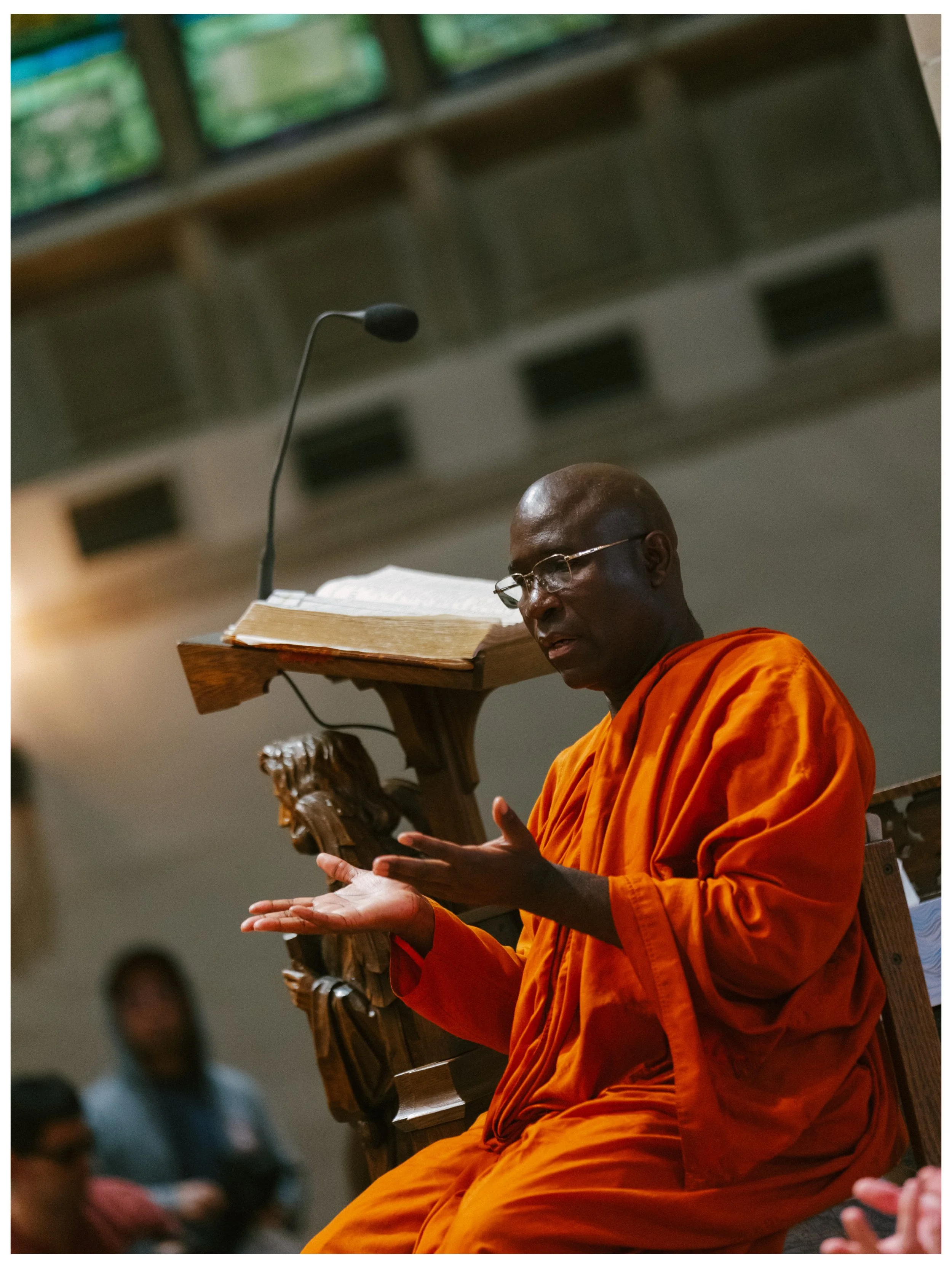
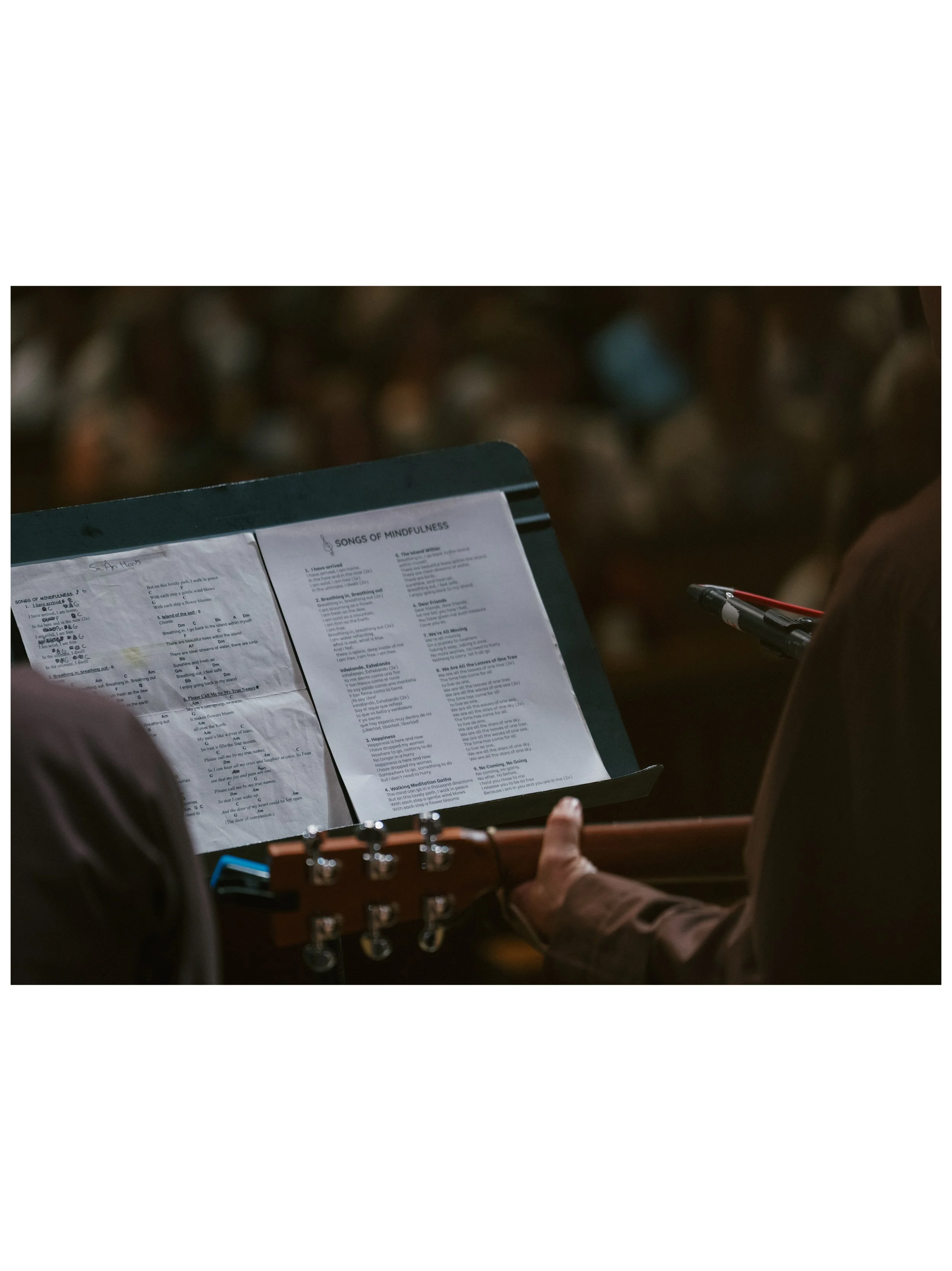
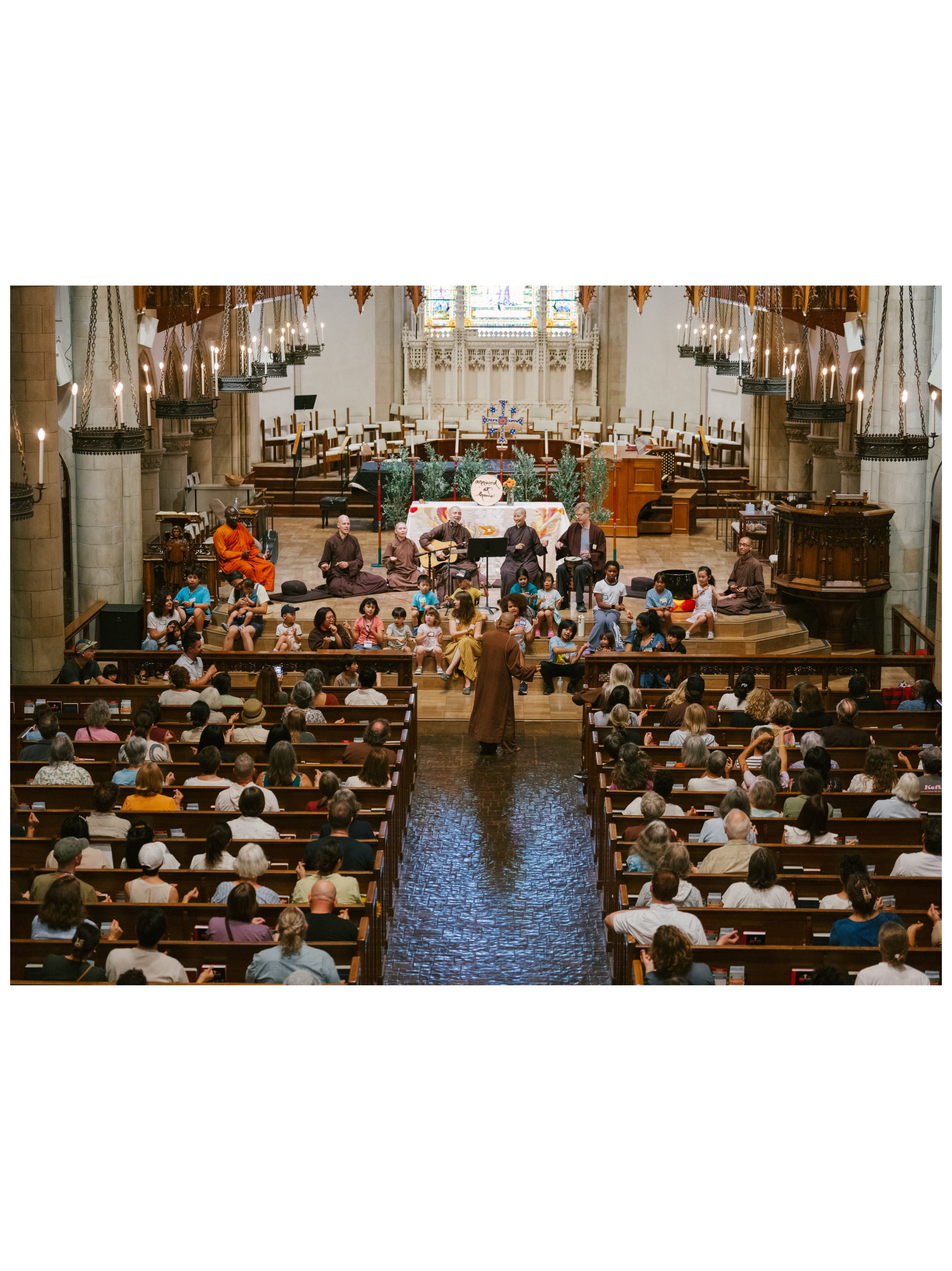
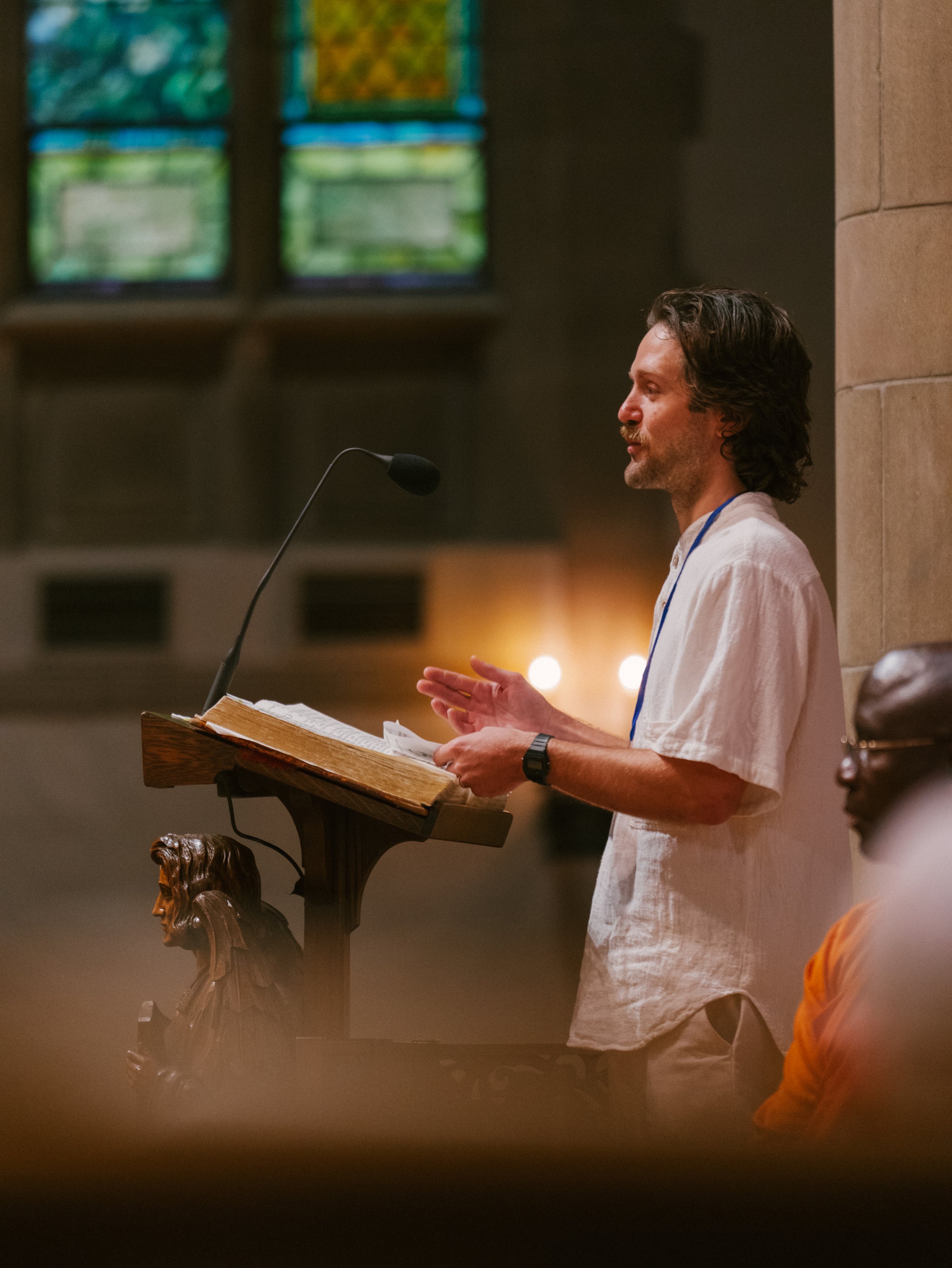
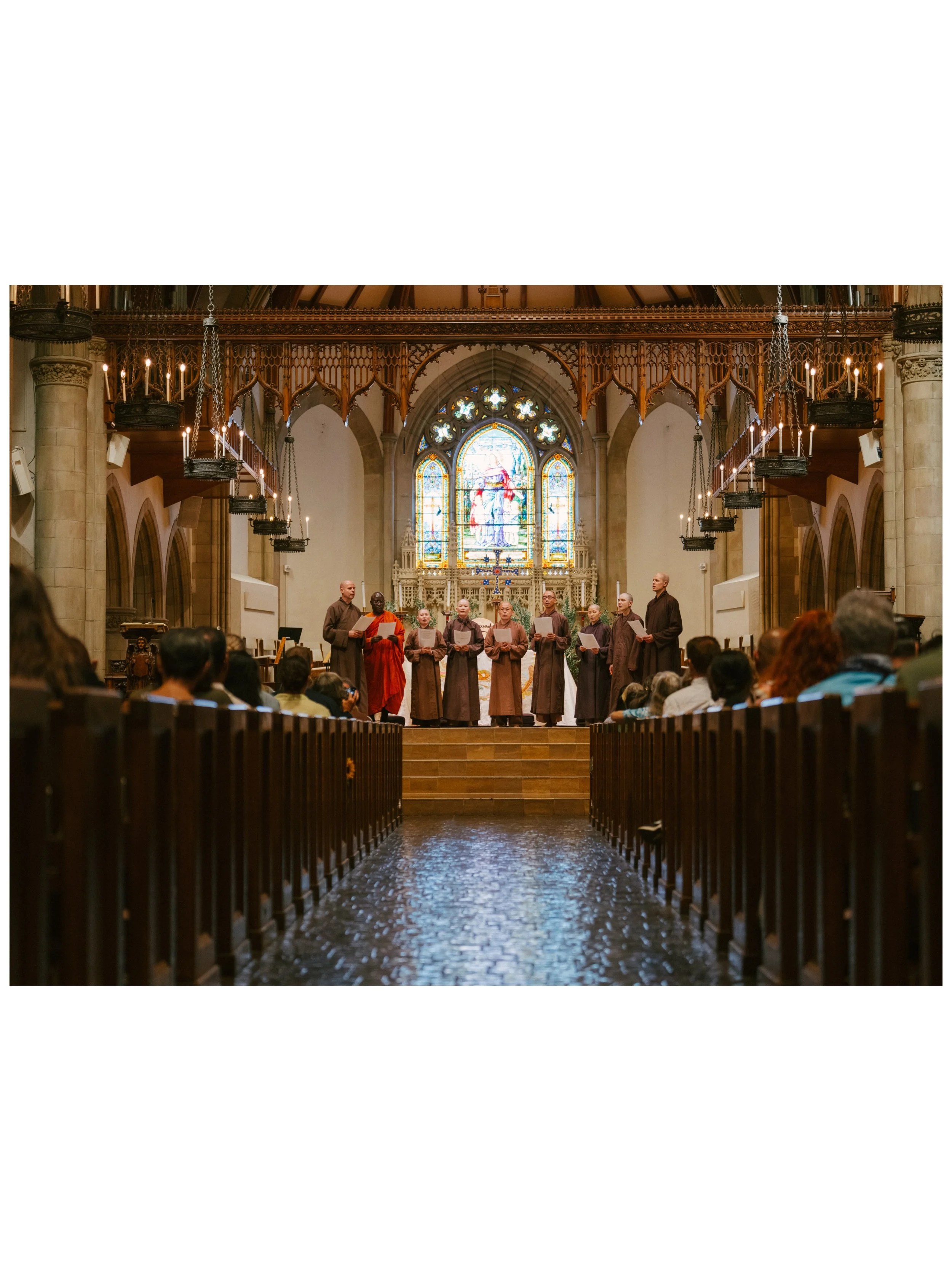
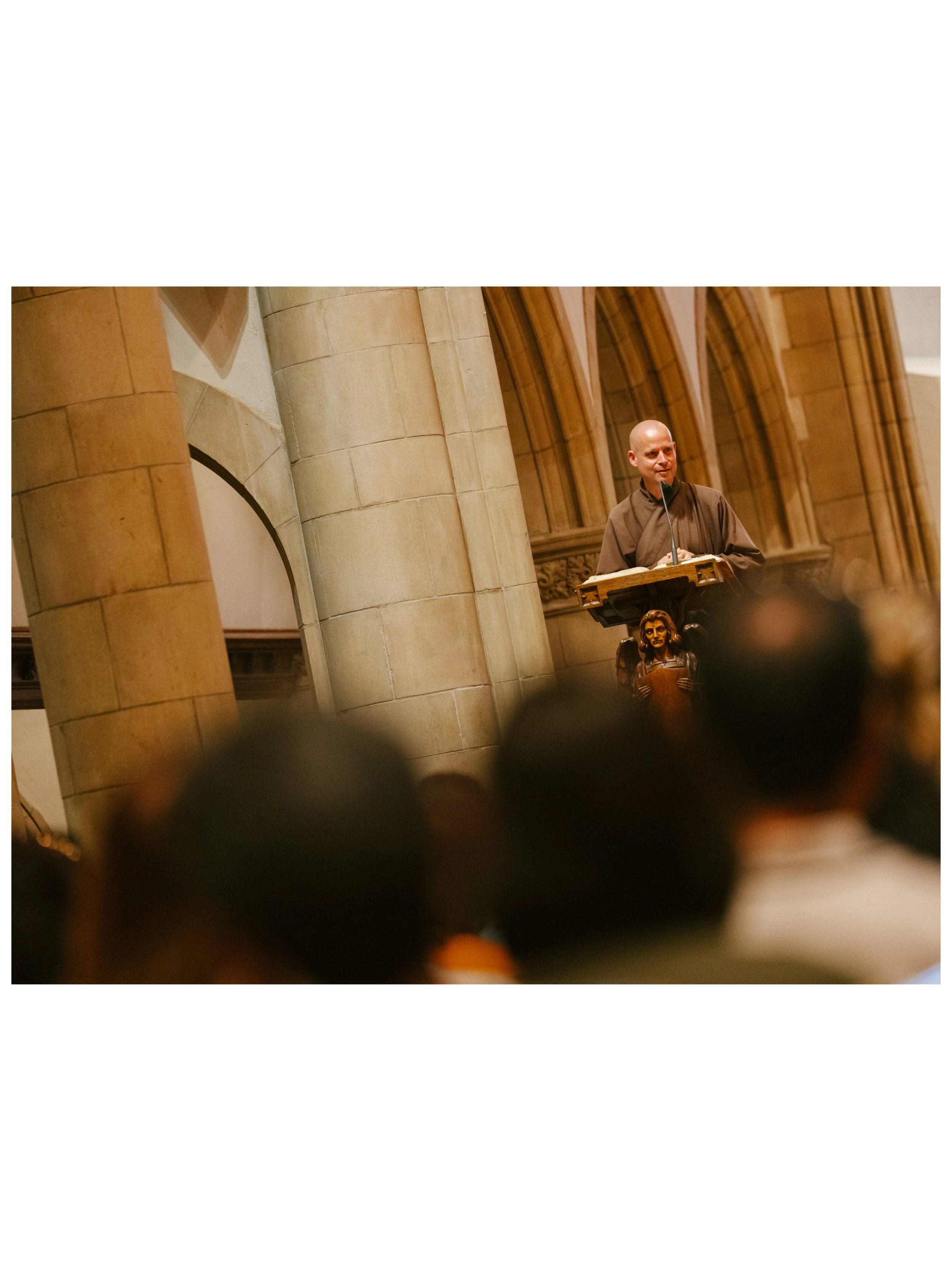
All Saints did not treat us as outsiders or as people from a competing tradition. They offered us their home and helped us use it with ease. Buddhist robes moved beneath Christian arches. Mindfulness songs were sung beneath stained-glass windows. Different traditions occupied the same space without needing to erase one another.
What I experienced there was not a discussion about interfaith understanding. It was interfaith understanding expressed through hospitality.
Someone opened a door. Someone else entered with respect. People worked together.
Sometimes compassion is that practical.
The Faces That Remained With Me
After returning to Deer Park, I felt the physical cost of the journey. My body was uncomfortable, and I knew that I needed to rest.
But as I edited the photographs, I kept encountering those faces again.
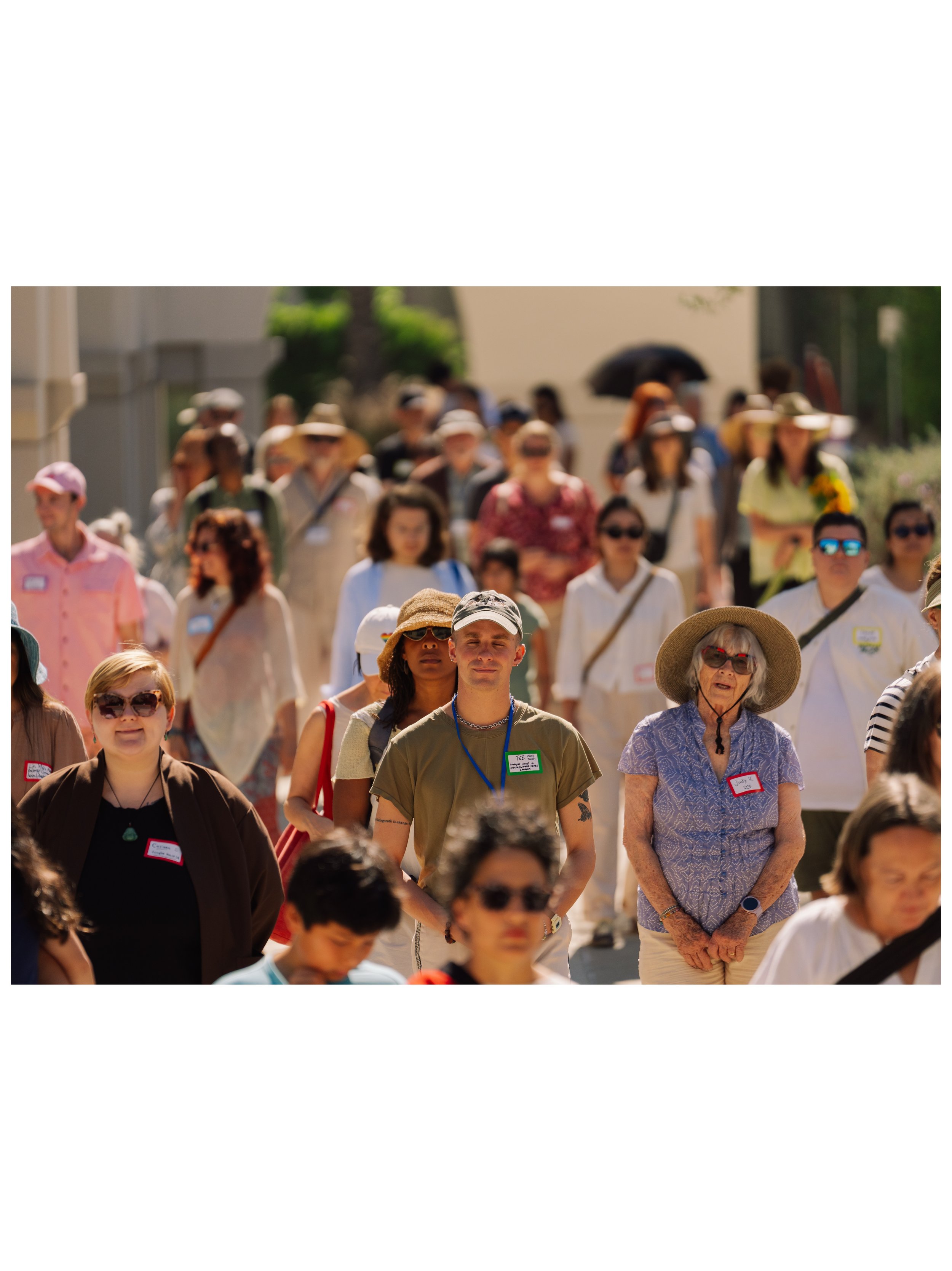
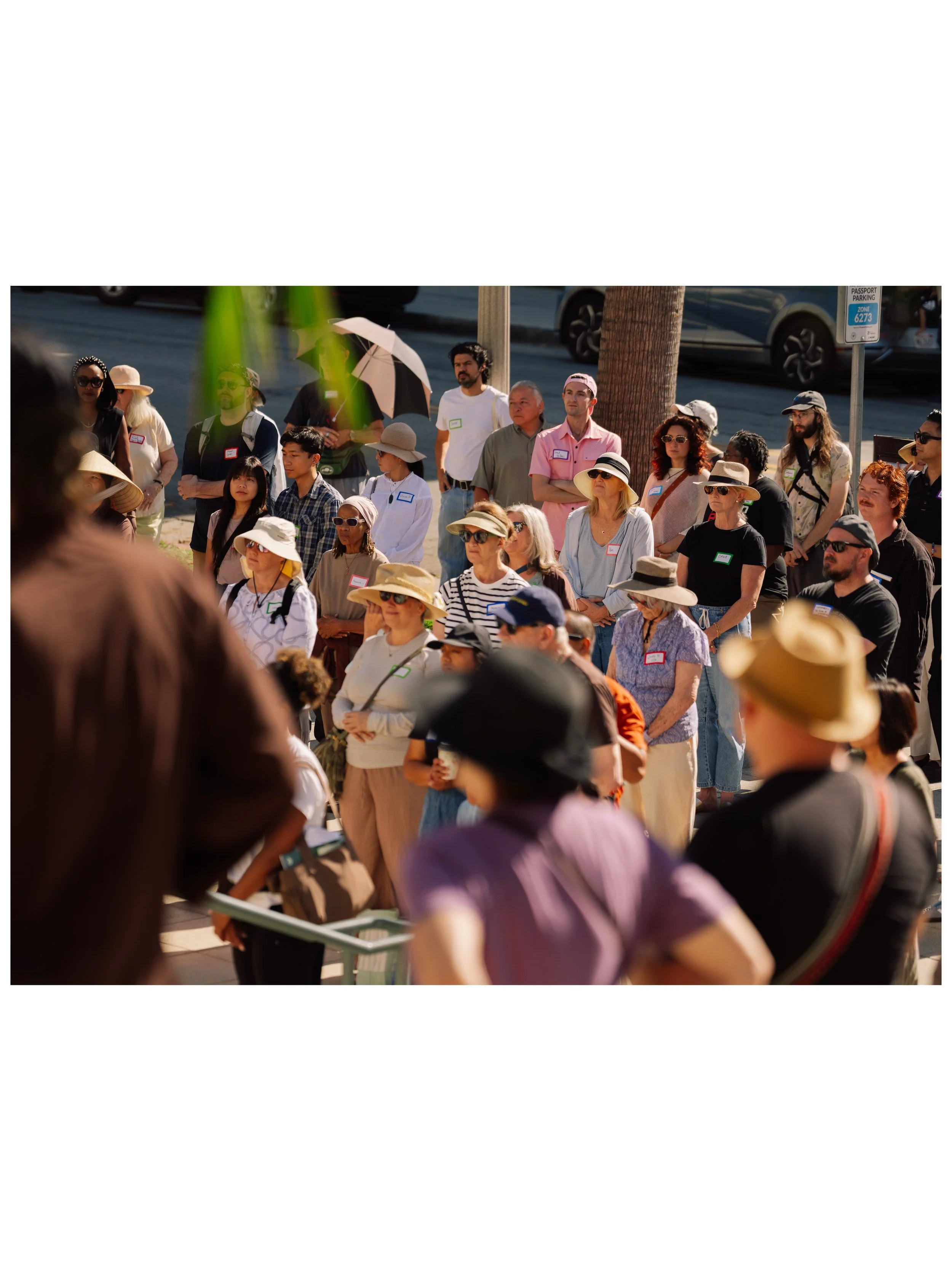
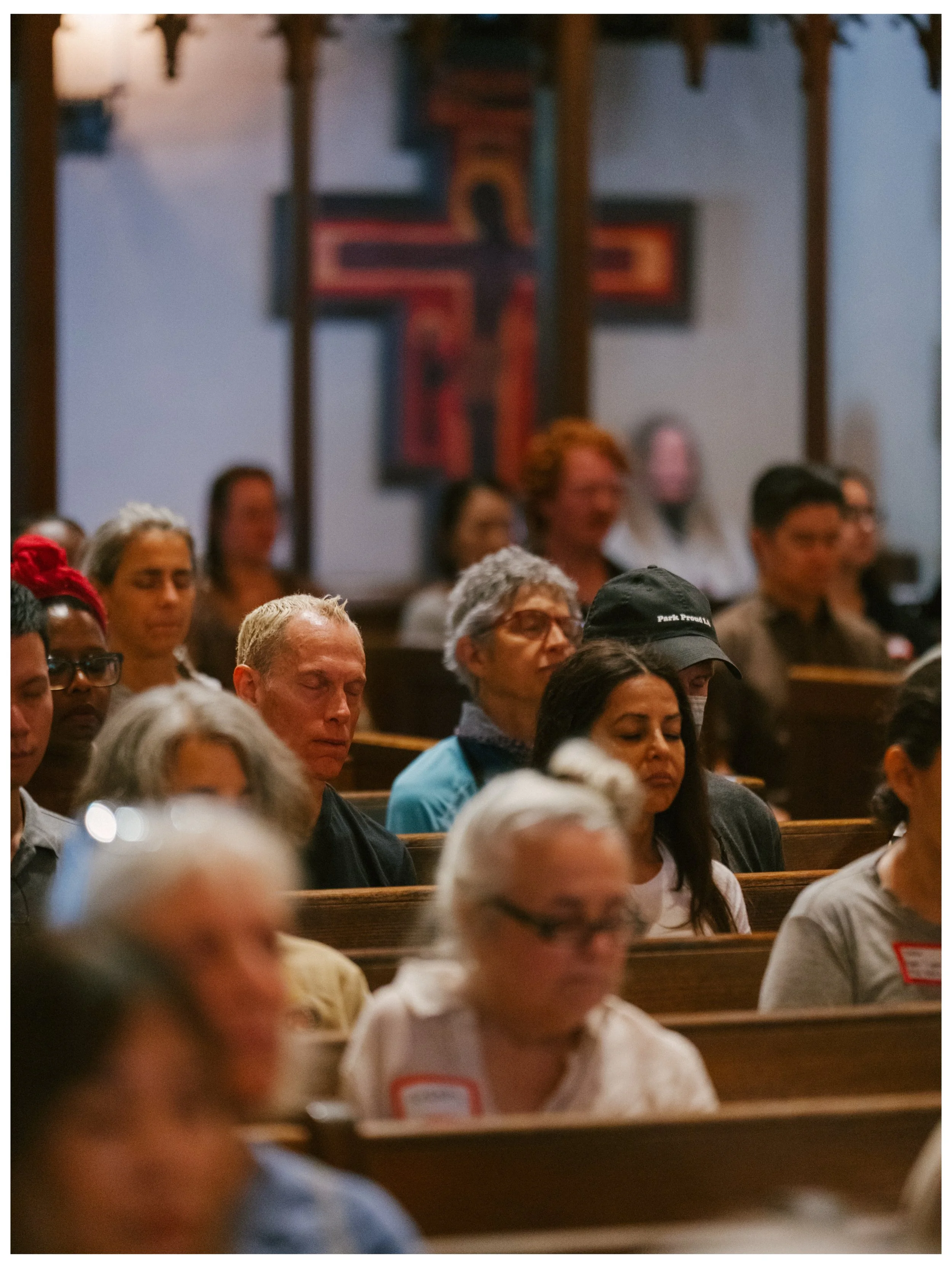
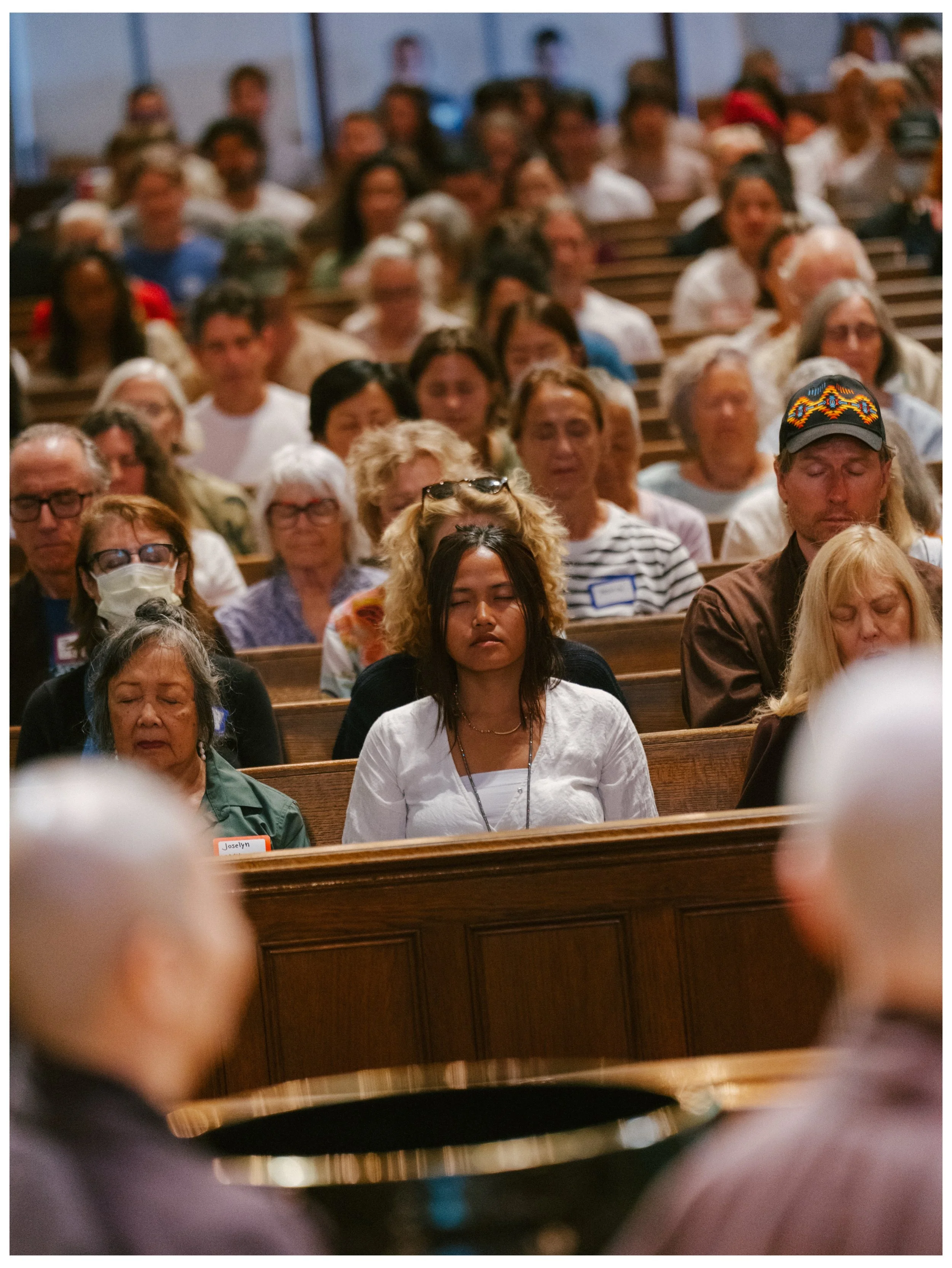
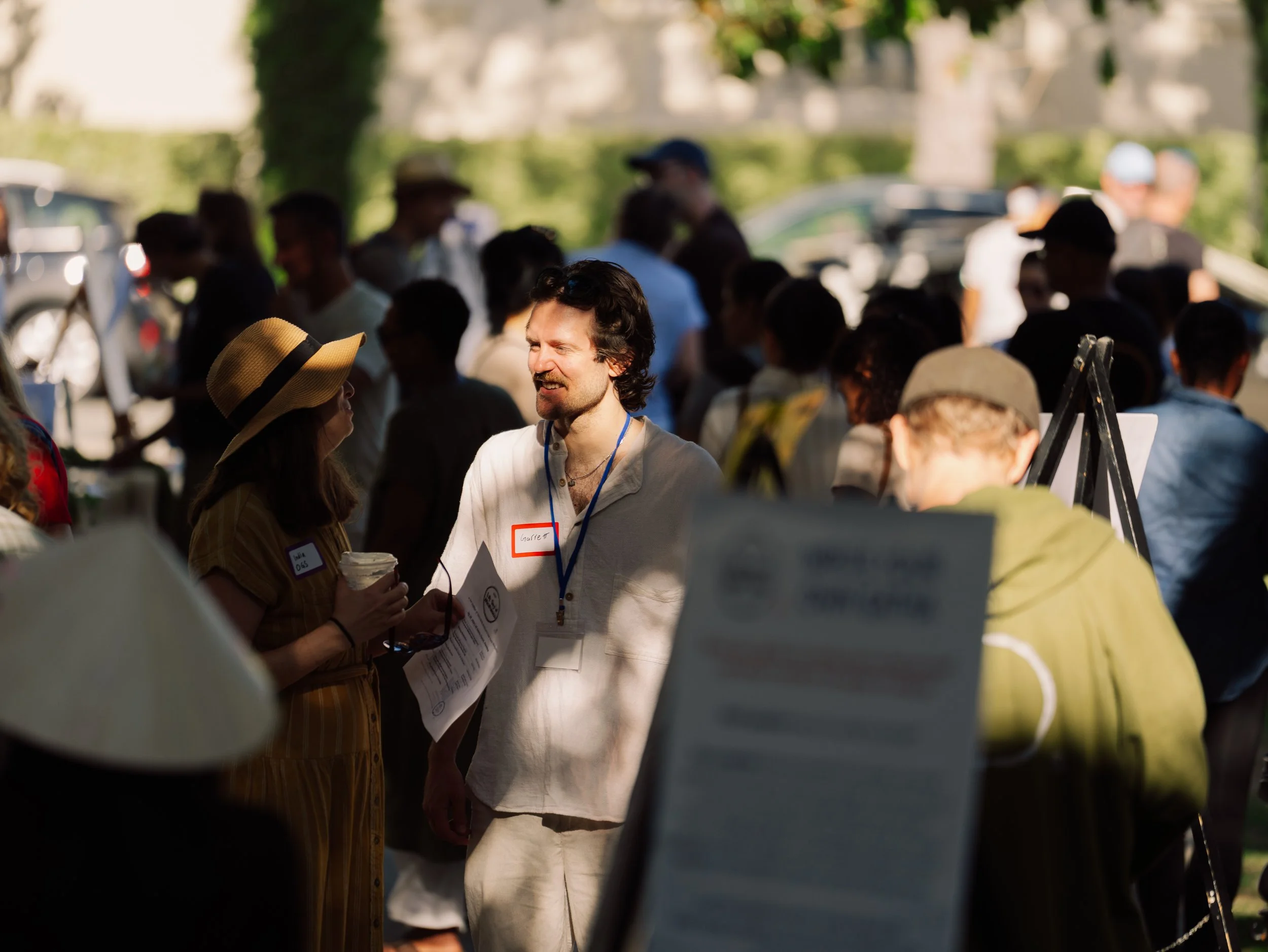
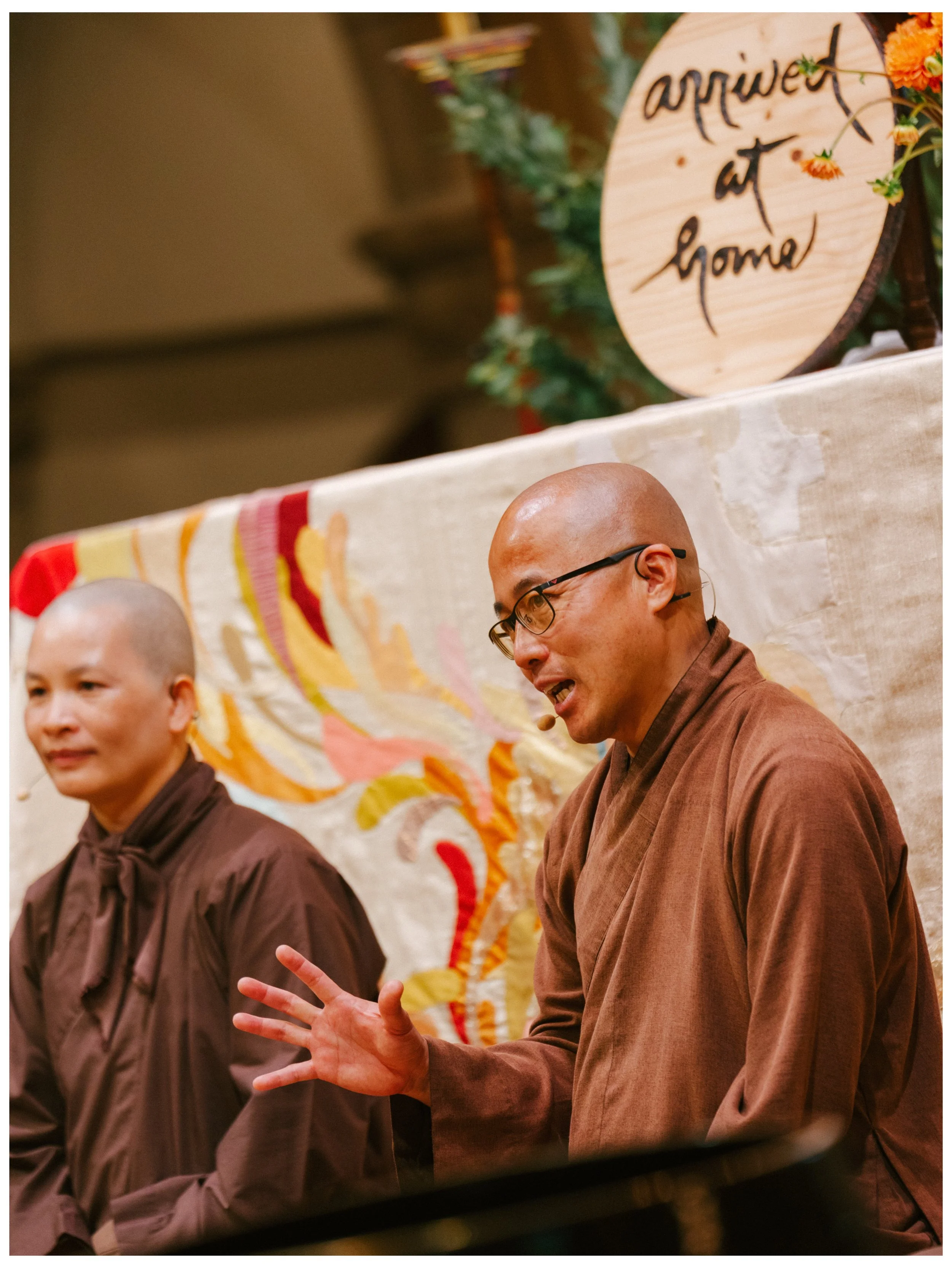
A person sitting quietly with closed eyes. A child moving freely among adults. Monastics walking through the bright Pasadena sun. Volunteers in fluorescent vests keeping hundreds of people safe. Strangers becoming a temporary community. People speaking, listening, singing, eating, laughing, and resting together.
Looking at them, I realized that I was being nourished again by the same moments I had photographed.
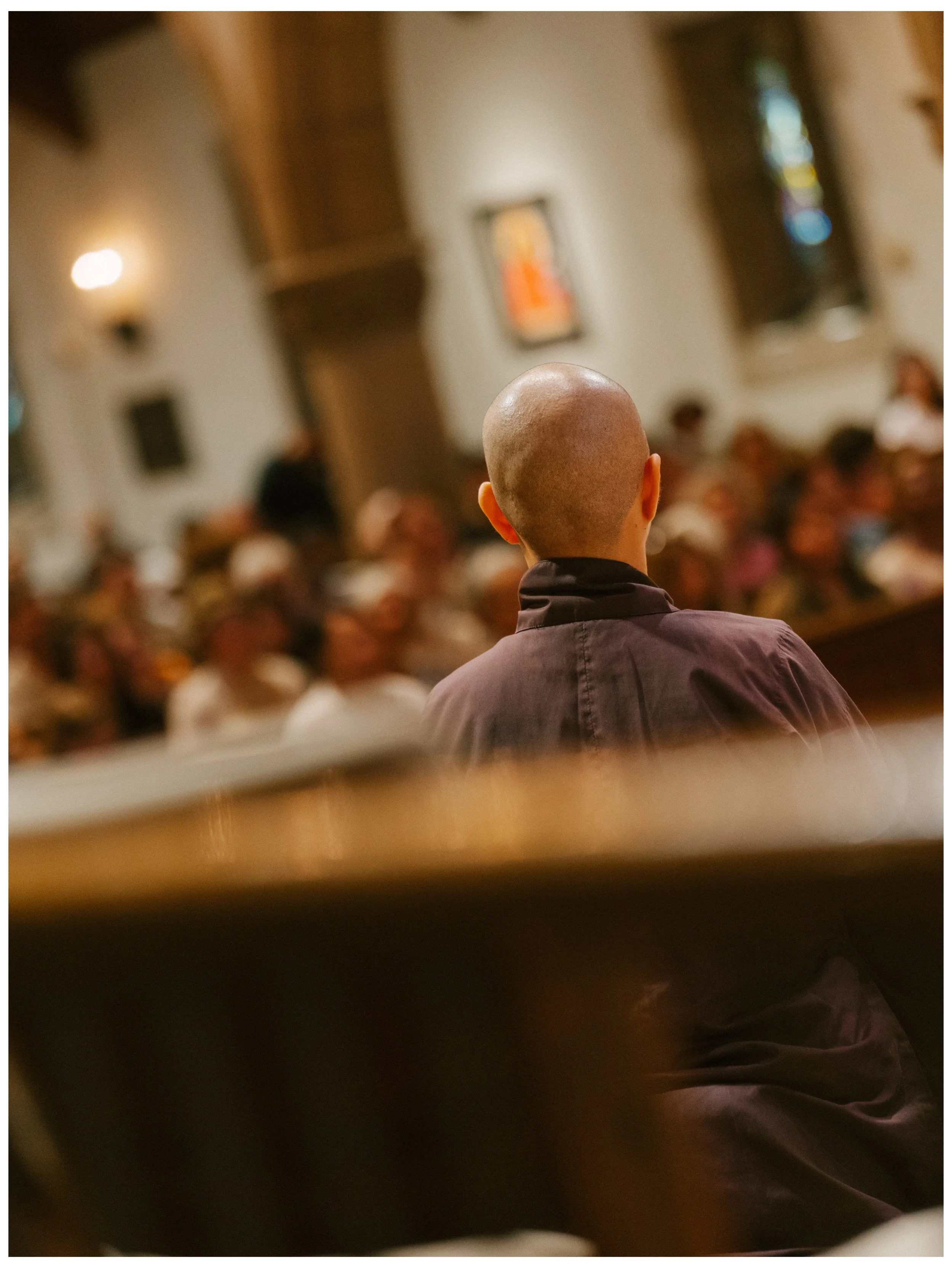
The camera had not placed me outside the gathering. It had drawn me more deeply into it. Each photograph carried traces of the person in front of me, but also traces of my own attention, my own breathing, and the quality of presence we shared when the shutter opened.
The images were not merely records of what happened. They were evidence of relationship.
Sowing the Seeds in Front of Us
Thầy Pháp Dung once told me that we do not need to know exactly what the future will become. We only need to sow good seeds and take care of the wholesome actions in front of us.
That teaching returned to me as I worked through the photographs.
More than six hundred people registered for this event, and around four hundred came. I cannot know what each person received or what will grow from a single day of practicing together. Perhaps someone will return home and listen more patiently to a family member. Perhaps someone will find a local sangha. Perhaps another person will simply remember to breathe during a difficult afternoon.
These are small things. But most seeds are small.
I also felt the presence of the Buddha and of Thầy during the gathering—not as something supernatural or far away, but in the way people cared for one another, in the ease made possible by unseen work, and in the willingness of a church to welcome a Buddhist community.
If this land continues to be nourished by that kind of love, then the growth of the Dharma will not need to be forced. It will be a natural manifestation, like a seed responding to sunlight and rain.
The event ended. The crowd dispersed, the chairs were put away, and the church became quiet again.
But the encounters continue.
Some remain in the lives of the people who were there. Some remain in me. And some remain in these photographs—small meetings between mind and the object of mind, between the person who was seen and the person who was seeing, each helping the other come into being.